Lay a flax stem beside a linen cuff and several different journeys could connect them. To find the one this cuff actually took, look for a record at each change of hands. The grower can identify a harvest, the spinner a run of yarn, the weaver a roll and the cutter the pieces taken from it. The part of the garment you can trace is the part those records join. Sometimes that is a whole knitted cowl. Sometimes it is only the yarn running across a square of cloth.
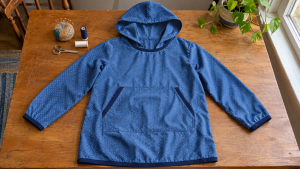
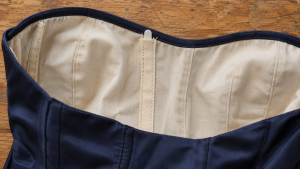
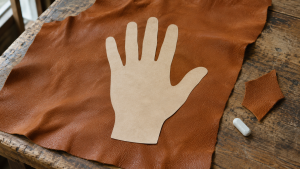
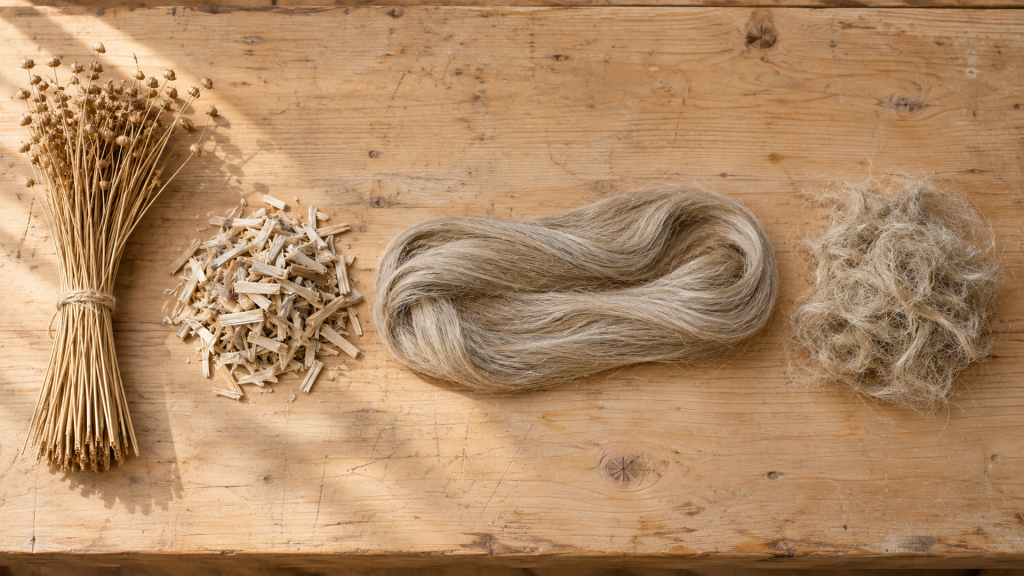
Featured image generated with AI. The samples illustrate processing stages in a flax mill.
Start with the load that went through the mill
One load is unusually easy to follow. In their final report for the Local Linen project, Andrea Myklebust and her collaborators describe taking 480 pounds of retted flax straw from their 2017 Wisconsin crop to TapRoot Fibre Lab in Port Williams, Nova Scotia. Three large containers fitted in the truck. The report includes photographs of straw at the breaker, fibre after processing and cloth on the loom. That gives a reader a particular shipment, a harvest year and people who did the work.
The quantity matters because the farm harvested more flax than it sent. On a sample label, write “portion sent to Port Williams” beside the crop year. If someone later offers you flax from the rest of that harvest, it belongs to the same growing season but has another processing history. A claim that a piece of linen was grown in Nova Scotia would also need its own evidence. In this example the Canadian location belongs to the mill. The crop crossed a border before it reached those rollers.
Make a card for the handoff while both ends of it are in view. Give the farmer’s name or project name, the field or harvest reference they use, what left the farm, and the name under which the mill received it. Copy any change in the unit of measure. Three containers on a delivery note can be reconciled with a weight in an intake book if the mill identifies those containers. Three anonymous bags beside a scale tell you much less.
Let the stem split into more than one sample
At the bench, follow the material in the order the tools meet it. Retting helps loosen the fibres from the rest of the stem. The breaker cracks the woody core into fragments called shive. Scutching removes more of that broken material from the fibre. Hackling draws the fibre through teeth that line up the longer strands and catch shorter ones. An aligned hank with long ends has taken a different route from the loose tuft caught in the comb. Either can have a future in yarn.
TapRoot’s own processing description distinguishes four outputs. There is shive from the breaker, a mixture of shive and tow from scutching, clean tow from hackling and the long fibre. Tow is the shorter fibre. It can take more cleaning to get the woody pieces out of the scutching mixture. Make separate envelopes for what the mill actually returns. A convenient envelope marked “waste” would hide the very branch that led to the cowl in the Wisconsin project.
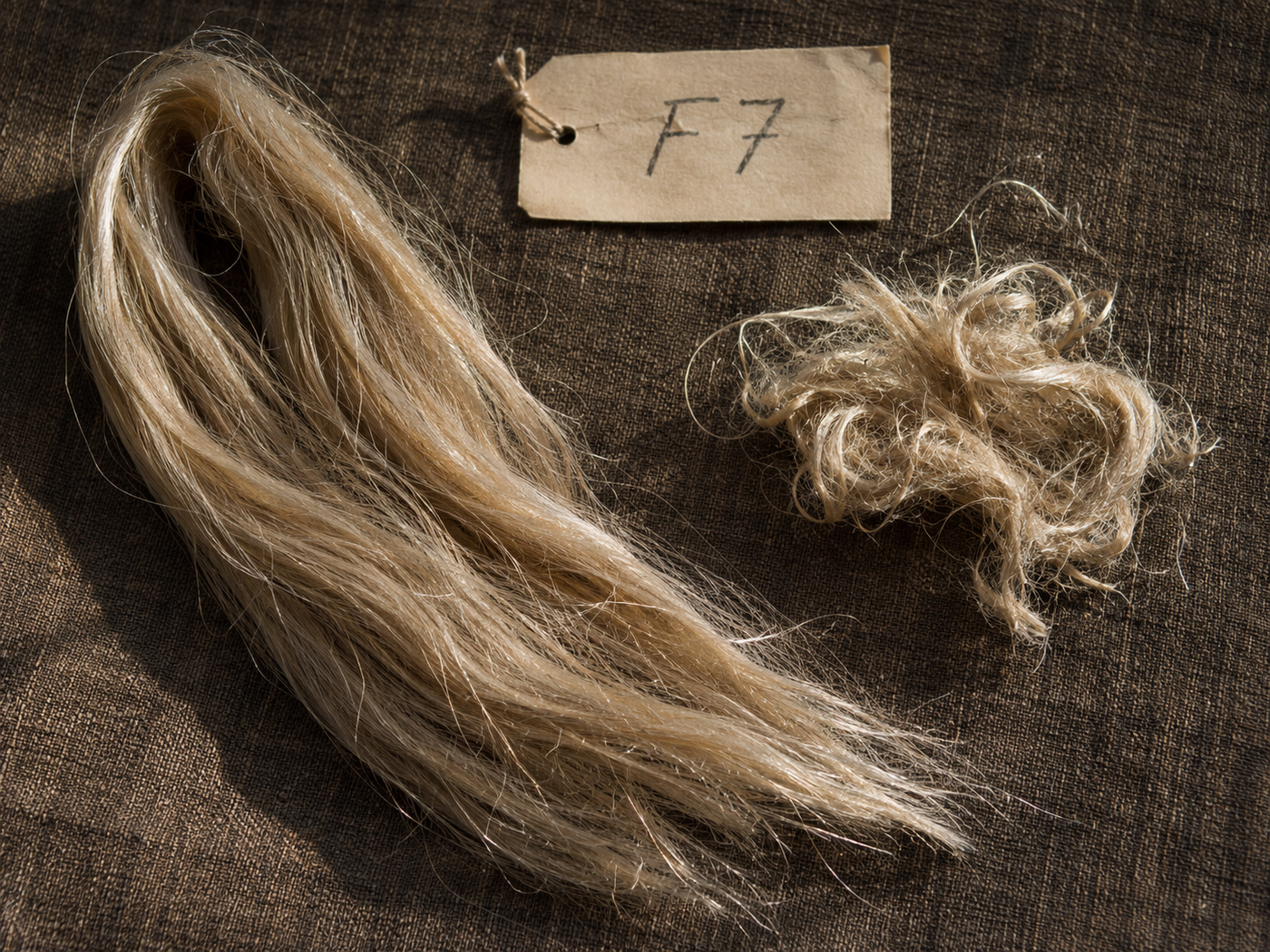
Take the labels off two adjacent piles for a moment in your imagination. The long fibres and the short ones are still easy to tell apart. Their harvests have disappeared. Keep an identifying slip with each sample as it leaves the bench, including the less picturesque bag of rough tow. Ask the operator which differences they expected within this run, which output was set aside, and whether another customer’s fibre entered the machine before this material was bagged. Record their answer beside the sample they described.
Find out which branch became yarn
The Local Linen team reported 65 pounds of long fibre and fine tow together. More than 100 pounds of rough tow stayed at the mill for further work. The combined figure cannot tell you the separate weight of either finished pile. On this job the short fibre could be cleaned, carded into a loose continuous strand and spun on the mill’s equipment. The team also used handspun long fibre in weaving. Two skeins bearing the project name could therefore represent different parts of the stalk and different spinning work.
Here is a paper exercise you can use with an actual spinner. Give an imaginary intake the reference F7. The spinner’s slip says that tow from F7 entered spinning run Y12. Tie a tag marked Y12 inside a yarn cone where it will travel with the yarn. On a separate card, copy the line that connects F7 to Y12 and who wrote it. If the cone later changes hands, that card lets another person trace it back. The letters and numbers in these illustrations are invented for the exercise.
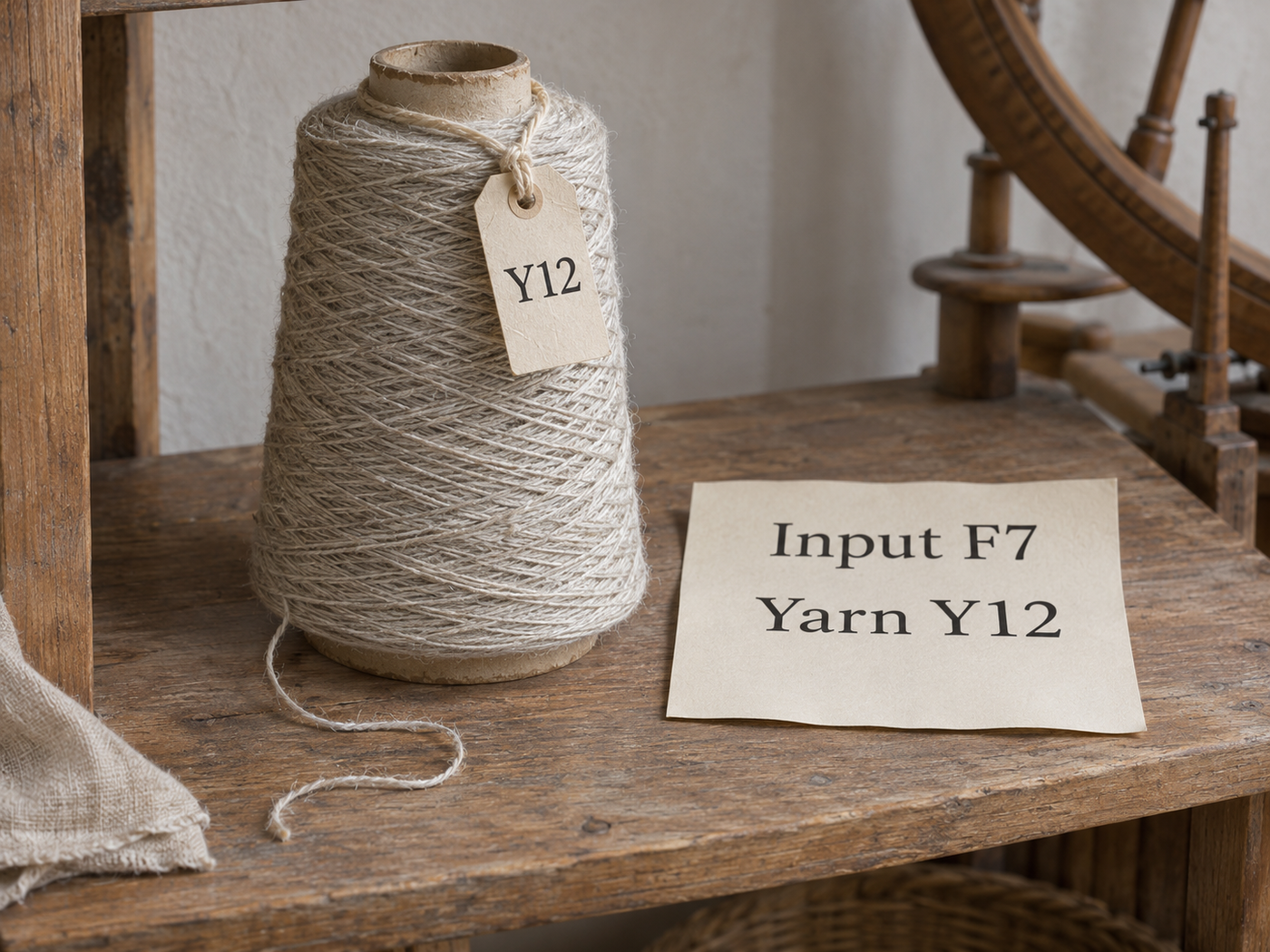
Suppose the spinner also fed tow from F8 into that run. Keep both inputs on the card and ask whether amounts were recorded as they went in. If the only surviving entry names two lots, you can say that yarn from the mixed run includes both. You still lack a share for either one. The cone’s weight gives you the amount left on that cone. It cannot tell you how the two source lots divide up. This is a good point to leave a blank in a notebook.
Put the yarn in the right direction
A woven sample has two chances to carry the fibre you are following. The warp runs along the length of the cloth on the loom. The weft goes back and forth across it. Look at the firm side edge where the cloth left the loom and mark the lengthwise direction on the sleeve holding your sample. The guide to following a yarn through woven cloth helps if the two directions are hard to see. The weaver’s record tells you which cones supplied each direction.
Myklebust’s project shows how precisely you can write that down. One pictured damask used handspun line linen in the weft. A separate sequence shows millspun tow yarn going into cloth on a four-shaft loom and shows the finished cloth. Jason Wurst also used the project’s tow yarn in a machine-knitted cowl, photographed during knitting and after blocking. The cowl is a documented route into a wearable piece. The public account leaves the cut and sewing history of the woven yardage open. Keep those two endings on separate lines.
Consider what happens when a cone runs out halfway down a roll. A weaving ticket might say that Y12 supplied the weft from the start to a marked change, then Y14 took over. Find the change mark and ask which end of the roll the length was measured from. A short clipping at the far end could come from the second yarn even if the roll ticket carries both references. Mark what you know about the actual clipping, with its position if there is one.
Take one piece through the cutting room
Return to the imaginary run. A work ticket says Y12 went into the weft throughout roll R4. The cutter issued part of R4 to cut C2. If a bundle ticket for the shirt fronts from C2 survives, the fronts have a documented link to the weft. Now ask for the cuff bundle. A cuff can come out of a narrow leftover piece from an earlier cut. A matching colour and a small enough piece of cloth make that a good question to ask the cutter. The answer belongs on the garment card only when the bundle or the cutter’s record supplies it.
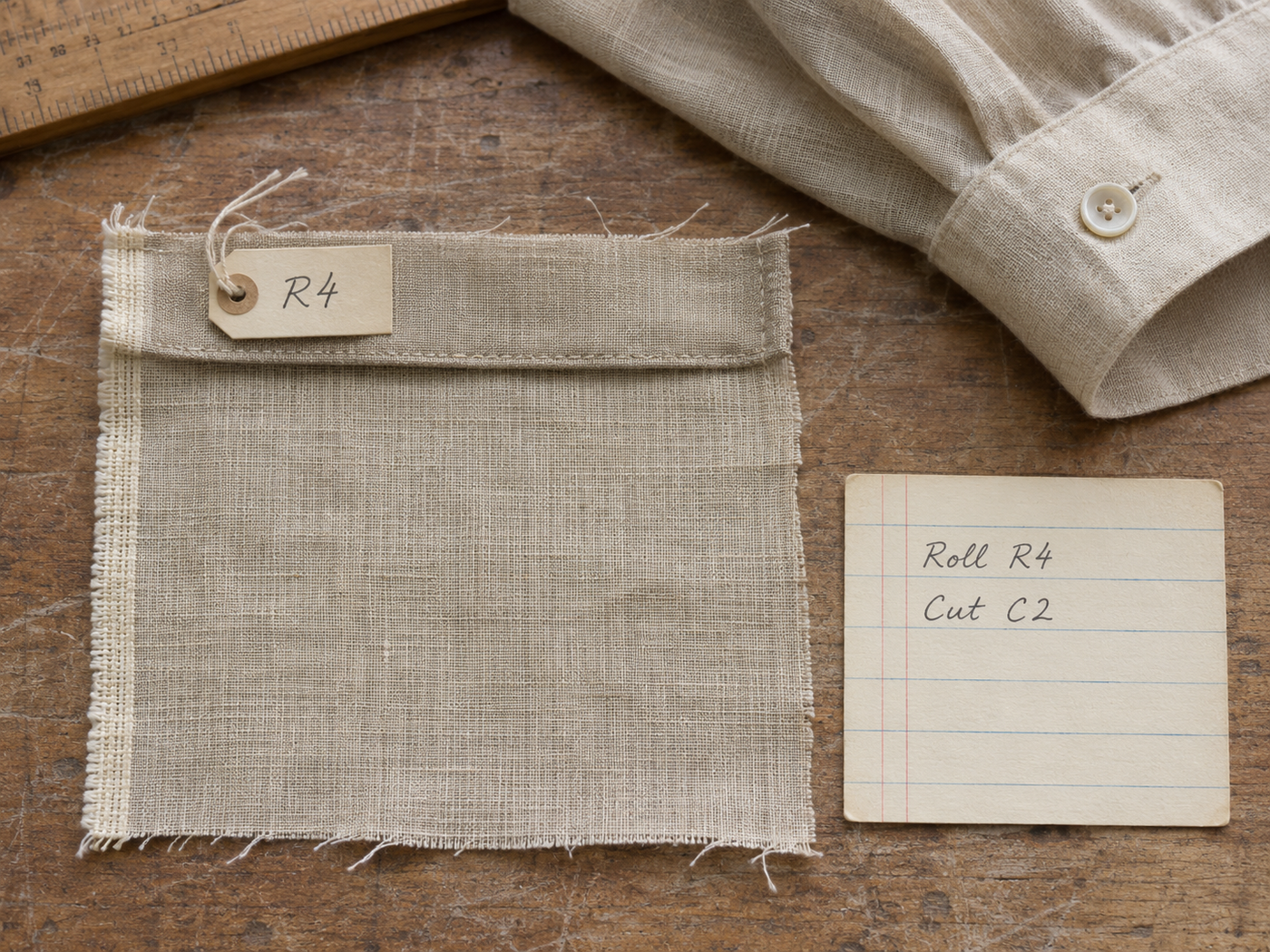
A cutting sheet can list several rolls against one style. Find out whether the shop kept pieces from each roll in separate bundles or put all the sleeves for the day together. If all you have is a style number on the finished shirt, you may be able to place it in a run that used R4 without identifying which shirt contains it. A record of where the issued cloth went after cutting can help locate a remnant or a recut. Ask for the particular bundle reference first. It saves a search through a whole season’s figures.
Write the shortest claim the records support
Give each handoff one line in a notebook. Start with these five entries and leave room to add branches.
- Name the harvest and the portion the processor received. Keep a delivery reference or the producer’s dated account.
- Name the output that left the mill. Keep its sample, the mill’s description and the record that ties it to the intake.
- Identify the spinning run and any additional inputs. Say which person or document connects the fibre to the yarn.
- Identify the cloth roll and yarn direction, or the knitting job and yarn issue. Mark changes within the run.
- Identify the finished piece and its last matching ticket. Put the first missing connection in words another person can investigate.
Read your last line aloud as if someone had the garment in their hands. “The fronts came from cut C2, whose recorded weft includes tow from F7. The cuff bundle has no surviving roll reference.” That gives the next person one useful thing to ask for. For the Wisconsin project a different ending is available. A grower’s account, processing photographs and a knitter’s identified work take the trail all the way to a cowl. The piece at the end determines how much of the story you can tell.

By Alma Quillan