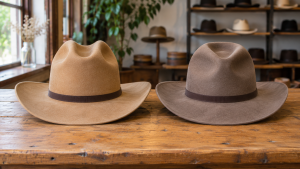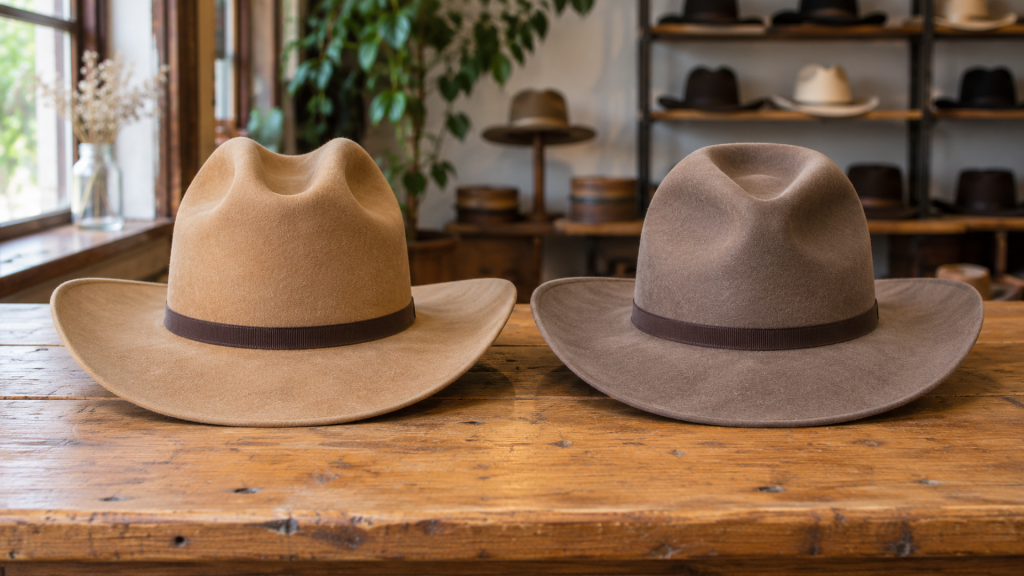
Two felt crown outlines viewed just above their bands. AI-generated image.
The quickest way to recognize a western hat you liked on somebody else is to draw the hollow in its crown. Look straight at the front at eye level, then down into the top. Two high points with a dip between them can look much the same from across a room. From above, one dip may run straight back like a trough, while the other widens into a bowl. That second view gives a hatter something quite specific to work with.
The featured illustration compares two felt crowns at hatband height. AI-generated image.
Put the brims on the same line
For a comparison in a shop, ask to see two felt hats of roughly the same crown height with similar brims. Have the fronts turned towards you. Stand far enough away to see both bands at once, then bring your eyes down towards their level. If one hat is tipped back on a stand, its top comes into view and its front seems shorter. Ask to see it level before deciding that the shallower front is the part you like.
On a scrap of paper, draw a horizontal line for the top of each band. Start where the felt rises above it on the left and follow the skyline across to the right. Leave the brim out of this first drawing. At some distance you might get just three marks, an upstroke, a dip and another upstroke. That is enough. You now have a record of what caught your eye before the overhead view supplies a name.
Look into the hollow
In the tan example, two long ridges stand on either side of a narrow channel running from front to back. Each outer side of the crown has its own dent. That combination is commonly called a cattleman crease. Follow the channel in the brown example and your pencil takes a different route. It can travel around a rounded back and down two sides that converge towards the front. Draw the direction of the nose at the bottom of the page. Otherwise a teardrop is remarkably easy to turn around in a notebook.
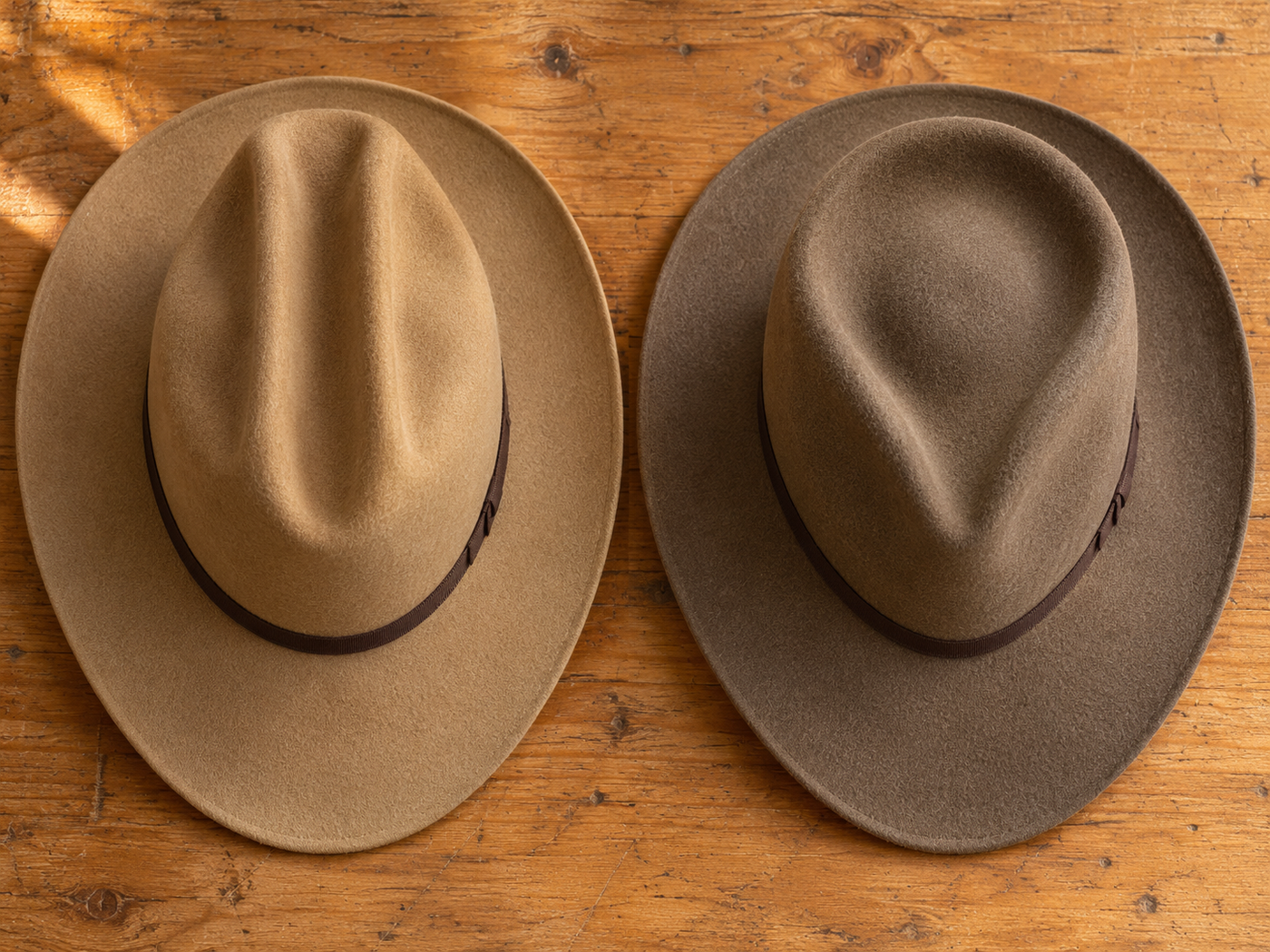
The names on a maker’s card are worth keeping with the drawing. Dallas hat shop Teres shows front and overhead photographs together in its comparison of cattleman and pinch-front crowns. Its pinch-front example has a teardrop-shaped top. “Pinch front” tells a hatter where the sides come towards each other. “Teardrop” tells them the path your pencil took around the upper hollow. On that particular hat both descriptions fit.
Turn a hat sideways
Keep the band horizontal and look along the side of the crown, from its nose to the back. Does the front sit lower? How far along the band does the side dent run? Jeff Dyer of RHE Hat-Co uses the word rake for the front-to-back slope in his open-crown shaping demonstration. The slope is another choice you can draw. Two hats can have a long central crease and give quite different profiles beside a window.
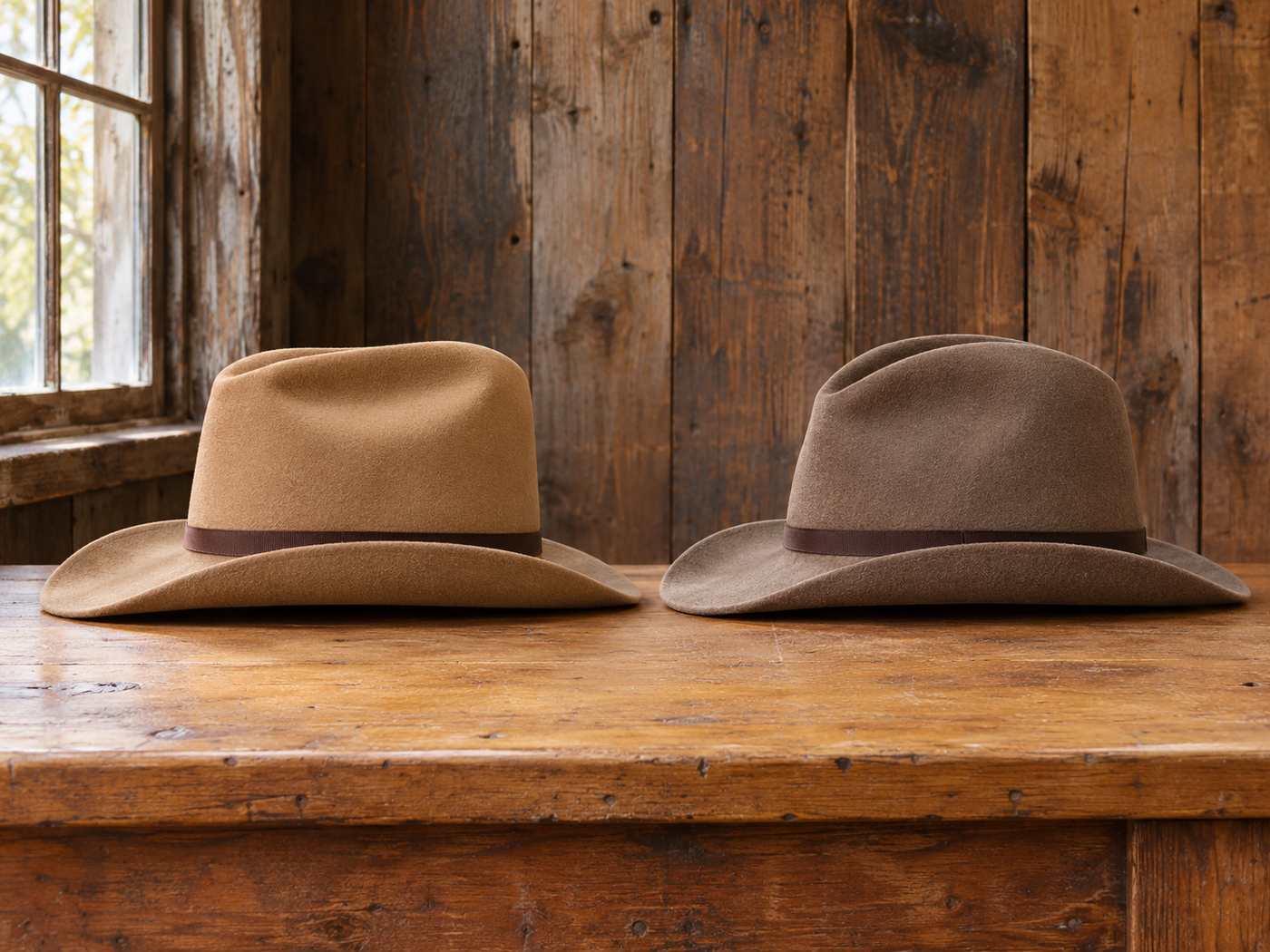
Suppose the brown hat appeals from the front but looks taller than you expected when you turn it. Cover the brim in your side-view sketch and mark the top of the band again. You might find you like the narrow front and would prefer a lower crown overall. If you are working from a vintage catalogue, keep the model or item number alongside the picture. The same drawing may serve several versions. The guide to following a catalogue illustration to its order entry shows where to check which version a customer could request.
Give the hatter your drawing
Ask the hatter to trace the line you mean with a finger held above the felt. Start at the nose and watch where the finger turns. It may follow the inside of the valley when you meant the ridge just outside it. You can settle that detail in a few seconds without putting a new dent in a borrowed hat.
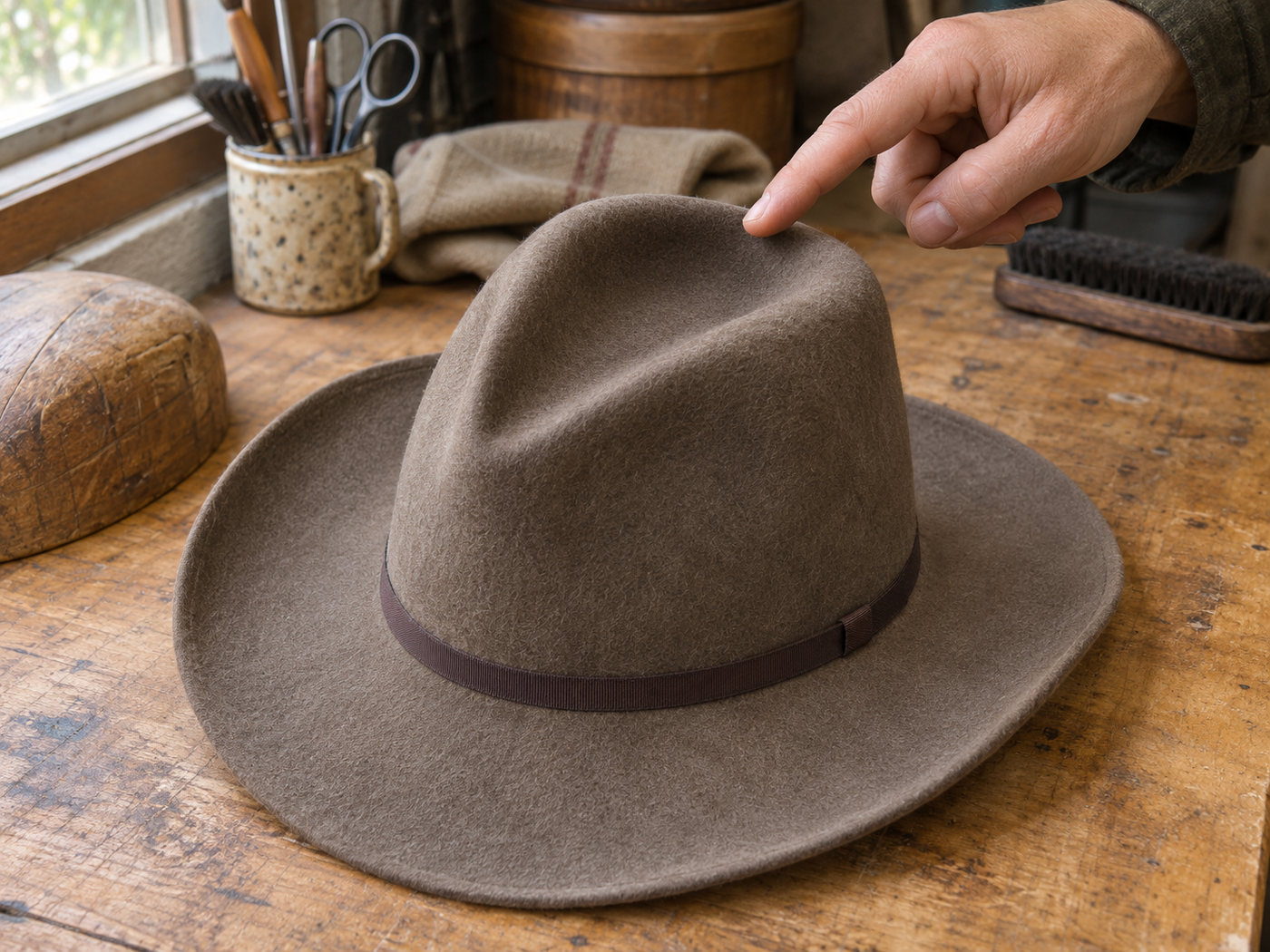
A good note to bring back might read, “Narrow at the front, rounded hollow at the back, very little slope when seen from the side.” Add the name the shop uses and a small arrow pointing forwards. If someone brings out a different hat under the same name, set it at band height. You already know which line to look for.