To find out whether someone could order the dress in an old catalogue, try filling in one line of its order form. Can you supply the item number, a size the seller offered, a colour available to that customer and a delivery destination the instructions cover? If one of those is missing, name it. A catalogue can give a remarkably precise account of what someone was invited to buy. A receipt, parcel note or letter may be needed to discover what came through the door.
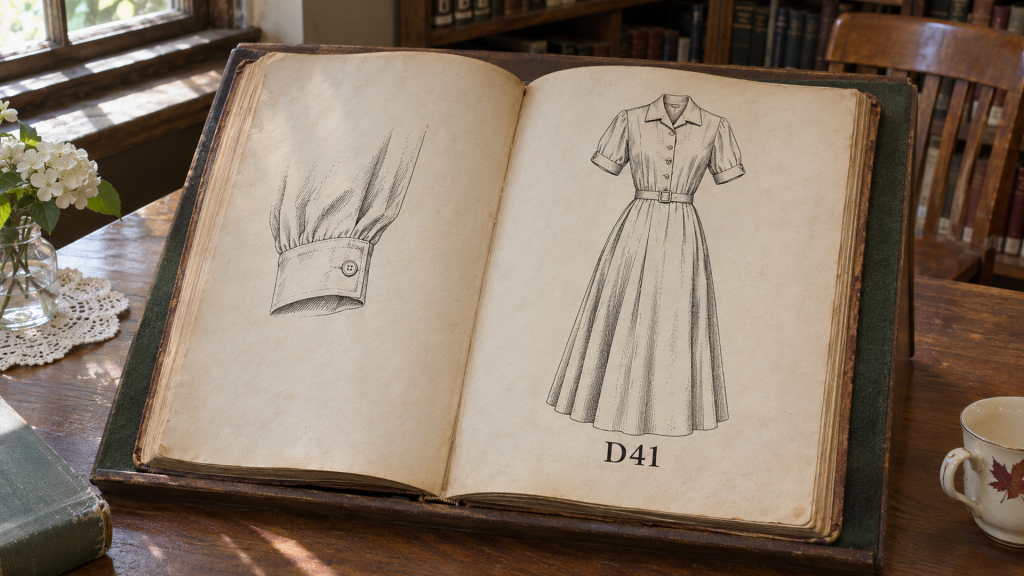
Featured image generated with AI. The illustrated dress and its item number belong to a practice catalogue.
Open the book at the address panel
Suppose a relative remembers that her mother sent away for a navy dress. She recalls standing on a chair while the hem was pinned and can still put her hand at the point where the skirt fell. That is a memory of a fitting. It gives you someone to ask about the garment and a reason to look at a catalogue. Before showing her a drawing, ask which town she was in, who usually collected parcels and what season she connects with the dress. Keep her words beside the date of your conversation, with her permission. Suggesting a maker too soon can give a quite different shape to the story.
Turn to the cover, title page and order address before you go back to the dress. Copy the company name in full, town of issue, language, season, year and any edition or district on the paper. Library and Archives Canada lists Eaton’s Toronto fall and winter 1925–26 catalogue separately from its spring and summer 1926 issue. The year 1926 can put two quite different offers on your desk. A winter catalogue kept for years in a kitchen drawer can acquire a family date long after its prices and ordering terms expired.
Keep the archive’s item reference and the printed page number. A digitised volume can begin with covers, advertisements and unnumbered leaves, so a viewer’s image number may differ from the page on the paper. Note whether the order blank is attached, folded into a pocket, represented by a torn stub or simply absent from the scan. Ask an archive whether the original has loose enclosures. Until you know, “insert missing from the images I saw” is a more accurate entry than a guess about what the customer received.
Give the dress a line of its own
Use a fictional mail-order dress, D41, to try the method. The drawing shows a collar, a narrow belt and a skirt with enough fullness to stand out from the legs. That silhouette will help you find the page again. The useful marks for ordering are the letters and digits printed below it. Copy them exactly, including a prefix, suffix or dash if one appears. Where one drawing serves three versions, follow the leader or figure letter across to the description before copying anything into your record.
Imagine the main list offers D41 in navy and rust, in sizes 34, 36 and 38. The reader wants the navy size 36. Put the four particulars on one practice line and leave a space for the delivery district. A column at the foot of a page may belong to several garments. Run a finger up from the size and across from the code to make sure the two meet. If only the navy version reaches size 38, recording the largest size once for the entire dress would promise a rust version the page never offered.
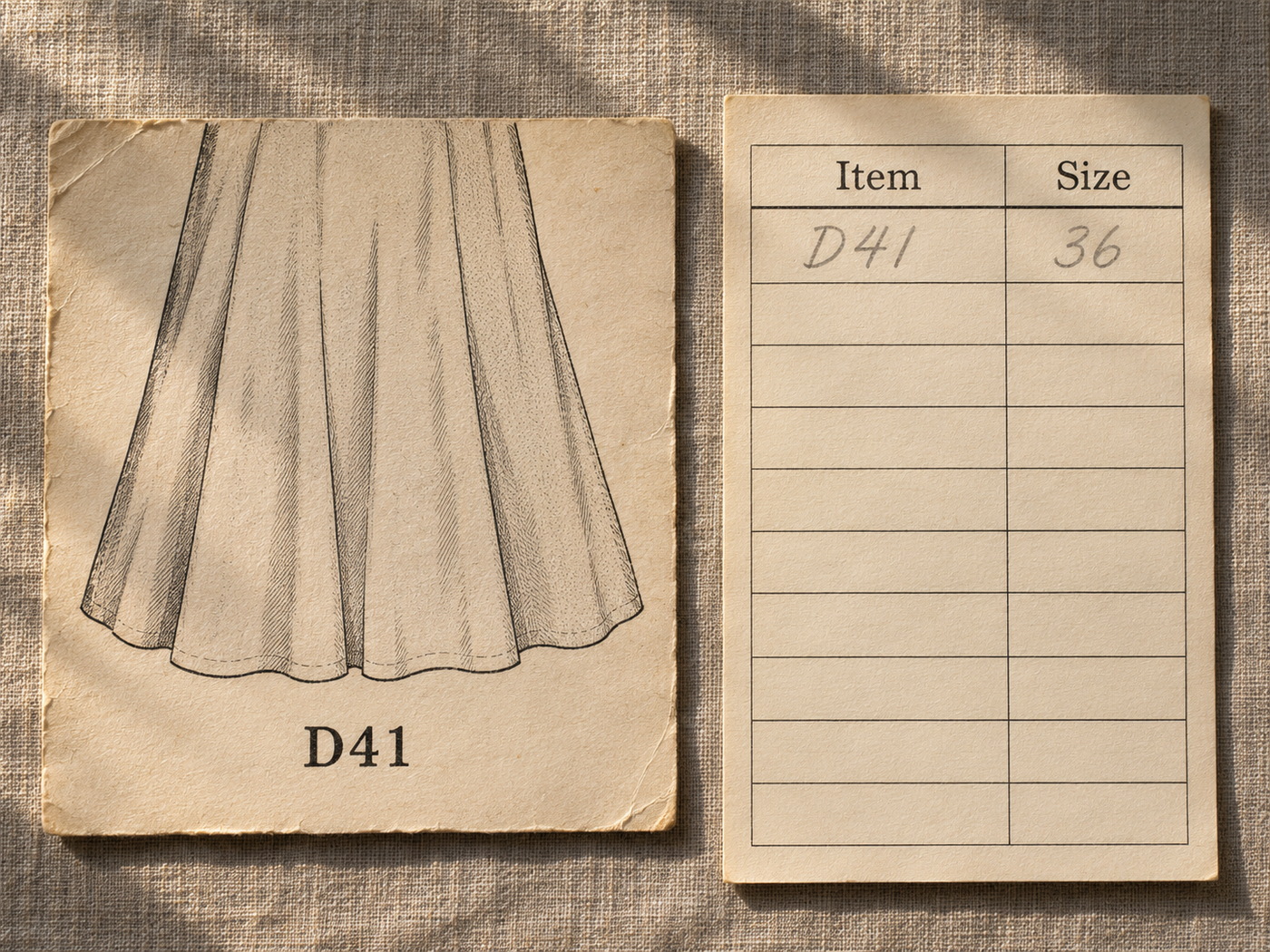
Read the edition’s measuring directions before translating the size. The example form says 36. Leave it as the printed size until a size table tells you whether that means a body measurement, a garment measurement or a numbered group. A family dress now measuring a different width could have been altered. A present-day size label is poor evidence for what number someone once wrote on an order form. If you have the dress, record where you measured and keep that observation on the garment’s own card.
Read the piece of paper that changes the answer
In this exercise a loose green sheet headed Western list limits D41 to navy and sends the customer back to the main list for overalls W18. Put the insert alongside the dress entry. For a customer covered by the western sheet, navy size 36 survives both checks. Rust size 36 appears in the main book and drops out once the district is known. For a second customer whose delivery district you cannot establish, leave the two outcomes open. Do not assign a district solely because the surviving catalogue was donated in a western city.
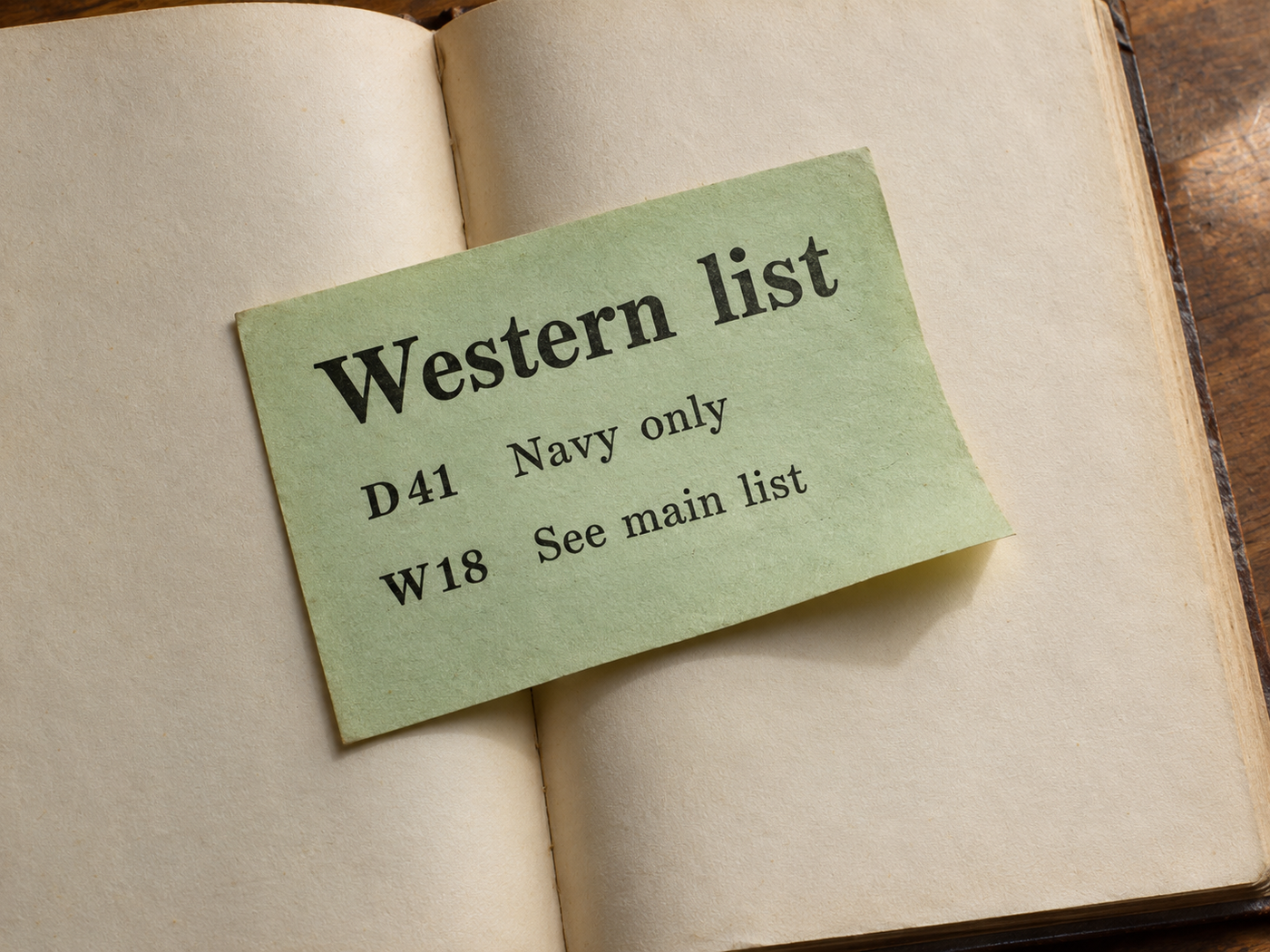
Check whether an insert applies to where the order was sent, the office that filled it or the address that would receive the parcel. Those can be three different places. A correction dated midway through a season needs a date on the proposed order as well. Write down which instruction has priority and the words that establish it. An insert offering faster delivery may leave the stock list untouched. An insert replacing a page can remove a size with no change at all to the illustration.
Try the same care with handwritten marks. A pencilled circle might be a child’s wish, a customer’s working list or a dealer’s note made decades later. Is there an accompanying letter in the same hand? Did the donor describe who wrote in the book? Ask before assigning the handwriting to the person whose name appears on the cover. If the only surviving mark is a cross beside D41, “D41 marked in pencil, hand unidentified” leaves room for the family to add what it knows.
Give the overalls a fresh start
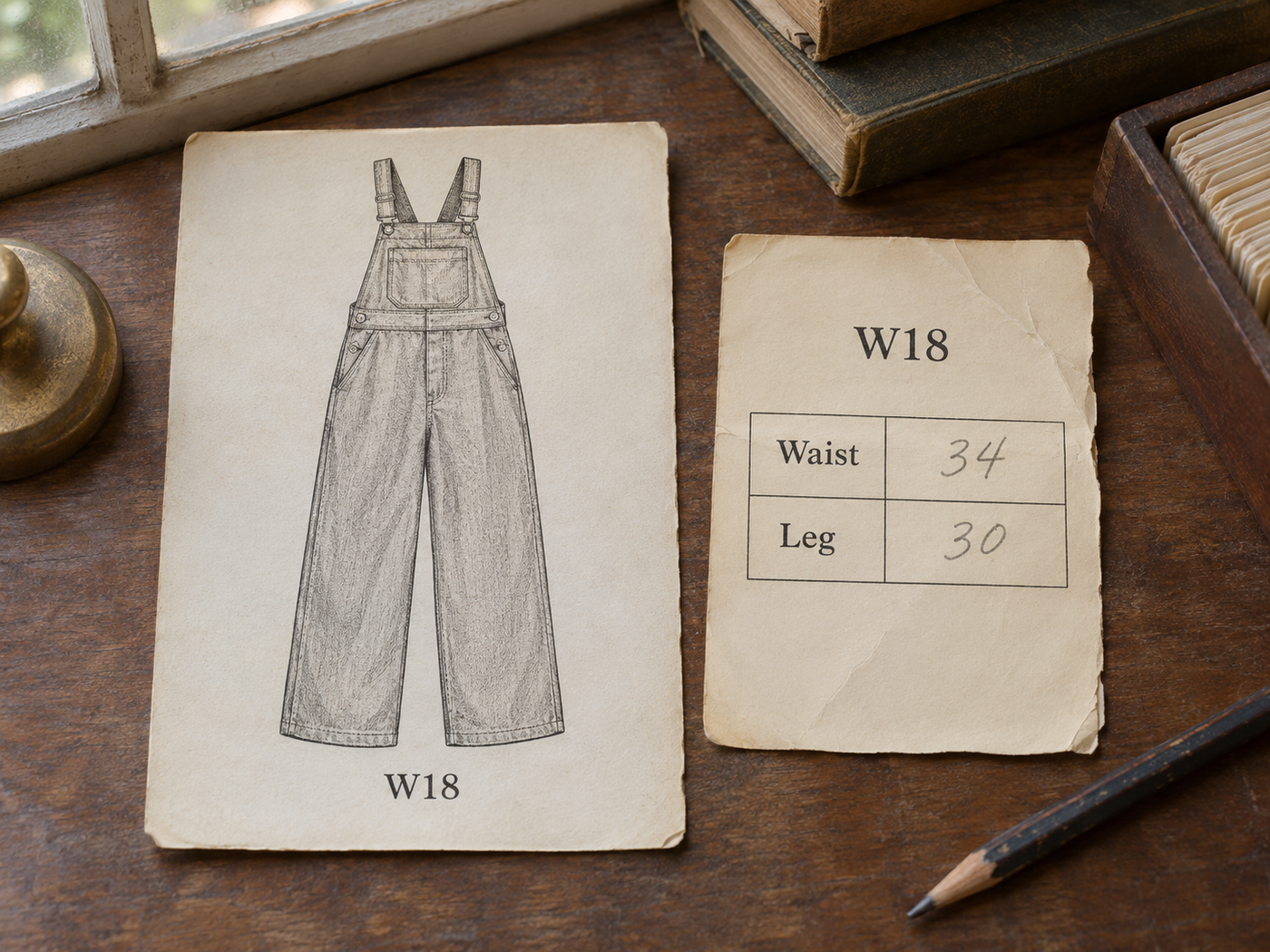
Move to W18 without carrying over the dress sizes. In the fictional main list the overalls come in a waist of 34 with a leg length of 30. Copy both numbers into the named spaces and retain the unit if the page specifies it. The green sheet refers W18 back to the main list. You can now record an orderable combination for that district provided the delivery instructions cover the customer’s address. Ask separately whether a different waist and leg could be ordered together. Two long lists of measurements can conceal gaps in the combinations a warehouse actually offered.
An original order book gives that exercise a useful twist. Toronto’s John Eaton Co. Catalogue No. 2 lists striped overalls as lot 24 and a jumper in the same cloth as lot 25. The note under the group asks for chest and waist measurements. Someone hoping to order a matching outfit had two lot numbers to follow. Someone copying the waist and leg spaces from our imaginary blank would have missed one of the real seller’s requests. Identify the company from the page itself. The form in this volume directs correspondence to the John Eaton Co. at Temperance and Yonge streets in Toronto.
The same form also distinguishes the postal address for a reply from the destination for the goods. That distinction gives a family researcher two places to ask about. A customer might recall the parcel arriving in a neighbouring town while an envelope in the family papers carries their home address. Keep both places in the record until you have read the mailing directions. If your item is a pair of shoes in a wartime American offer, checking the month’s shoe terms against a ration record can settle an additional condition on the transaction.
Decide how far the purchase travelled on paper
Lay out the evidence in the order a customer would have met it. The plate shows a style. The item entry offers a version. The size table and regional sheet narrow the offer. An unused blank shows how to request it. A pencilled line shows what someone wrote, if you can establish whose line it is. A dated acknowledgement can show what the company received. A dispatch slip can show what the warehouse sent, including a substitute. On each record, check that both the customer reference and the item still match.
A missing parcel is a useful test of your wording. Suppose a letter says the shop could send another colour because rust had run out. The original listing still documents an offer. The letter documents the seller’s response to a particular customer at a later date. If a further letter thanks the shop for the navy dress, you have evidence for a delivery and a change of colour. If the exchange stops at the offer of a substitute, leave the outcome there. A family’s account of pinning a hem adds a remembered use. It still takes a detail tied to that transaction to identify the dress in the letter.
Leave a record someone else can try
Finish with a sentence that contains the edition, the district, the item and the combination you checked. In the practice book a customer covered by the western sheet could request D41 in navy, size 36. The main dress list also mentioned rust. The sheet ruled rust out for that customer. W18 could be requested from the main list in the waist and leg combination shown. Keep the trial order unsigned and mark it as your reconstruction so that nobody files it among family receipts.
When someone brings you one more piece of paper, ask what it adds. A dated laundry entry describing clothes in use might put a navy dress in a household later on. A seller’s acknowledgement bearing D41 and the same customer’s address could identify the order. Both become worth keeping for different reasons. The person who remembers the hem gets a precise answer about what the book offered, and a precise place to look for what her mother wore.

By Nell Aster