In April 1980, Sharon Y. Lopez went looking for clothes a New Yorker could afford. At Fifty’s Edge on Orchard Street she found boots on sale. A few doors down she directed readers upstairs for sportswear. Her shopping column in Routes gives you the beginnings of a walk on Manhattan’s Lower East Side. Choose the stretch between Broome and Delancey, keep the window to 1980 through 1989 and put a source beside each door. You can tell a visitor where someone went for a shirt or a pair of shoes even when the window in front of them has since changed hands.
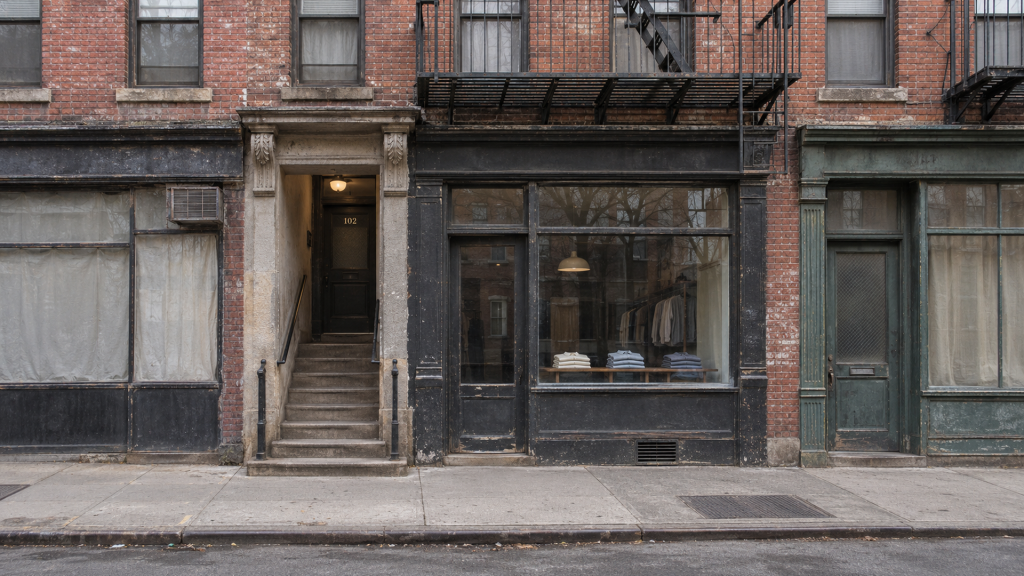
Featured image generated with AI. The imagined façade illustrates an upstairs address on the walk.
Start with a person who had a reason to go through the door
Lopez wrote for shoppers who wanted to find those places again. An upper floor mattered because you could pass the right building and miss the clothes entirely. A corner mattered because you could find it without reading every number. Her byline, the month of publication and the details she chose for readers give her account a particular place on the route. April 1980 is a firm point within the decade. The column by itself cannot carry any of these businesses all the way to December 1989.
For a block closer to home, ask someone who once used it to describe a single errand. Where did they go to have a sleeve shortened, collect a dress on approval or borrow clothes for a performance? Start with the clothes, then ask how they found the place. The light in a stairwell, the turning after a grocer’s window or the side from which someone handed back a garment may be easier to remember than a street number. Ask permission to jot down the description and record the date you heard it. Give the speaker time to be unsure.
Draw a line between two named cross streets on a sheet that will fit in your hand. Put your ten years at the top. Use both sides only if you can still describe the street from one safe viewing point. Give a business outside the two corners a separate note. It may explain where a dress went for finishing, but the person joining your walk should always know where to put their feet and which period they are looking for.
Look up the person and the address separately
Start in the street section of a dated directory and copy the entries on either side of your number. Then look up the person or business by name. An occupation beside a resident’s name gives you a way to ask where they worked. A trade listing with a business address can put the work somewhere else. Look for a floor, a rear building, a room number or a second entrance. Those small directions can change the walk more than the official name of the business.
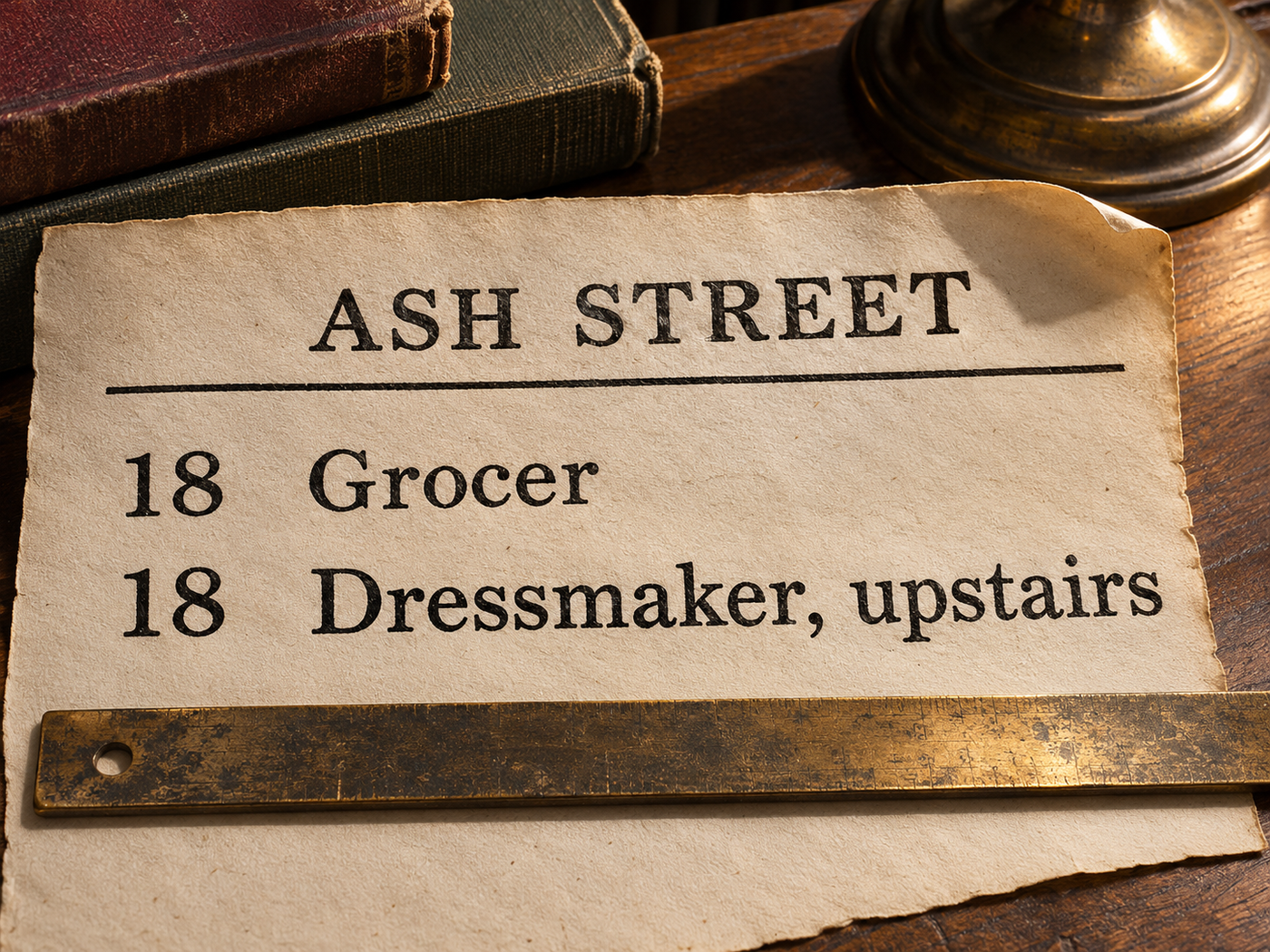
Take an invented directory entry at 18 Ash Street. It lists a grocer and an upstairs dressmaker at the same number. With those two lines you can stop opposite 18 and say there was garment work above a shop. If all you have is the grocer under the street address and a dressmaker listed elsewhere as living at 18, keep the dressmaking room open as a question. Someone might have taken bundles home from a workroom on another block. An advertisement mentioning upstairs fittings or a customer who remembers trying on sleeves there would change what you can say.
Copy the publisher and edition as carefully as the address. The City of Toronto Archives explains that its directories drew on information gathered in the previous year. That detail can account for a shop being under the former tenant’s name in a volume published after a move. Check how the directory for your own city was compiled. A mark in one book and an empty line in the next give you a period to investigate. A missing name can also belong to a lodger or someone whose trade the compiler left out.
Fit the numbers to the block
Find a fire insurance map or a street atlas with a date and a legible key. Mark the two intersections before counting lots. Turn the map until the corners line up with the direction you plan to face. On Orchard Street, Delancey anchors the end where Lopez placed the shoe shop. A 1980 Sanborn fire insurance map reproduced in New York City’s GO Broome planning records shows Orchard, Broome and Delancey. Record the date of the sheet you use. An earlier plan can establish the street arrangement while a photograph within the decade fixes a particular frontage.
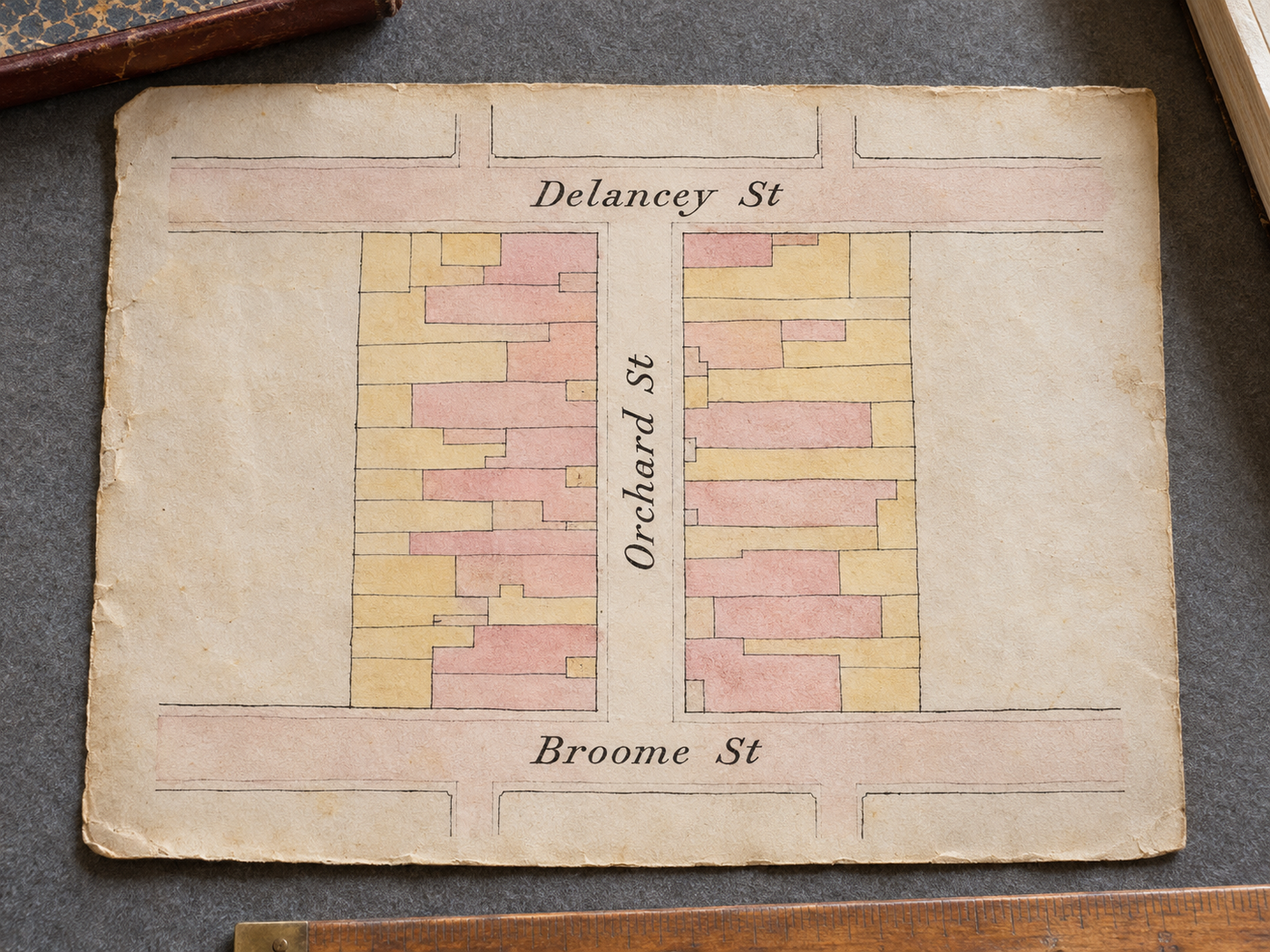
A long shopfront can span two narrow lots. An upstairs business can share a number with the shop next door or take a different number painted on a narrow jamb. Check the street key for a former name, then compare a directory on either side of an apparent renumbering. If both neighbours change numbers together and the same side street still marks the corner, you have a reason to examine that run of addresses closely. Keep the old and new numbers in separate columns until a map, numbering record or dated photograph connects them.
Three stops you can put on the Orchard Street card
These stops come from Lopez’s April 1980 column, on pages 40 and 41 of Routes. Read them in increasing street-number order toward Delancey. The words on the card describe the documented shops in that month. The exact survival of a particular sign, step or door needs a dated comparison of its own.
- 102 Orchard Street. The Designers’ Connection was upstairs. Lopez listed sportswear there, including silk shirts. From the sidewalk, give the group a moment to find how many doors could plausibly have served the upper floor. The upstairs location is documented. The choice of a particular stair needs another source.
- 104 Orchard Street. P.J. Goodwill offered menswear, including suits and accessories. Keep the initials on the card so someone checking another directory can distinguish this merchant by its printed name. Standing here gives you a second kind of stop, a shop identified by its goods even if the old window display is gone.
- 110 Orchard Street. Fifty’s Edge sold shoes at the Delancey corner. Lopez described seeing a sale on boots during her visit. The corner and merchandise are two things a former customer could check from memory. A surviving pair of boots might prompt a story about that trip, though you would still need evidence to place their purchase in this shop.
Leave a fourth space on the card for 106 Orchard. The three entries above give no answer about clothing work at that number in April 1980. Write the question by the address. A shop that advertised little, a room used for piecework and an address with no clothing trade at all are all possible outcomes of a further search. Visitors often have a better chance of answering a question about a single gap between two familiar shops than a request for everything they know about the street.
Ask which entrance the customer actually used
Take a copy of a period view back to someone who remembers an errand. New York City’s Municipal Archives holds a mid-1980s property tax photograph series. A view from that series can bring a frontage within the decade of this walk. Check the borough, block and lot before identifying a door. Photograph the same frontage from a public place if you can do so comfortably. Put the two views alongside each other and line up a wall edge, a column or the top of an opening that appears in both.
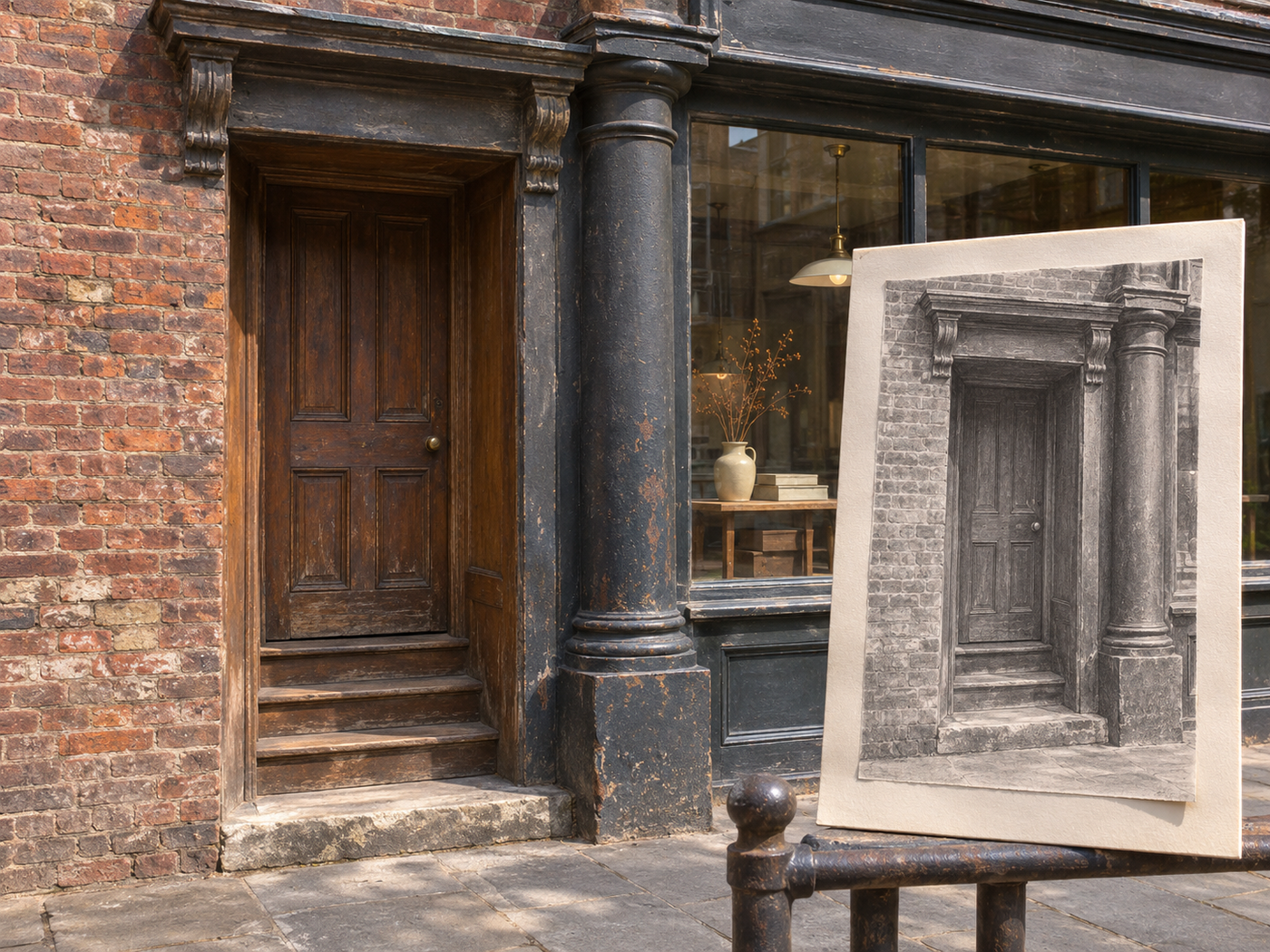
Invite the person to trace the route on a copy. Which door did they use? Did they turn before or after the shop counter? Could they see the street while someone marked the hem? Ask what changed between visits. If a second customer remembers a different stair, give both accounts their dates. The business could have moved within the building, or the customers might have come for different kinds of appointments. The guide to working with a speaker’s memory of dress can help keep the wording and permissions with each account.
Give the walk a place to pause
Try the viewing points at the time of day you mean to use them. Look for a spot that allows a seated person to see the doorway, leaves room for passing pedestrians and lets the group gather without blocking a business or asking to enter anyone’s home. A photograph with a description can bring an upstairs stop down to street level. If a corner is crowded or the crossing is awkward, keep the group on one side and show the opposite frontage on the card. Ask the venue or local host about current conditions before offering directions to a group.
End with something a visitor can help check. They might recognise the stair at 102, know where a customer kept a receipt from 110, or remember what stood between the two. Get permission before putting an account or a name into the next edition. If what turns up is a dated picture of people wearing a particular cut, set it aside for dating the local appearance of that clothing detail. For this walk, one well-placed doorway is enough. A visitor who returns with the right stair has changed what the next group can see.

By Nell Aster