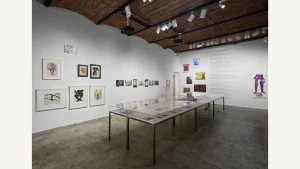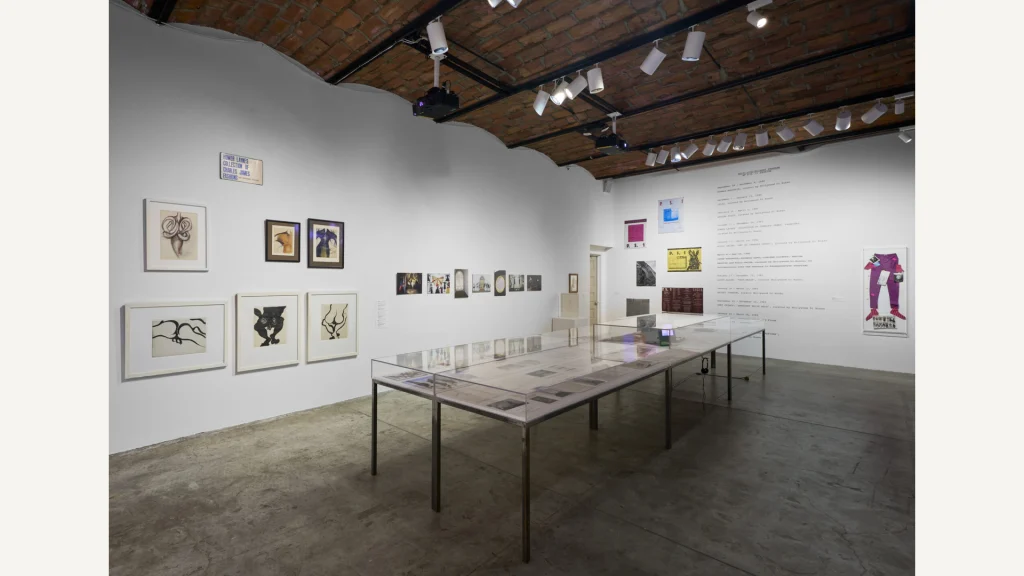
The current Queens exhibition places archival material in cases and on the walls. Installation view of New York Fashion at PS1, 1980–1984. On view November 5, 2026, through March 15, 2027. Courtesy MoMA PS1. Photo: Steven Paneccasio
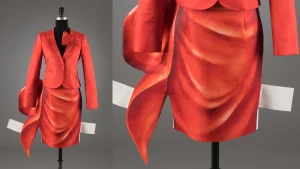
On November 5, MoMA PS1 opened an exhibition in Queens that brings back part of Betsey Johnson’s 1983 installation. The objects include a red velvet outfit and a dark skirt. Above them, two handwritten arrows explain which clothes Johnson says she wore when she tried to get married and which ones she wore when the ceremony went ahead. The distance from the tip of each arrow to the cloth matters. A visitor who saw either garment by itself could walk away with only half the story.
Featured photograph. Installation view of New York Fashion at PS1, 1980–1984. On view November 5, 2026, through March 15, 2027. Courtesy MoMA PS1. Photo: Steven Paneccasio.
The wall Johnson filled in 1983
Johnson’s winter exhibition ran from January 16 to March 13, 1983, in what had once been a public school. Stylist and independent curator Hollywood Di Russo had been bringing designers into PS1 as part of a program that also made room for film and performance. Instead of sending a selection of dresses for somebody else to arrange, Johnson came in and built an environment. Former PS1 staff member Tom Finkelpearl remembered finding mannequins downstairs at Materials for the Arts. In his oral history for the museum, he also recalled Johnson asking the guards to wear her clothes. One of the guards was his wife.
The museum’s 1983 installation photograph brings you close enough to see the tape. Short red strips catch the corners of photographs. A pale T-shirt hangs below the largest lettering, which names the Chelsea Hotel. Elsewhere on the wall a few words of handwriting send the eye sideways to the next picture. The shirt has sleeves and a neckline, but the neighbours it acquired on that wall tell you how Johnson wanted somebody to come across it.
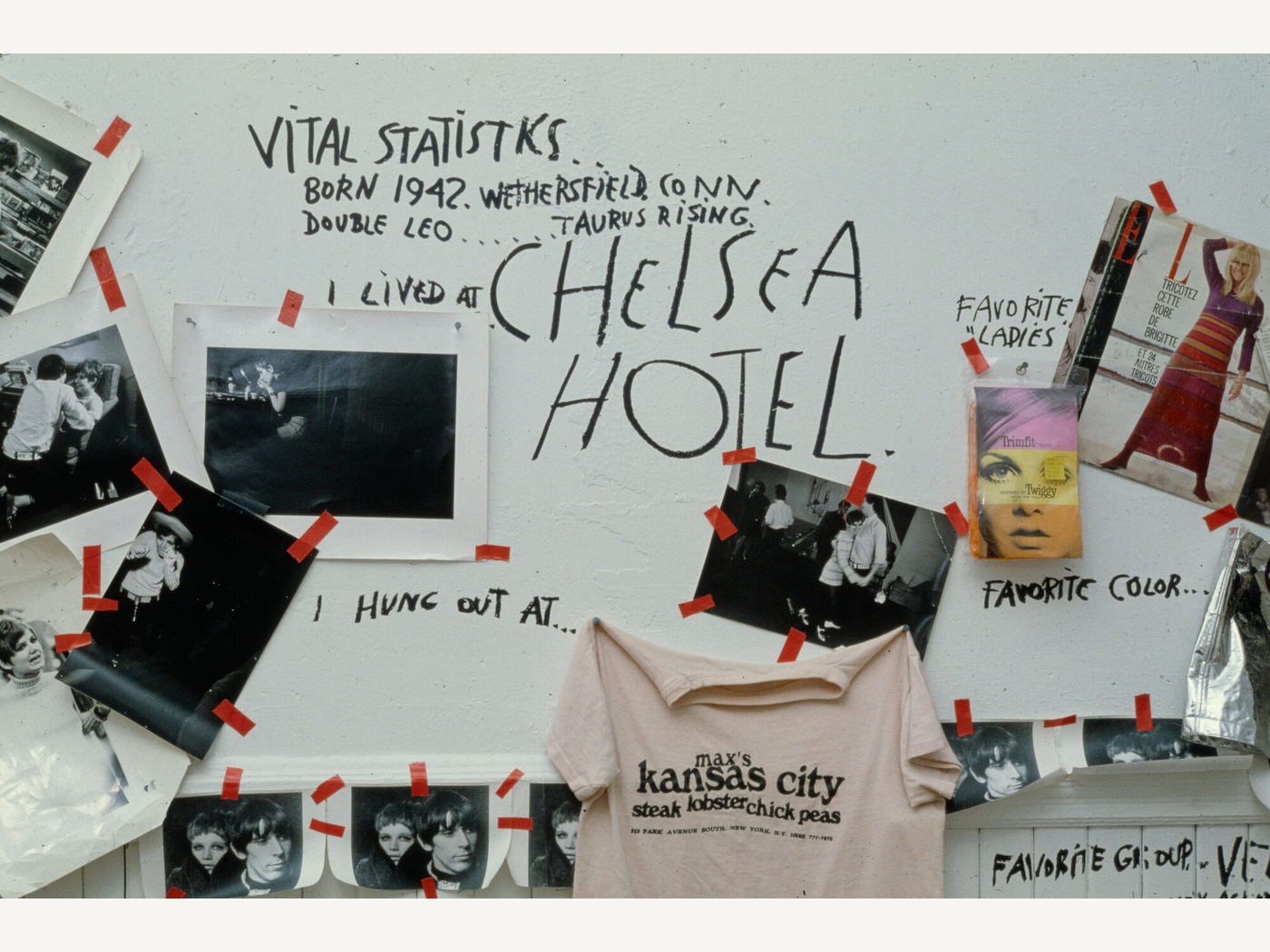
Step back through the other views in MoMA’s exhibition record. An arched doorway gives a glimpse into a space beyond the figures gathered at either side. Farther in, a low stand bearing garments sits out on the floor, with room around it. The slides in the museum’s archive let you see that separation even at a small scale. The close view of the T-shirt alone gives little hint of how far a visitor could stand from the walls.
The two arrows in Queens
For the museum’s fiftieth anniversary, curator Kari Rittenbach brought original objects, documents and partial reconstructions into the same exhibition. In a November 9 account of the preview, Galerie reported that Johnson had agreed to the reconstruction of the section about her wedding to musician John Cale. The distinction is visible in Steven Paneccasio’s photograph for PS1. A white stepped support sits against the wall. A sleeve falls over the front edge, and a small photograph bridges the two levels. The handwriting above gives the clothes on the support an order in which to read them.
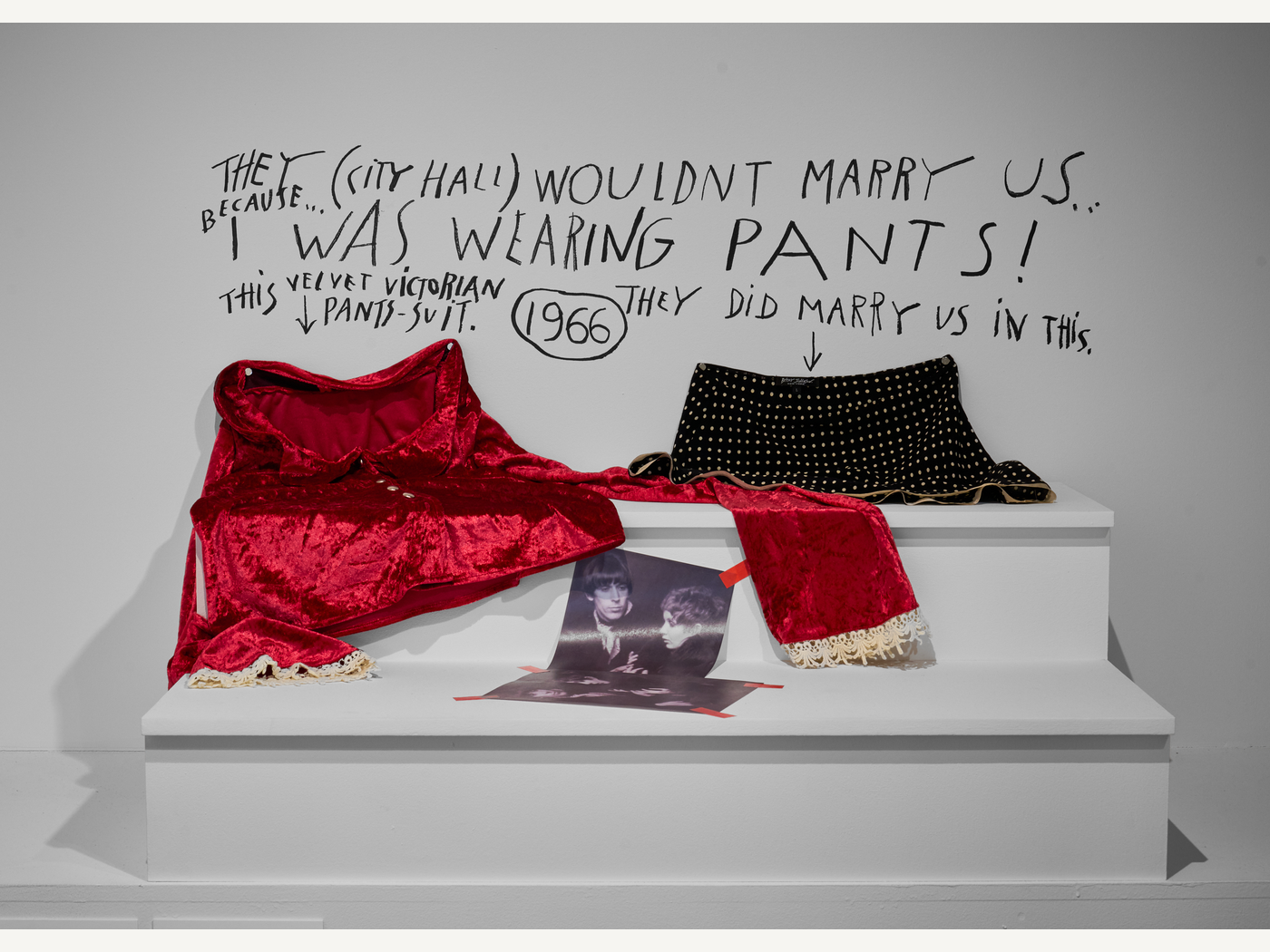
A visitor trying to date the clothes will come up against a discrepancy. The year circled on the wall is 1966. Writer Legs McNeil, who interviewed Johnson with Gillian McCain in 1996, dates the wedding to 1968 and gives Johnson’s account of changing into a miniskirt. In a caption, assign 1966 to the writing you can see. The dates of the two exhibitions are firmer ground. Johnson put her story into a gallery in 1983, and Paneccasio photographed its new arrangement for the 2026 show.
Paneccasio’s photograph documents where the objects sit now. It leaves open whether the same physical garments occupied the earlier stand and who wrote the lettering in the present room. The arrows give visitors a chance to test the designer’s account against the two pieces she chose. A reader who has heard Christopher John Rogers describe his checked outfit in Toronto’s Sunday Best will recognize the pleasure of looking back at the clothes once the maker has had a say.
Where to see both arrangements
MoMA lists seven period views of Johnson’s installation. Its archive folder of slides and contemporary clippings also preserves several views of the low stand. If one detail lies outside a published picture, the guide to comparing an exposure with its printed crop can help you decide whether to look for a wider frame or a different photograph altogether. Here, a view from the doorway answers a question that no enlargement of the Chelsea Hotel wall can settle.
The current exhibition in Queens runs through March 15, 2027. In front of the wedding display, start with the dark skirt and read upwards to the writing. Then follow the other arrow back down to the red velvet. The visitor makes the connection in two short movements, much as somebody once moved from a word to a shirt on Johnson’s crowded wall.