On May 22, 2019, trustees in Toronto approved a revision to the Toronto District School Board's student dress policy. The board records September 2019 as the month it came into effect. Those two dates answer different questions for a student getting dressed for school. To follow a proposal in your own district, trace one clothing provision from the version in force through the vote to the wording and start date your school sent to families.
Featured image generated with AI.
Find the rule that applied before the meeting
Write down the school, district or board and the precise activity in question. A note about hats during lunch at one middle school can easily be mistaken for district policy about hats throughout the school day. Check the name and number of the policy and the authority named on the document. A school handbook, a uniform choice made by a particular school community and a board-wide dress policy may all address clothing at different levels.
Save the version that was in force before the proposed change. Give your working copy the title, revision date and place where you found it. Find the exact paragraph about the item, the setting and anyone responsible for the decision. Copy the surrounding sentence if it limits the paragraph to certain grades, activities or premises. A rule concerning shop equipment, for example, may sit in a separate safety document with its own scope.
Start a chronology on one sheet with room for the document date, the action taken, the clothing words and the point still open. The document date may be earlier than the public posting date. A file updated the morning after a meeting might reproduce a motion written weeks previously. Keep the date on its face and the date you retrieved it. If the old text has disappeared from the board's site, ask its records office for the version in force on the day before the vote.
Read the agenda as an invitation to decide
Look for the meeting notice, agenda item number and attached draft. The short line in the agenda can be a title for a much longer staff recommendation. Check the attachment for its author, version and date. Record whether the item calls for discussion, consultation, referral or a vote. A recommendation from staff or a committee can be important evidence of what someone wanted the full board to do.
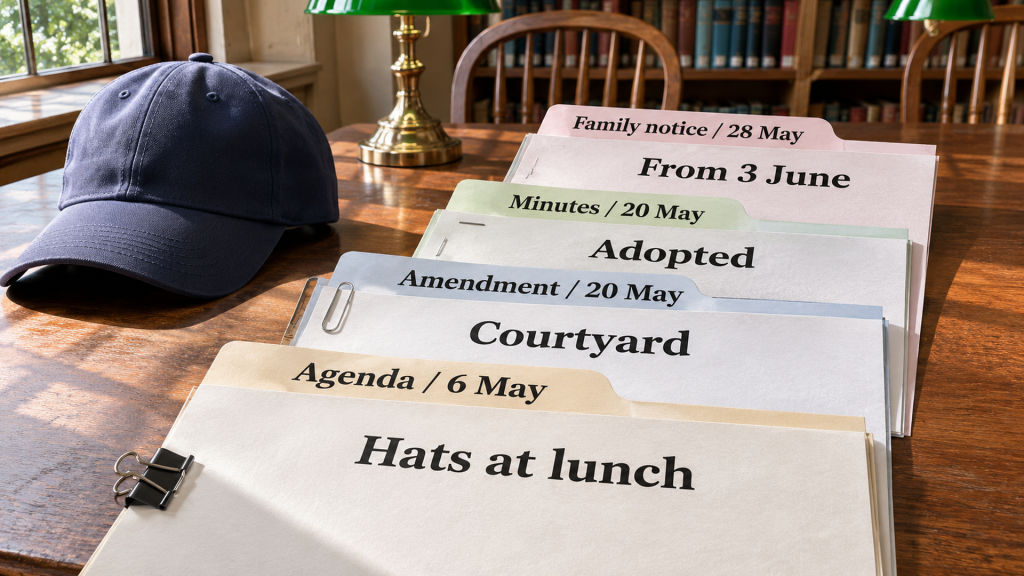
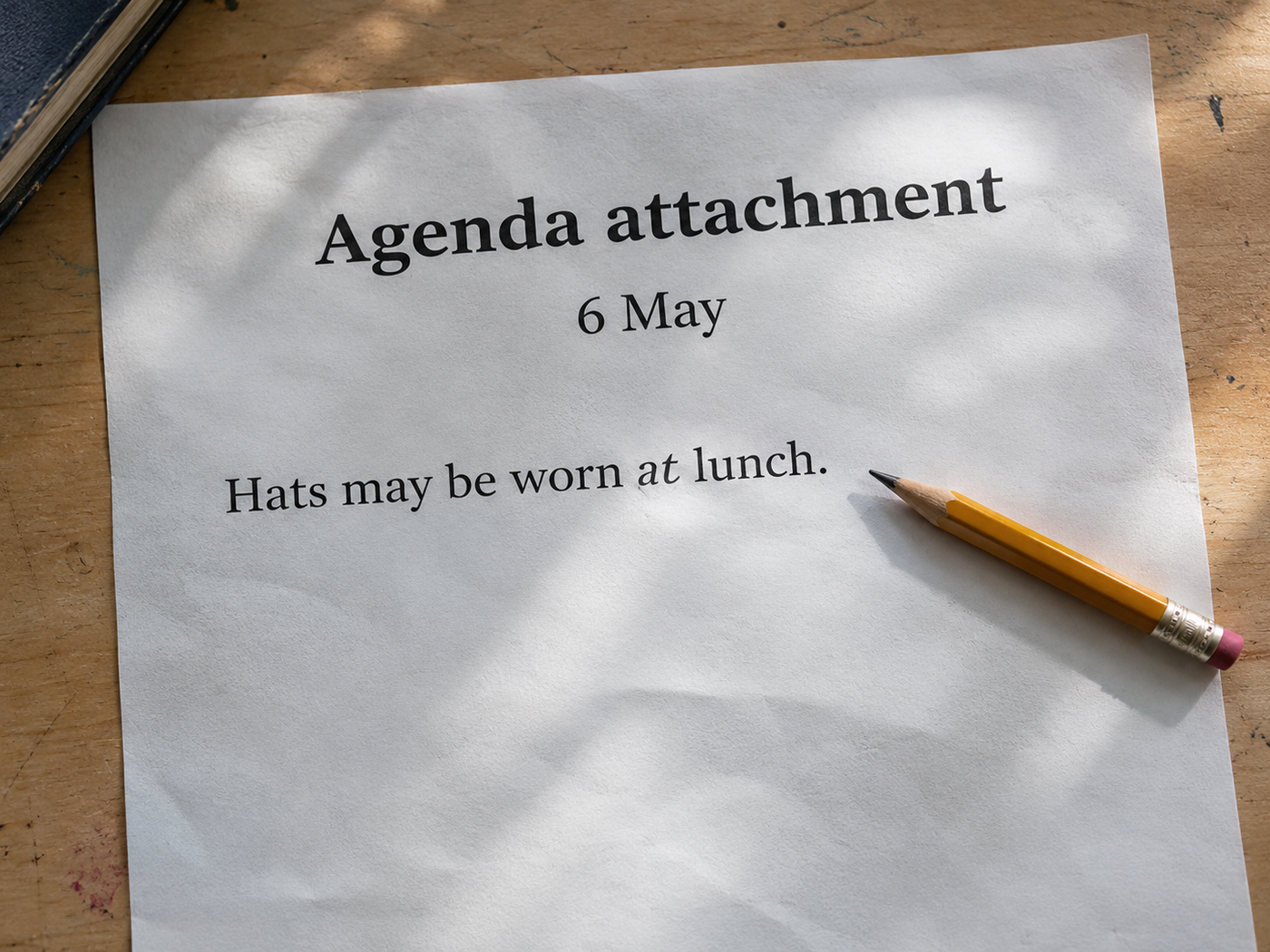
In the invented example pictured here, an attachment dated May 6 proposes the words “Hats may be worn at lunch.” Underline the item and the time of day. The sentence says nothing about a courtyard, a particular grade or a start date. In your chronology, write that these words appeared in the proposal and identify where. A student reading your account should be able to tell which of those questions the attachment actually answers.
Compare the draft with the preceding version a sentence at a time. Suppose the old rule said hats had to be put away during lunch. The proposal would change what students can do with a cap during that interval. If the old handbook said nothing about lunch, the proposal may be clarifying an unaddressed situation. Get the old wording before describing a permission as new. Ask whether a second language version or accessible format has also been updated if the school circulates the policy in several forms.
Keep an amendment attached to its own vote
During a meeting, someone may move an amendment to add a location, strike a phrase or send the draft back for revision. Record the amendment's exact effect and its outcome. Then locate the separate decision on the main motion. A board can agree to change a proposed sentence and still postpone or defeat the proposal as amended. A clip that ends after the first show of hands can leave the most consequential decision out of view.
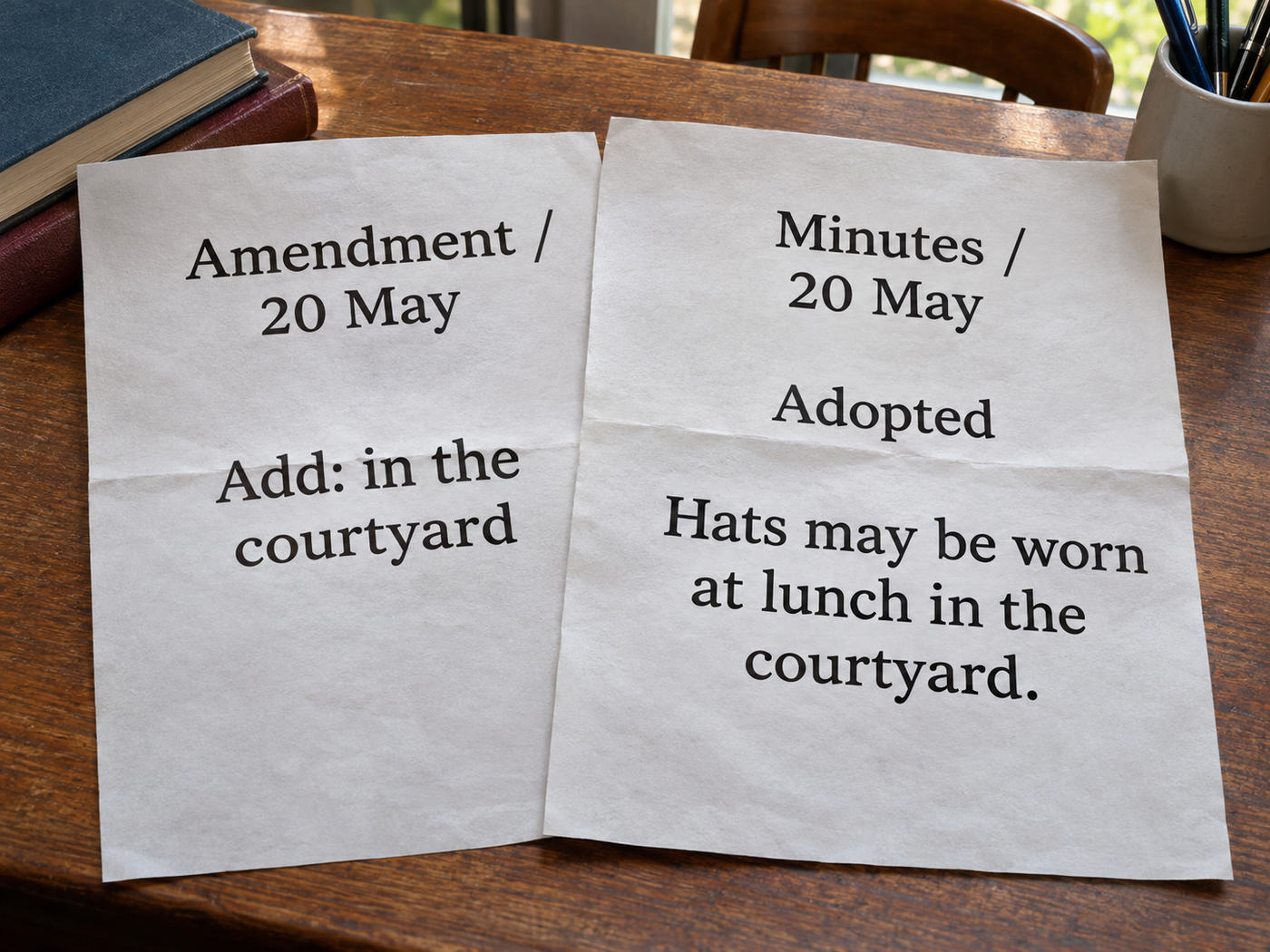
In the example, the amendment adds “in the courtyard.” The May 20 minutes record that the main motion passes with those words. Reconstruct the whole adopted sentence and compare it with the approved attachment. Hats may be worn at lunch in the courtyard. The unqualified permission in the May 6 draft would have covered a different set of places. A reader asking about the cafeteria now needs the applicable wording for that space, including anything the policy already said about indoor wear.
Check the status of the minutes. Draft minutes can guide you to a motion while you wait for the approved record. A board may publish a decision summary ahead of the final minutes. Give each its actual status and check back for corrections. If the minutes say a motion carried “as amended” but omit the amended wording, look for the referenced appendix or ask the board clerk for the final text. A blank in your notes cannot supply a missing phrase.
Put adoption and implementation on separate lines
Look for an effective date in the adopted motion, final policy or implementation notice. It might specify a date for the whole district, a pilot term at named schools, or a later decision before anything starts. Ask who is responsible for telling families and which edition of the handbook reflects the action. The Toronto board's public Student Dress information and the May 2019 board record let a reader distinguish the spring approval from the change taking effect in September. Those dates belong specifically to the Toronto revision.
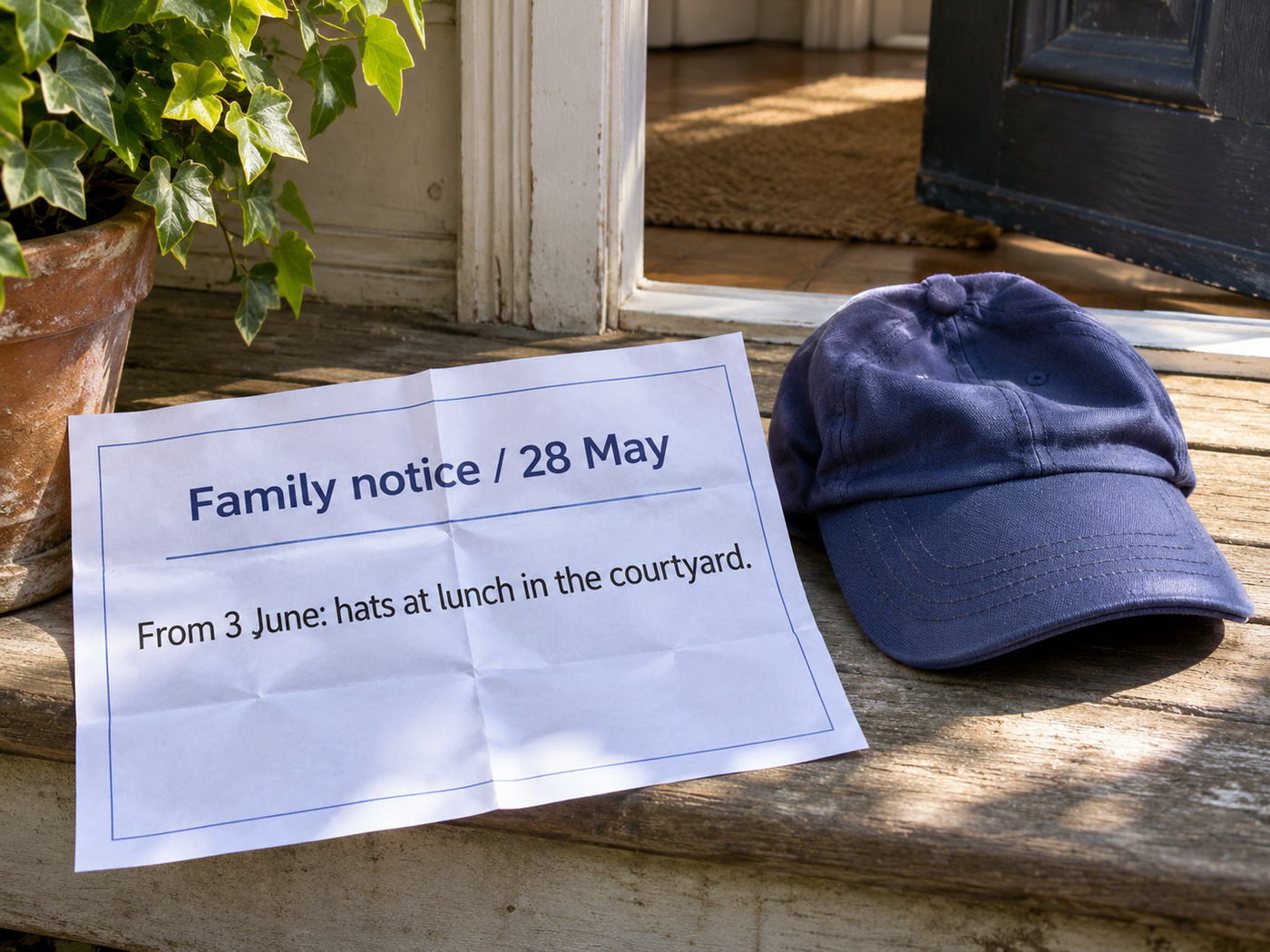
Return to the imaginary courtyard. A notice sent May 28 tells families the lunch provision starts June 3. The four dates now have different jobs in the record.
- May 6. The agenda sets out the proposal the board is being asked to consider.
- May 20. The vote adopts the narrower courtyard provision.
- May 28. The notice tells families about the outcome.
- June 3. The notice gives this as the day the new arrangement begins.
Keep the adoption and communication records together. A student choosing a hat for lunch on May 30 needs the date as much as the words. Preserve a copy of the notice and the approved policy it refers to.
A family communication may shorten a paragraph to fit a newsletter. If it omits the courtyard restriction, save both texts and ask the issuer which wording the school is communicating and whether it will send a correction. Record who responded, their role and when. Where two current documents still disagree, quote the disputed phrase in your account and name the office that can resolve it. Avoid assigning a resolution to a student or a teacher who has seen only one of the documents.
Ask what students actually encountered
Choose a question narrow enough for a firsthand answer. Did the student see the notice? On what day were they told where a cap could be worn? Did somebody point to the revised policy or simply say what lunch supervisors had been told? Ask separately about reading, hearing and experiencing a direction. A single lunchtime observation may tell you a great deal about one courtyard and very little about other schools in the same district.
Agree on consent, intended audience and credit before collecting a student's account, following the arrangements that apply to the student's age, school and project. Discuss the details that could identify someone in a small class even with their name withheld. A student can describe a change in routine without being asked to re-create a disciplinary incident. Offer to check the sentence attributed to them and verify that the quotation says what they wished to share.
If a public meeting recording contains a student's account, check what the speaker witnessed and what someone else told them before describing enforcement. Preserve their distinction between what happened to them and what they heard happened to a friend. Put practice in a separate part of the chronology from the wording adopted. A disagreement between the two is a specific question for the responsible school office.
Write the answer someone can use on Monday
Begin the final note with jurisdiction, item of clothing, place, time of day and effective date. Follow with a sentence describing how the rule used to read and a sentence describing the decision. Give the meeting date and item number, the final policy section, the school's dated notice and the office that handles practical questions. If that office offers a named procedure for asking for clarification or reporting a problem, check its current instructions before including it.
Read the note against three ordinary situations. Can someone tell what it says about lunch in the courtyard, lunch indoors, and a day before June 3? In the example only the first situation after the start date is directly settled by the new sentence. A careful account will lead the other readers back to the applicable earlier or adjoining wording. Hand the chronology to someone who missed the meeting and ask them to find the vote and the start date. When they can do that without your help, they can also spot the next amendment when it comes before the board.

By Idris Vale