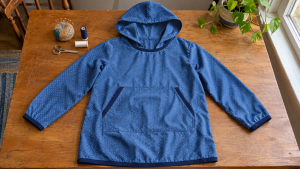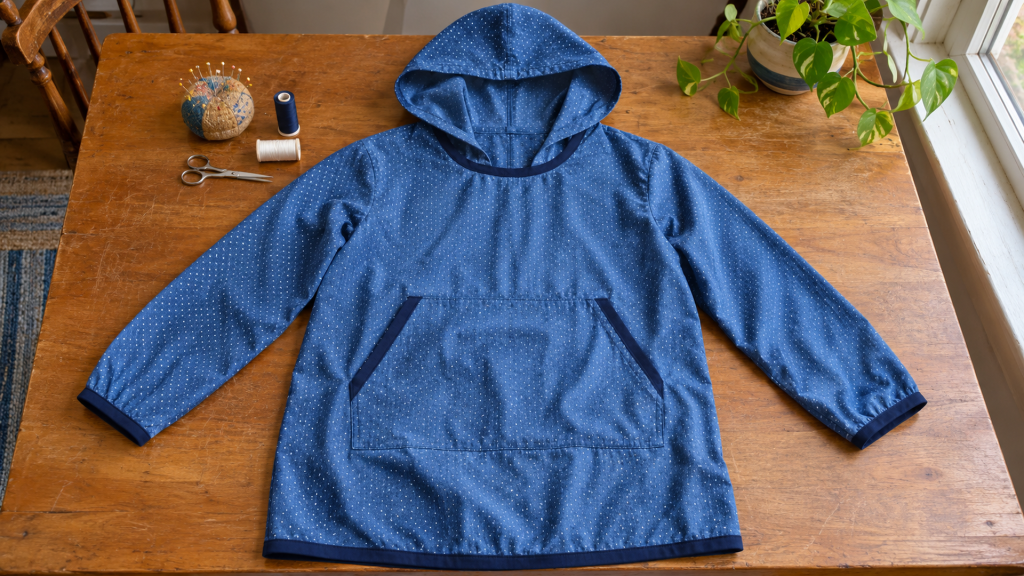
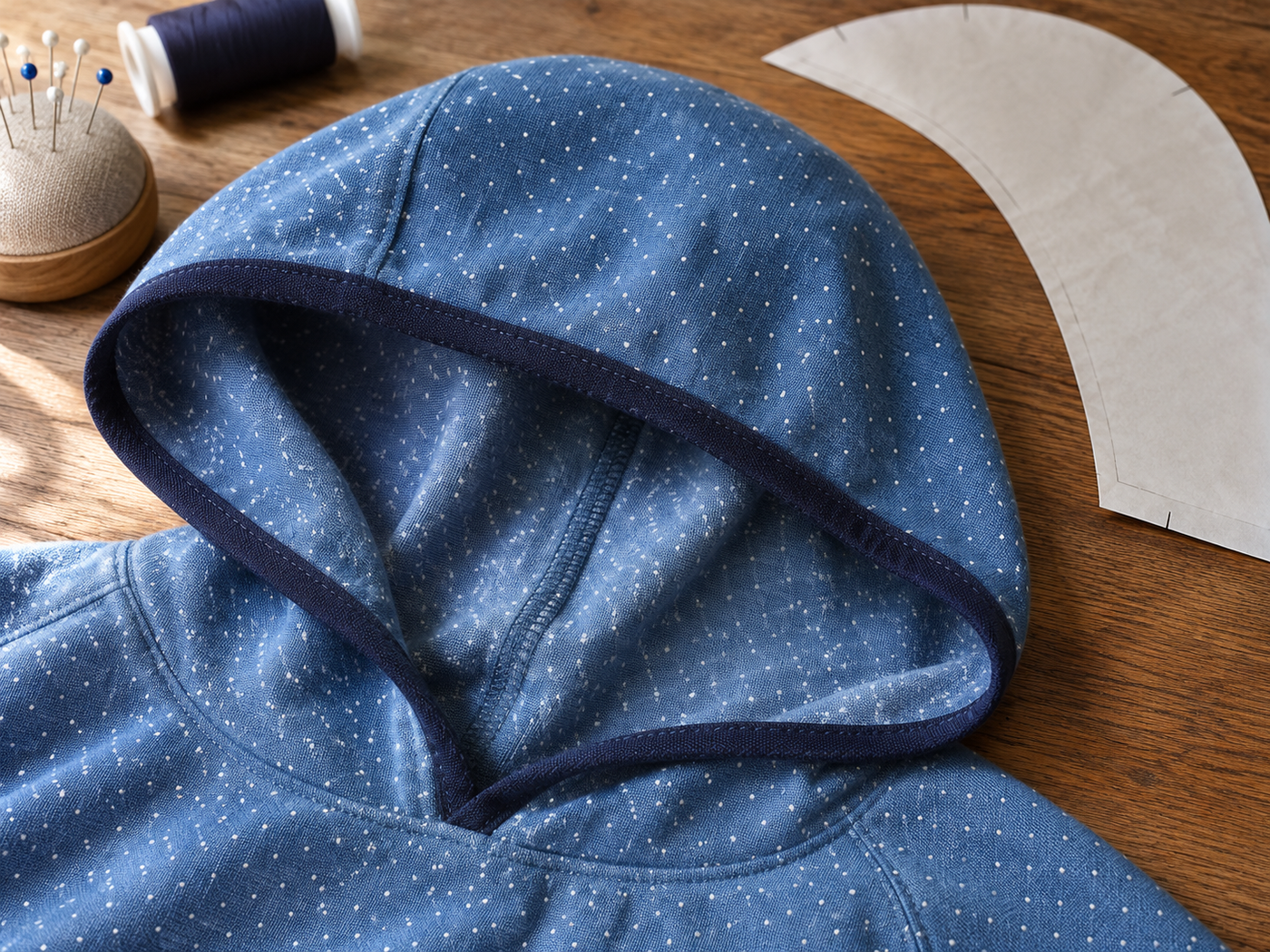
A generic garment study shows the hood, sleeves and front pocket of a cotton qaspeq. AI-generated image.
At the Cama’i Dance Festival in Bethel, Alaska, in March 2026, Nikki Corbett told a reporter who had made the qaspeq she was wearing. It was one of her grandmothers. Corbett was there to teach other people to sew the hooded garment. She could have worn something fresh from her own machine. Instead, the person at the front of the class had come dressed in another woman’s work, and she could give that woman her place in the family.
The featured illustration shows a generic cotton qaspeq. The family garments are described in Nikki Corbett’s published accounts. AI-generated image.
The English word in the title, kuspuk, comes from the Yup’ik word qaspeq. Corbett uses qaspeq in her own writing and teaching. The National Park Service describes variations in the sleeves, trim and cut of garments known in English by that name. In Corbett’s family there is a particularly tangible link. One qaspeq made by a grandmother gave her the basis for the sizes in which she cut her own.
What passed through her mother’s hands
In an October 2020 interview with KDLL, Corbett described having qaspeqs made by her grandmother and her auntie. They had belonged to her mother before they came to her. It is possible to follow the garments through that sentence without knowing the colour of a single one. Someone did the sewing, someone wore or kept the result, and Corbett could still put her hand on it years later.
KDLL also describes a recording in which Corbett introduces a lesson on adding trim. She wears a purple qaspeq with blue trim and patterned patches. The colour belongs with that particular recording. Corbett’s account of the pieces that came through her mother belongs with the family garments. Put those two details on separate caption cards and it becomes clear how easily a lovely blue trimming could acquire the wrong maker in a retelling.
In another interview about her sewing, Tribal Business News recorded a detail that could survive a complete change of colour. Corbett had based her sizing system on one of her grandmother’s qaspeqs. A later garment could be sewn from a print its original maker had never seen and still carry something of her judgment about how much cloth a person needs. Corbett has identified that link in the cut. The accounts leave open whether the piece she used for sizing was the one she wore in Bethel.
Learning the shape with a hand
In June 2016, Corbett wrote about learning to measure a qaspeq with the body. Hands, elbows and thumbs could give the maker her measurements. She thanked Bethany, who had learned from teachers in Toksook Bay and shared the method. In the same entry Corbett called the relative who helped her make her first qaspeq her “cousin/auntie/sister.” That choice of words gives the reader a closer sense of who sat beside her at the sewing machine than a single branch on a family tree could do.
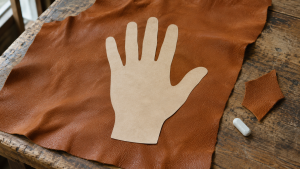
Ten years later, reporter Samantha Watson sat down at a machine in Corbett’s Bethel workshop. This time Corbett was the one showing a learner how to find a curve. Watson describes the teacher making a goose shape with her hand for the hood and the students tracing their own hands. Imagine two people at the table, each following that instruction. They can remember the same gesture and leave with differently shaped lines. Watson’s account lets us see what Corbett passed on in the room. The curve Watson carried home began with a gesture she saw Corbett make.
Who gets to name the maker
For someone recording their own family clothes, there is a question worth borrowing from that afternoon in Bethel. Who made the one you are wearing? Let the wearer supply the relationship in their own words, and ask which detail they would like to keep with the story. When listening to a recorded clothing memory, keep the speaker’s answer with the question that drew it out. A picture of a hood can show its curve. Corbett could tell the people at Cama’i that her grandmother had made the garment she wore that day. Then she bent her wrist, and the person at the next sewing machine had a hood of her own to draw.