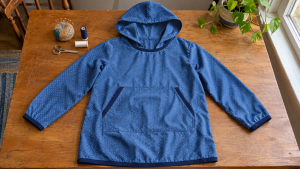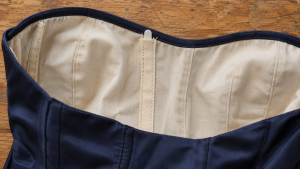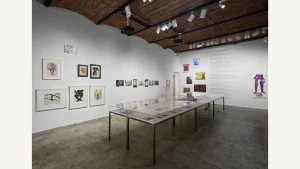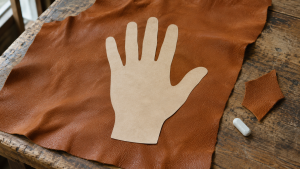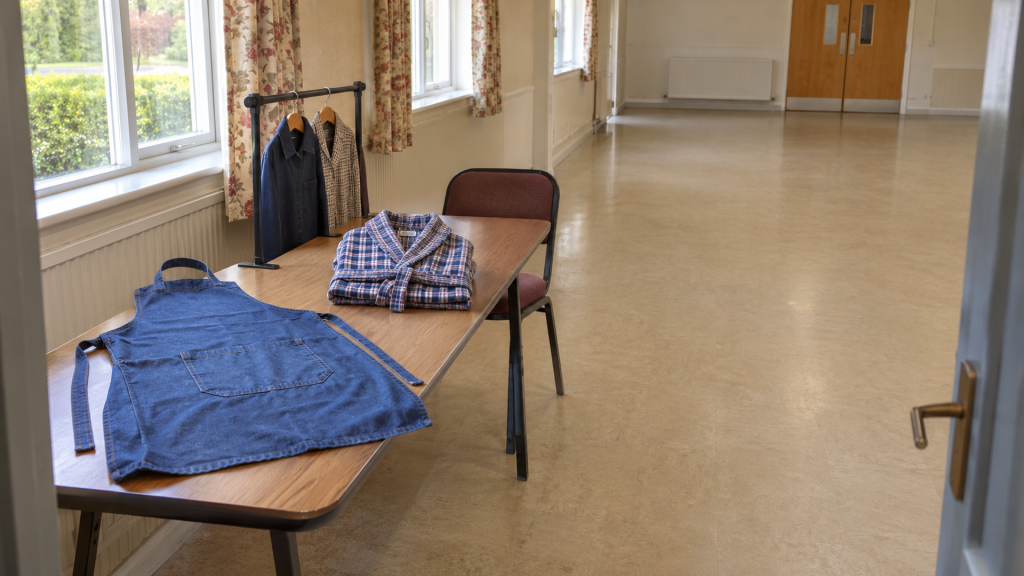
Put the work apron near the edge of the table with its pocket facing the person who sits down. Let them run a finger along the seam, put the apron down and go on their way. If they can do all three without giving a name or answering a question, you have the beginnings of a good clothing handling session. Add a lender’s instructions for each garment, a clear route through the room and a separate place for anyone who wants to record a memory.
Featured image generated with AI. The table is an example of a room arrangement.
Decide what a visitor’s hands can do
Ask the lender to show you one permitted action with the garment laid out. “People can touch it” leaves a lot to settle in a crowded room. May someone lift the pocket flap? Put a hand inside? Tie the tapes? Try the apron on? Write the answers beside the item’s description. If the lender has promised one kind of handling and you want another, make a copy that will stand up to it. A visitor deserves to know which piece they have in their hands.
Imagine a family lends a blue apron with a repaired patch pocket. Its owner is happy for fingers to rest on the pocket while the apron lies flat. A tape at the waist has started to part, so lifting the apron by its ties is outside the loan. Lay the ties back from the front edge and place a small instruction by the pocket. Keep the family’s name off the card if they have agreed only to lend the apron. Permission to handle a piece tells you very little about permission to repeat its history.
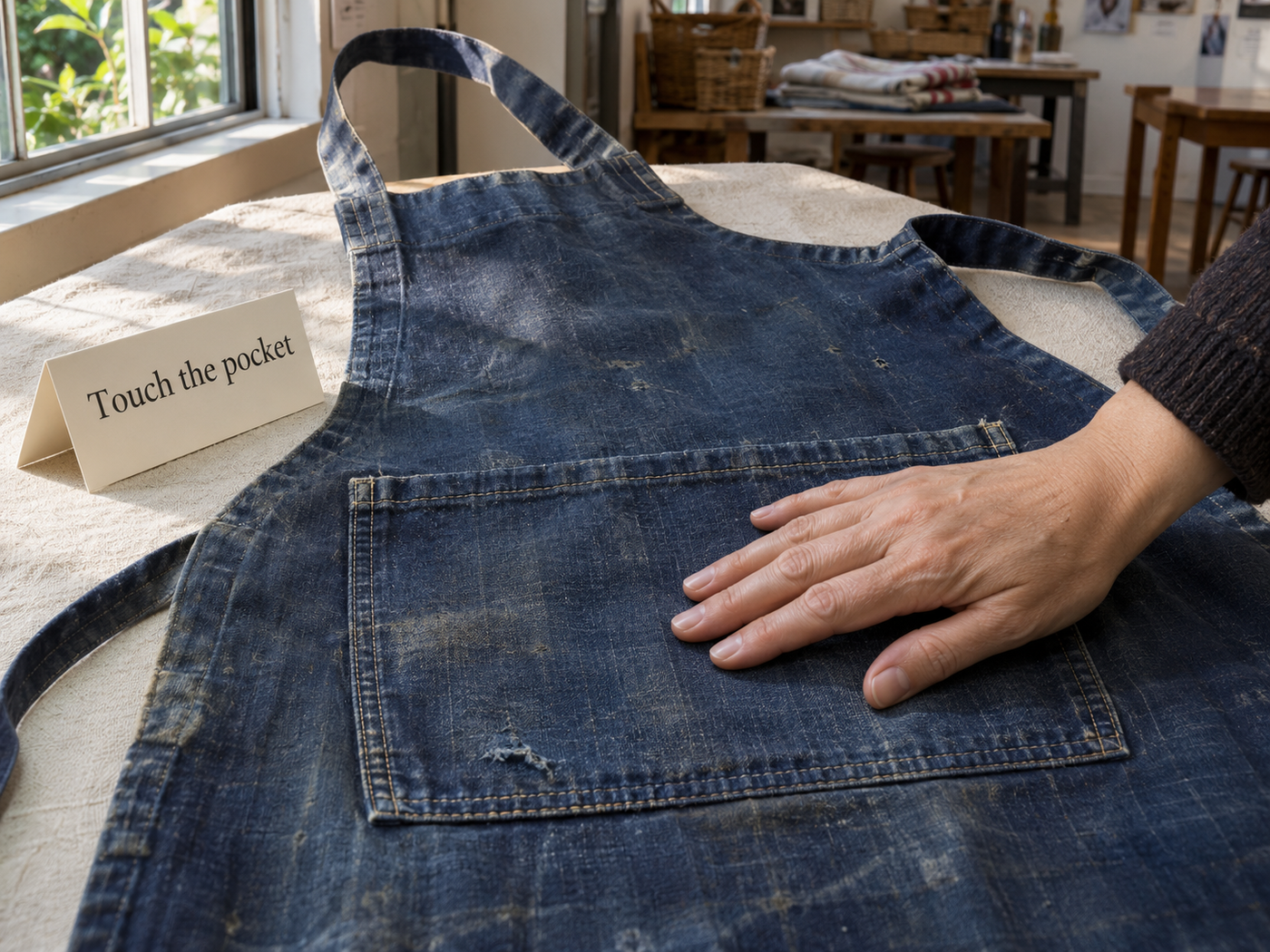
A second apron, cut from sturdy cotton, can go on the rail. Visitors can tie this one around a coat or lay it across their knees to see where the pocket falls. Tell them the pocket was copied from the loan and that the new cotton feels stiffer. If people want to compare a particular weave or finish, a set of labelled handling samples gives them more to work with. Keep the original available for the small action its owner approved.
Make a place to stop and a way to pass
Build the table from the visitor’s side. Sit where the first person will sit. Can you see the pocket and its label at the same time? Does reaching it bring your sleeve across someone else’s loan? Move the garment toward you until you can touch it with your forearm supported. Then stand and try the same action. A second place at the other end can hold the dressing gown with a cuff turned back. Leave a piece of clear tabletop where either visitor can put something down.
A row of chairs can turn a friendly table into a queue. Try one movable chair facing the cloth and one away from the busiest conversation. Ask the venue which doors will be open, where a mobility aid can turn and whether someone can go from the entrance to a seat and back without asking others to move. Walk that route with the room set up and the chairs occupied. Ask someone who uses the space to try it if they wish. Their account of a tight corner is worth more than a guess made in an empty hall.
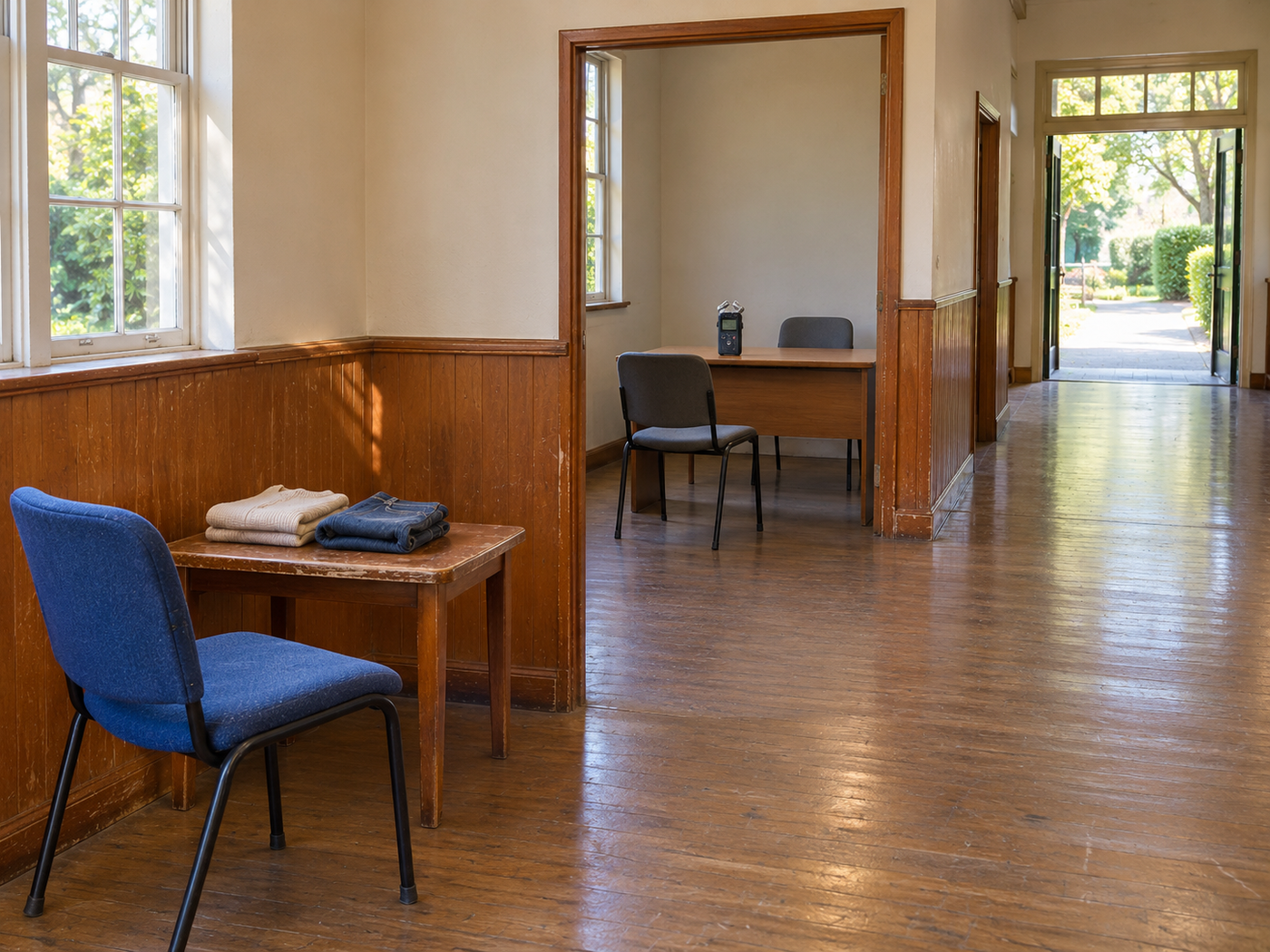
Give the welcome in more than one way. A short card can say that visitors may touch the marked pieces, listen or leave whenever they like. Let the host read it aloud or point out each option. Keep the room’s ordinary exit in view and the recorder off the handling table. If the venue has only one noisy room and no place for a private conversation, offer an appointment elsewhere to anyone who wants to record. The table can run for a whole afternoon on touch and conversation alone.
Follow one quiet visit
Picture someone arriving while a volunteer is talking about a dressing gown. The visitor picks the seat by the apron. The host points out the card, gives the pocket a light touch to demonstrate and steps back. There is no round of introductions to wait through. The visitor can compare the raised seam with the flatter cloth a finger’s width away. That is already an encounter with the garment. Leave enough silence for it to take as long as they like.
Keep a few prompts that start with something a hand can find. Where does the pocket open? Could you reach it sitting down? Which side of this cuff would have touched a wrist? A person might answer by showing you a movement. They might say their own apron had two pockets, both much lower down. Follow their choice of words. “Would you like to say more about where they sat?” gives them room to continue or leave it there. Guessing an occupation, an age or the person who washed the apron can close that opening quickly.
The host can also help a visitor take part without handling a loan. Turn the copy around, describe the pocket or hold the cuff at a comfortable viewing distance. Ask before moving anything close to their body. If someone looks ready to leave, clear the path and let them have their coat. Asking for a story at the door undoes the freedom you offered at the table.
Give a spoken memory somewhere to go
When a visitor starts a story, keep the recorder off. Ask whether they would like an ordinary conversation, a note they can check, or an invitation to the recording desk. One person can speak freely to a neighbour and still want none of their words written down. A relative’s enthusiasm about a story is a good reason to offer its teller a choice in private. It gives the teller a chance to decide how much of a family detail to share.
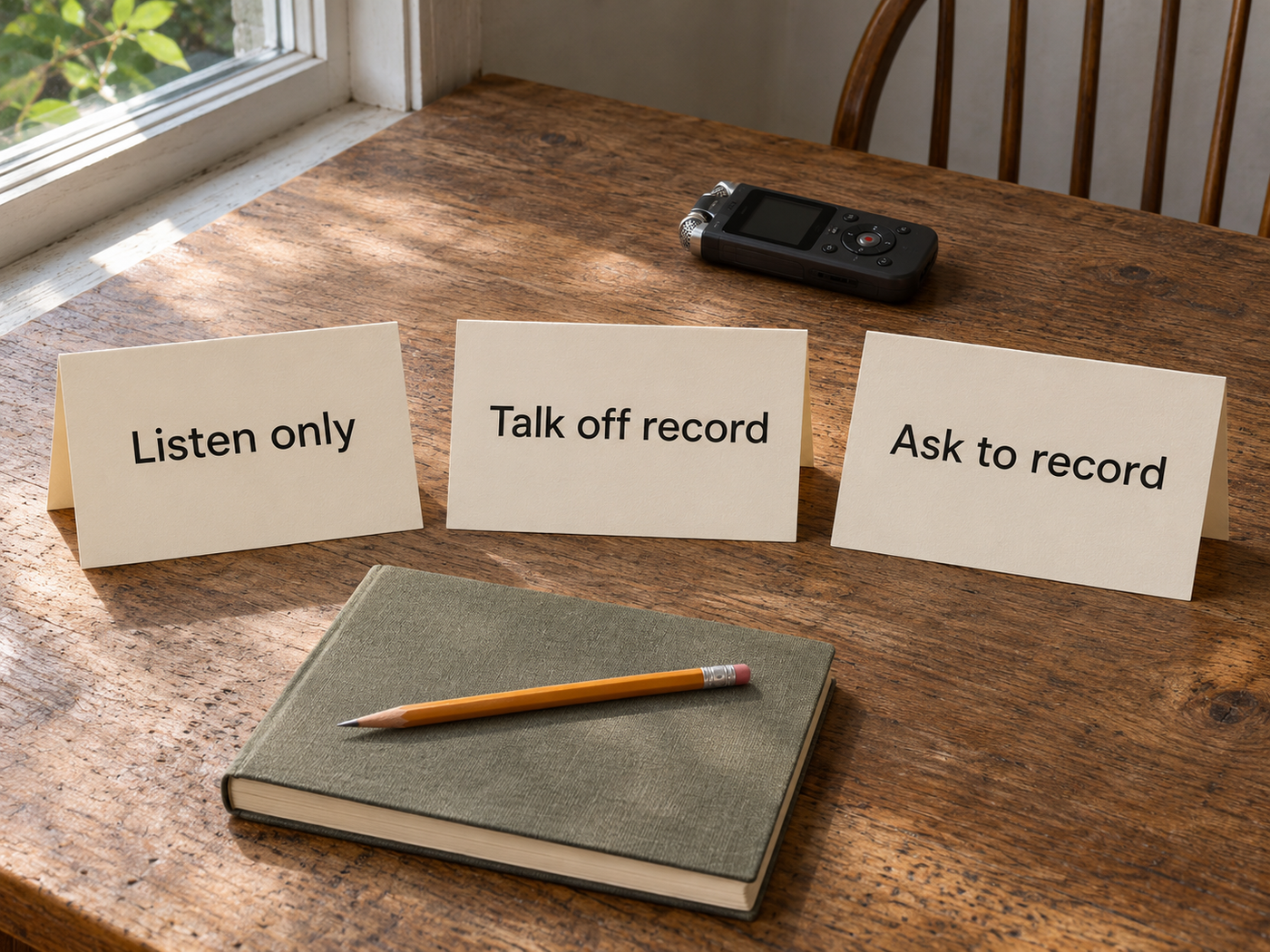
At the separate desk, explain who would hear the recording, where it would be kept and who would see any name attached. Give concrete options that your group can honour. A clip played in a room of invited members, a transcript kept by an archive and a clip put on a public website have different audiences. If your group offers only one of those, describe that one plainly. The Oral History Association treats consent as a continuing conversation and asks practitioners to obtain explicit permission for public use. A yes to starting the machine leaves the choice about a public audience open.
Agree on a way for the speaker to check the passage. Offer to play it back, read a transcript aloud or send the chosen extract by a method they use. Explain which changes you can still make, the date you need to hear from them and what happens if you hear nothing. For a session set up around approval before sharing, an unanswered message leaves the clip on hold. If the speaker mentions someone else’s private business, offer a shorter extract and let them hear the join. For help keeping the wearer’s own words and the interviewer’s interpretation straight, use the guide to listening for dress details in an oral history.
Practise one change of mind before opening the doors
Try a rehearsal. Give a volunteer a practice recording number, then ask them to ring the contact on their copy of the agreement and withdraw just the sentence about a neighbour. Can the organiser find the right clip, identify its transcript, set both aside and confirm what happened? If a partner archive would hold a copy, establish who there handles the request. Give contributors an ordinary way to reach a named person later. A slip that says “contact the project” is difficult to use after the posters come down.
Give an equally plain answer about the limits of withdrawal. Your group may be able to replace a clip on its own website. Someone who already downloaded it may still have a copy. Say this while the speaker is choosing an audience. Keep contact details apart from the public label and restrict access to those doing the agreed work. Someone who has come only to look at a dressing gown has no reason to appear in a visitor photograph, an audio file or a story list. Put the group’s arrangement about personal photography where people first approach the cloth.
Close the table with the lender
When the last visitor leaves, put each loan beside its arrival note and look again at the part people handled. National Museums Scotland’s handling guidance recommends supporting textiles as they are moved. For the apron, lift the supported body clear of the table and keep the waist tapes with it. If the repair has opened, put the piece aside, record what you can see and tell the lender. Let them decide what should happen to their garment. Return the copy to its own bag so a well-meaning helper cannot swap the two.
The handover has two parts. The lender gets the apron back in the agreed condition or hears exactly what changed. Each person who chose to record gets the promised chance to hear or read their contribution. A visitor who sat with the pocket for a minute and left quietly owes the group nothing further. Leave that place at the table free again next time.

By Eli Fenner