Begin with one bundle, one operation and one pay period. Multiply the number of units credited for that operation by the rate in force for that unit. Then look for the resulting entry, or a group that includes it, in the worker’s own pay record. A ticket can tell you a great deal about a sleeve seam while leaving open how long someone worked or what they took home that week.
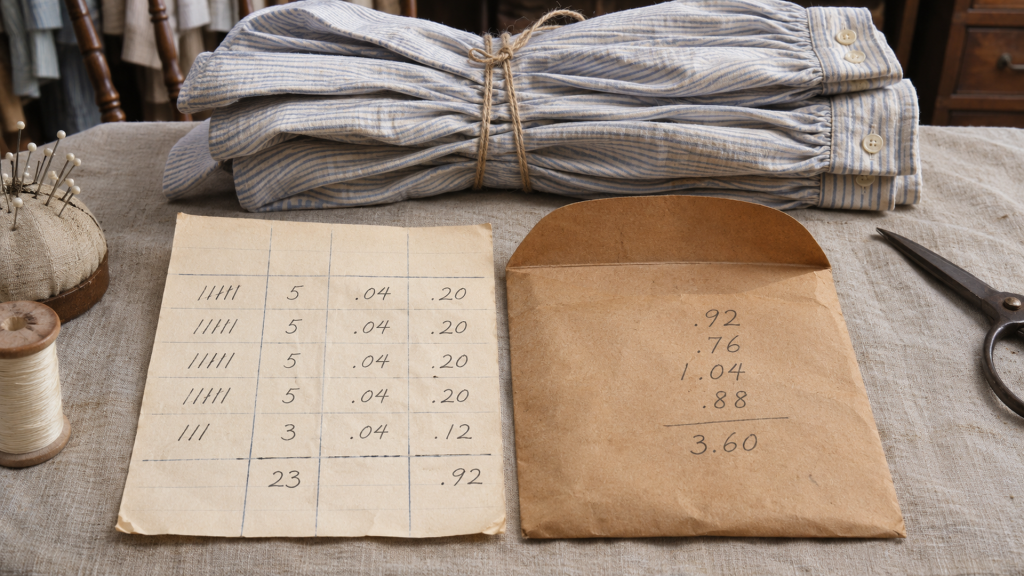
Featured image generated with AI. These invented work papers illustrate how to compare two kinds of record.
Imagine finding a small ruled slip inside a pay envelope in a family sewing box. Someone has written a count on the slip. The envelope has another figure in nearly the same ink. Save the arrangement in which they were found, including any folded corner or writing on the back. Being kept together is a reason to test a connection. A matching shop, period, operation and bundle number can turn that possibility into something much firmer.
Give each piece of paper a name
Start a record for the ticket and a separate one for the envelope. Copy the wording of the shop name, date, worker number, operation, quantity and rate exactly as each survives. Put your own expansions in a second column. If the slip says “slv,” keep those three letters there even if someone in the family has always called the job sleeve setting. Closing an underarm seam and sewing a sleeve into a shirt are different operations with different possible rates.
Dates can describe the day a bundle was issued, completed, checked, credited or paid. Look for the heading over the figures before assigning the date to the work. A Friday envelope might cover work accepted through the preceding Wednesday. A surviving bundle ticket from Thursday could belong to the following pay period. Find the period ending date or a run of neighbouring envelopes before moving the ticket across that boundary.
The Smithsonian’s National Museum of American History preserves the production notebook Yue Jin Wu used to compute pay in New York City in 1995. Its collection record gives the notebook a setting that a loose page by itself would lack. Borrow that discipline when describing a family document. Write who kept it, who passed it on, and what you know of the shop from this particular record. Keep identifying numbers off any copy intended for circulation unless you have the holder’s permission.
Find the unit that actually earned the rate
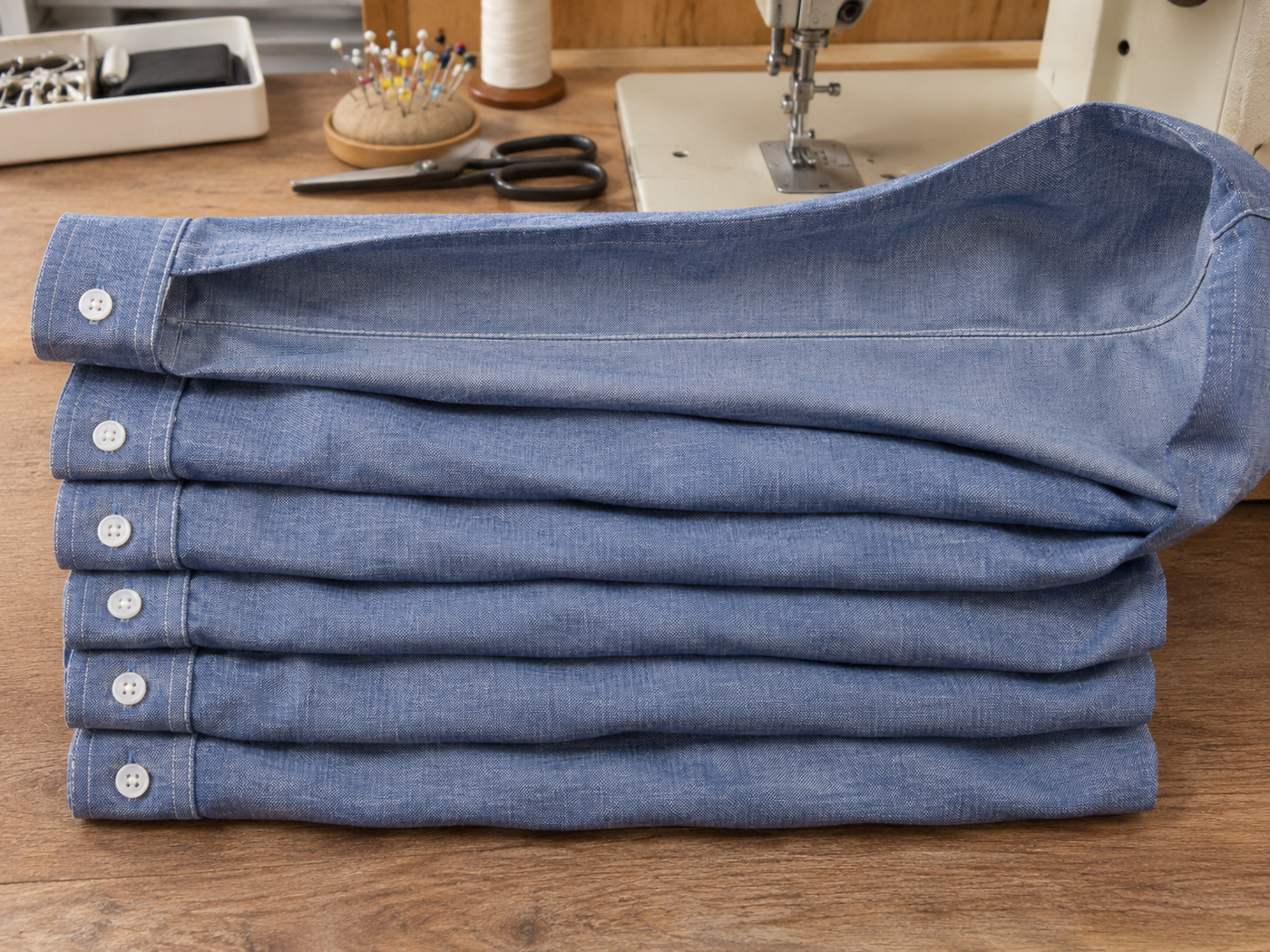
Read along a single row from the operation to its unit. A completed sleeve, a pair of sleeves and a dozen operations are three different counting systems. A bundle of twelve shirts may mean twenty-four sleeves, but each sleeve can pass through several hands. A worker who closed the sleeve seam need not have cut the piece, attached its cuff or set it in the armhole. The unit is the event the shop agreed to count for this operation.
Look for a rate card, a piece list on the reverse, another ticket that spells the operation out, or a worker who recognises the code. Ask a speaker how the units were counted in that shop. Were they counted on leaving the machine or after examination? Who kept the rejected pieces? With permission, record their words and the date of the conversation. If you are working with a recording, keep a time-coded note of the operation as the speaker remembers it so another listener can hear the distinction.
A small sketch can settle a large misunderstanding. Draw the shirt sleeve flat and put a short line over the seam that was sewn. Record where the operator picked up the piece and what state it was in on leaving the machine. If the interpretation rests on the ticket alone, put a question mark beside the seam until someone or something identifies it. A photograph of a similar shirt can show where a seam sits without establishing the job on this ticket.
Work one bundle through to a credit
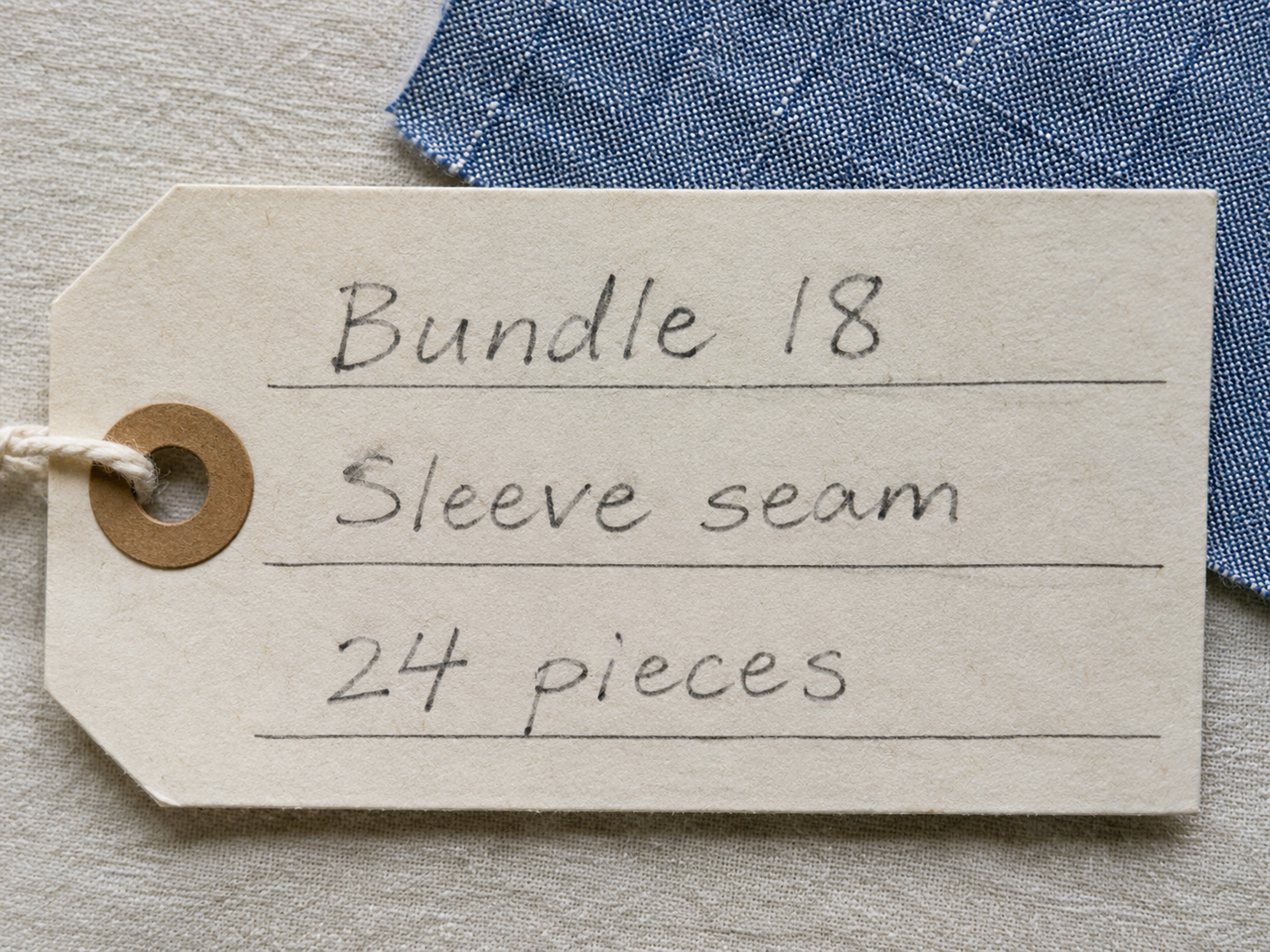
Use a made-up worked example to test your arithmetic. In this exercise a workshop records US dollars, credits each accepted sleeve seam at 15 cents, and identifies the lot as bundle 18. The issue ticket says 24 sleeves. The check sheet lists 22 accepted in the current pay period. The line for that operation should contribute 22 times $0.15, or $3.30, provided the rate belonged to that worker and pay period. These numbers illustrate the reading method and carry no historical wage claim.
The issued count would have produced $3.60 at the same rate. That thirty-cent difference is a question with a physical scale. You are looking for two seams, a correction of two units, or a change in how the units were credited. Look first for a reject slip, a carry-forward or a second check sheet. Writing “two rejected” before you find one of those records would give the discrepancy a cause the documents have yet to supply.
Change the unit and the whole calculation changes. Suppose a separate ticket lists 24 accepted sleeves at $1.80 per dozen. Convert 24 sleeves to two dozen, then multiply by $1.80 to get $3.60. Writing the conversion on the sheet helps someone catch the error if a figure originally read as a price per piece turns out to be headed “doz.” Keep the original currency and decimal convention visible when typing up the calculation.
Bring the pay envelope into the same period
Examine the part of the pay record that credits earnings before any deductions. The envelope might carry only a total. A slip inside it might group several bundles under a single operation. List the other tickets you can actually place in the same period and add their calculated credits. If their sum falls short of the line on the slip, write down how many tickets survive. A partial set can support a single bundle calculation while leaving the whole weekly total unresolved.
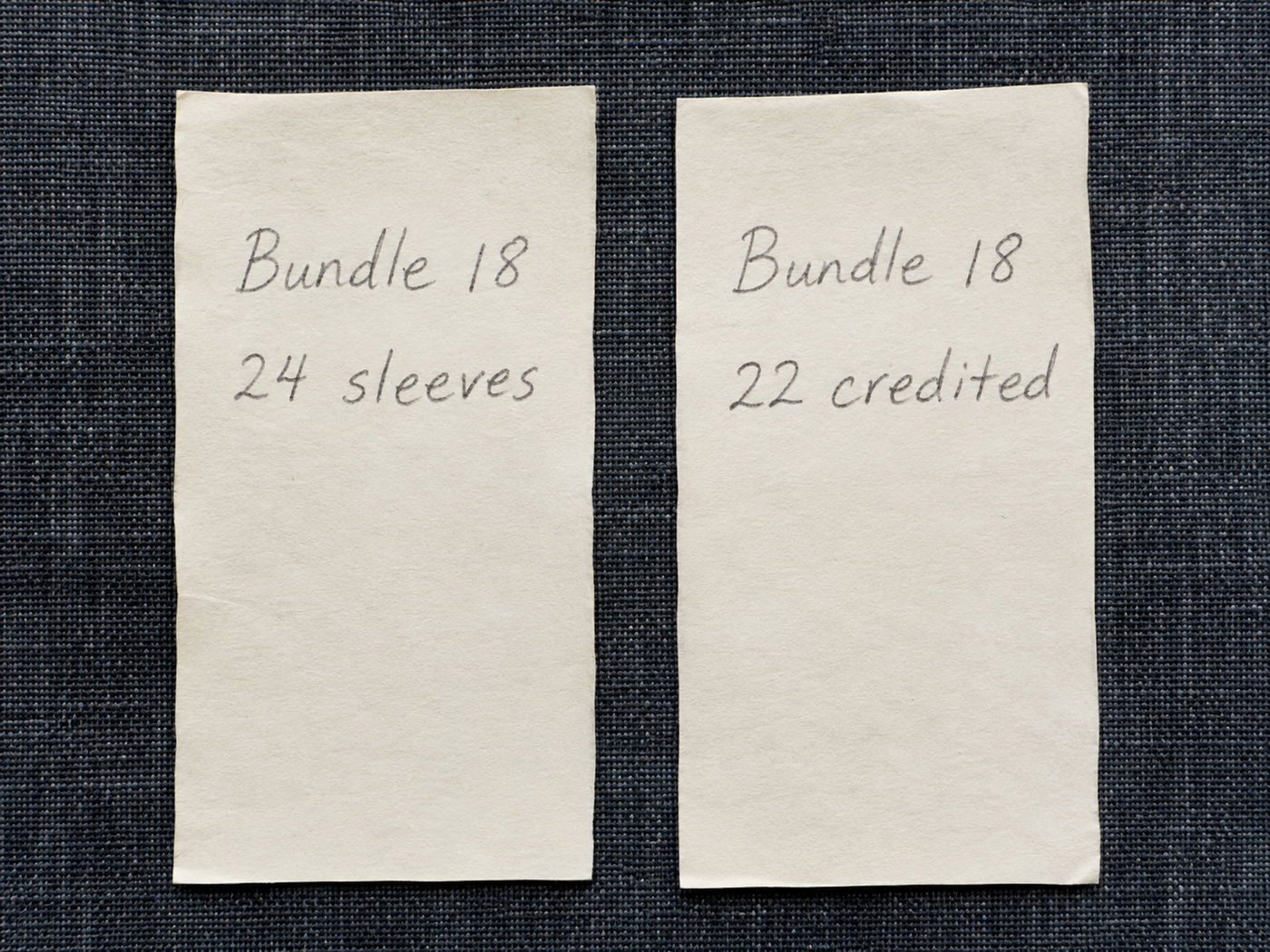
In the fictional case, imagine a later pay sheet that credits two more sleeve seams and repeats bundle 18. It changes the reading of the first period. You can now describe 22 credited there and two credited later, provided the later sheet carries the same operation and rate. Keep both dates in the account. Folding the two entries into one figure for the earlier week would erase precisely what the second document recovered.
Try laying the records down in the order each answers a question.
- The issue slip fixes the number of pieces that reached the operation. Copy its bundle identifier and the shop’s name for the job.
- The acceptance record fixes the number credited to the worker in that period. Keep a rejected or delayed count with its stated reason if one survives.
- The pay entry lets you locate the credit among other earnings. Note whether it shows this bundle separately or includes it in a larger sum.
Deductions need their own lines. Copy the description as written, the amount and the pay record on which it appears. A small difference between a bundle calculation and the cash in an envelope does not identify a deduction. There may be several bundles, time-paid work or an adjustment carried over from another period. If a label is illegible, preserve the amount and its position without guessing what was withheld. A later explanation can be added with its source.
Give the worker room to correct the reading
A person who handled the work may distinguish a bundle issued to a team from the amount credited to one machinist. Start with the paper in front of them and ask where they would have put their mark. Someone may remember counting pairs by touch, or receiving pieces bundled in dozens and being credited individually. Invite them to describe the gesture before introducing the unit you expect. If two people remember differently, retain both attributions and the period each person worked.
Protect the boundaries of the evidence when the story goes wider. A ledger covering a whole shop can give context while keeping individual workers anonymous. A worker’s ticket can establish one credited operation with great precision, yet say little about the price of a finished shirt. If a second set of figures is organised by finished units, read the workshop’s accepted-garment count on its own cost sheet before trying to relate those numbers to individual pay.
Leave a calculation another reader can reopen
Write a final note that someone else could check with the originals. Give the shop and period if known, the worker identifier you have permission to use, the operation as written, the interpreted unit, the accepted quantity, the source of the rate, the multiplication and the matching pay entry. If the shop name cannot be recovered, say where you looked and describe any mark that might yet identify it. A future reader may have the next envelope in the series.
Close the folder on a sentence of the right size. In the example it could say that the records credit 22 sleeve seams from bundle 18 at 15 cents each in the first period and that a later sheet accounts for the other two. If the later sheet never appears, stop at the $3.30 credit and name the missing record. The question you pass on is concrete enough for someone with another slip of paper to answer.

By Nell Aster