Date the shop advertisement, identify the exact book and stamp, and look up the rule that applied to that type of shoe on that day. Those three records can tell you whether a customer needed a ration coupon for the advertised footwear. To say that a particular person bought the pair, look for a receipt, account entry or another record of the completed sale.
Featured image generated with AI. The advertisement ran in Wilmington. The book is a separate Wisconsin example.
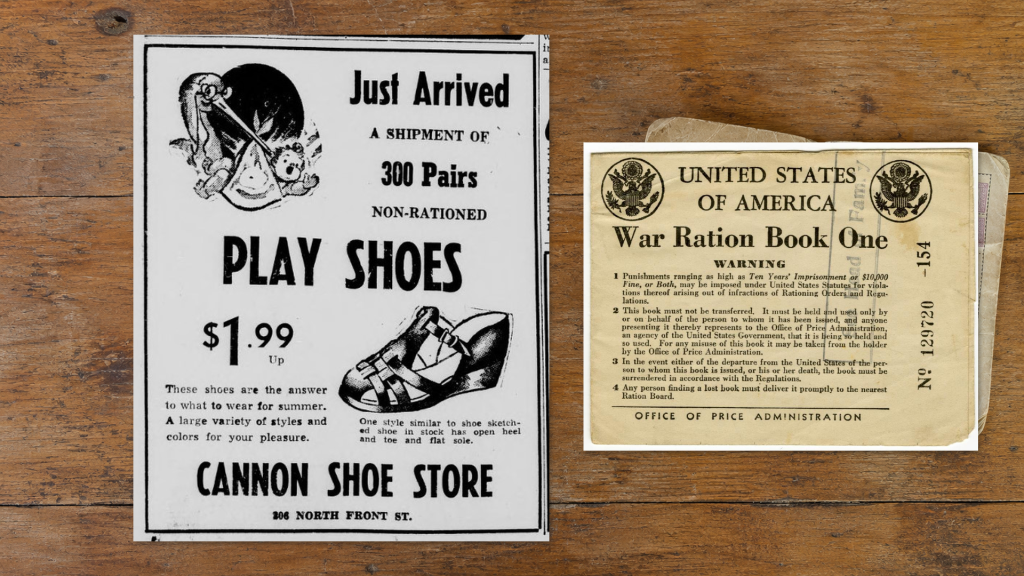
On July 23, 1943, the Wilmington Morning Star carried a Cannon Shoe Store advertisement announcing 300 pairs of non-rationed play shoes. The price began at $1.99. Put that offer beside a surviving War Ration Book One and you have a fair question. Could a shopper in Wilmington answer the advertisement without surrendering a shoe stamp? The retailer expressly offered these shoes as non-rationed. A household booklet can explain the alternative a shopper might be saving a stamp for, even when it comes from an entirely different family.
Read the retailer’s promise from the whole page
Copy the newspaper title, city, issue date, page, retailer and the language used to describe the shoe. The Wilmington notice appears on page six. Its drawing supplies a recognisable summer shoe. The copy tells you that styles similar to the pictured shoe were in stock and describes other styles as well. Keep that distinction. A drawn strap can help you recognise the offer without identifying the construction of every pair that arrived at the shop.
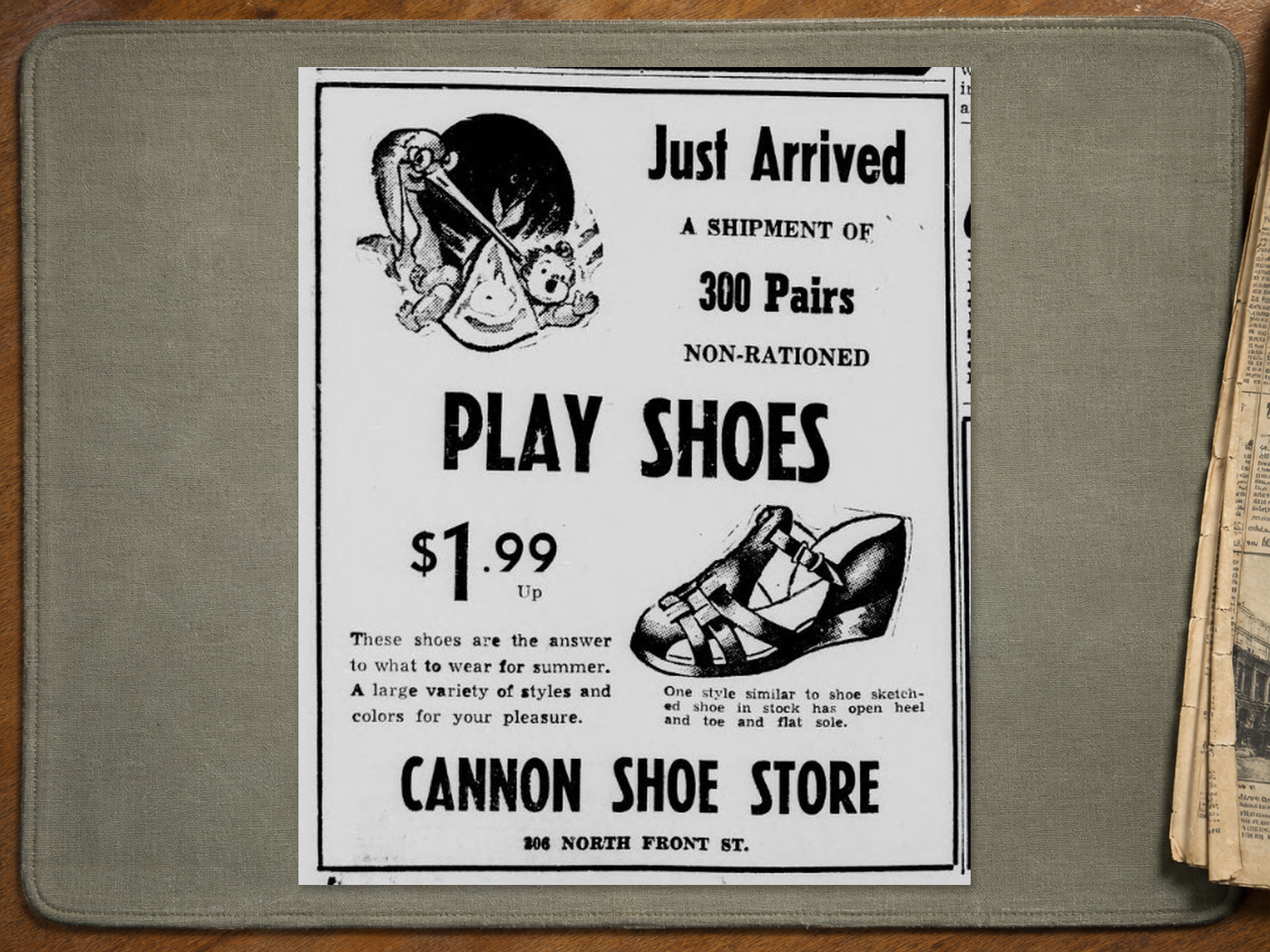
The National Park Service reproduces this particular clipping from the Library of Congress newspaper collection. Its account of wartime non-food rationing describes the demand for shoes made with non-rationed materials. Use the retailer’s own wording for the offer and the ration rules for the category. This particular advertisement gives little basis for identifying the exact sole or upper material of an individual pair. A perforation in a drawing is a particularly weak way to distinguish leather from a substitute.
Record the price as a starting price in U.S. dollars in that place and month. A customer might have chosen a dearer style. The number of pairs announced is a stock claim by the store and says nothing definite about the number of pairs sold. A neighbouring advertisement for another shop or another day deserves its own entry even if it uses the same drawing. The distinction between an illustration and an offer to supply a model works just as well with a newspaper.
Identify the booklet before interpreting the holes
Look at the cover first. Write down the book number, issuing authority, country and any legible issue information. Different wartime books carried different stamps. A family wallet might hold several people’s books and more than one issue. Keep the cover and its attached pages together in the record. If you have only a loose coupon, photograph both faces and leave its association with a particular owner open until another document supplies the connection.
The University of Wisconsin–Madison Libraries preserve a copy of War Ration Book One issued in Manitowoc, Wisconsin. The certificate and remaining coupons include a visible stamp 18. It is a documented example of the type of book relevant to the Wilmington advertisement. Its owner was in a different state. Putting the two objects side by side for comparison creates no evidence that this person saw the newspaper or went to that shop.
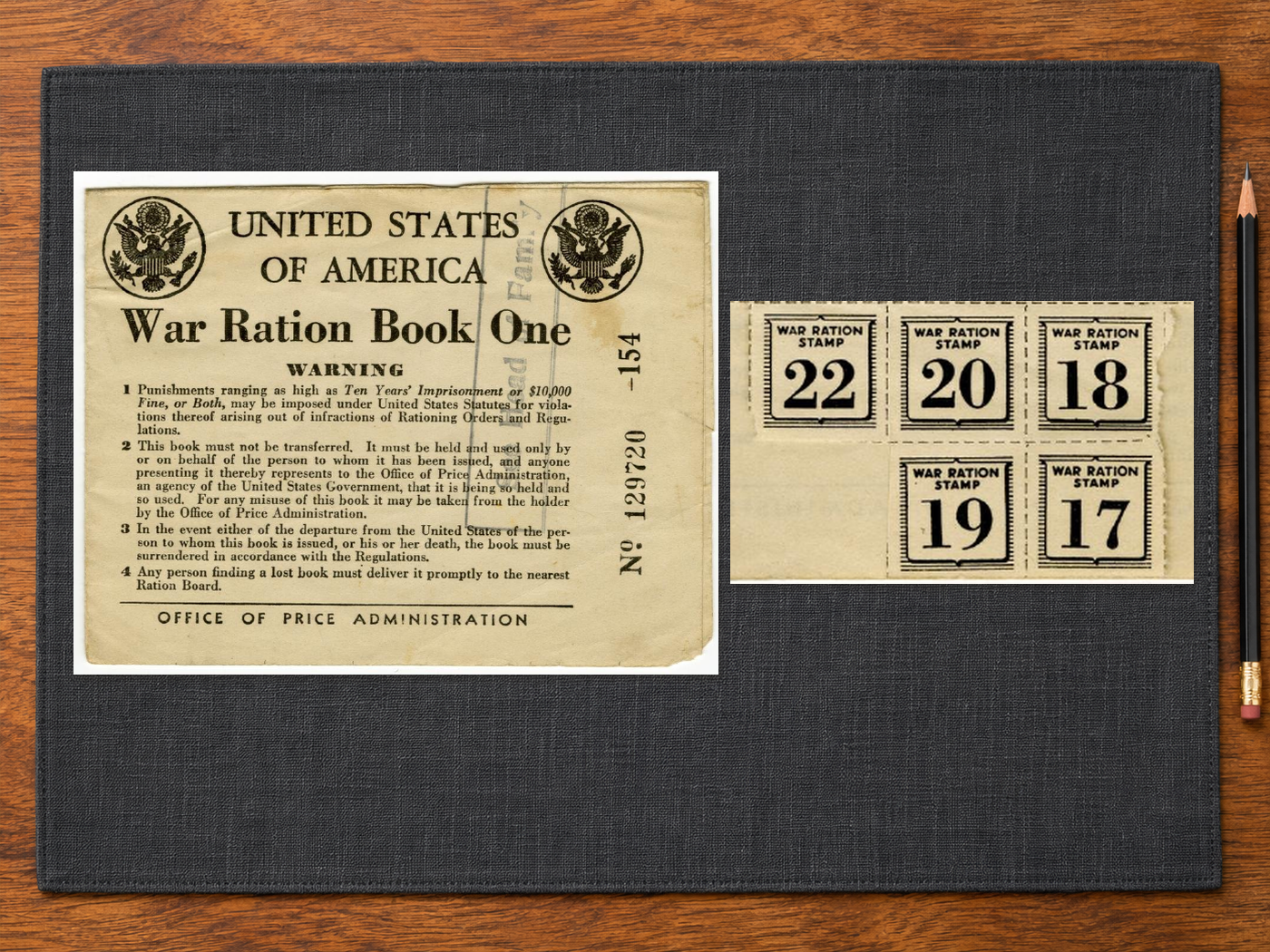
An intact stamp tells you it was still attached when the book reached its surviving state. It might have gone unused, become invalid, or stayed in a book the owner no longer needed. An empty space gives you even fewer particulars. Handling, cutting, later collecting or incomplete survival might account for it. Describe the physical state first and reserve suggestions about why a stamp disappeared for records that identify a use.
If a relative remembers saving a coupon for school shoes, ask for their own words, the place, the approximate season and whose shoes they meant. Keep the recollection beside the book entry with the speaker’s permission. People can remember the decision to save while forgetting which numbered stamp the household used. A dated listening note about a remembered pair of shoes leaves room for both the practical memory and the uncertainty over the coupon.
Check the stamp against the month and the shoe
Ration Order 17 is the federal record to consult for U.S. shoe rationing. In its restatement in the November 23, 1943 Federal Register, the Office of Price Administration listed stamp 18 of War Ration Book One as valid for shoes beginning June 16, 1943. The later table in the June 12, 1945 Federal Register records the closing date as April 30, 1944. July 23, 1943 falls inside that interval. Keep the dates of the official documents with the dates of validity they describe.
The next question is whether the goods fell into a rationed class. The wartime rules distinguished rationed and non-rationed shoes, with definitions and exceptions that could change. The National Park Service describes non-rationed play shoes and documents the Wilmington retailer’s use of that wording. If an advertisement specifies a material, look at the whole description, including the sole where relevant, and check it against the rule then in force. If it simply says “play shoes,” keep the category open until a notice, specification or current rule gives you more.
Imagine a second advertisement from the same month. It offers brown shoes at a sale price and says nothing about ration status. A lower price gives you a cash term. It supplies no coupon exemption. Conversely, the Cannon notice gives a price and calls its offer non-rationed. Record those as separate fields. A person could need the advertised cash price while keeping a valid stamp for a different purchase.
Make a three-line note before leaving the newspaper.
- Terms of sale. Transcribe whether the retailer asks for a coupon, advertises an exemption, or gives no information on the subject.
- Dated entitlement. Identify the book and stamp the official table makes relevant to that month.
- Household connection. Enter the document that joins a named purchaser to the sale, or leave the line open and say which detail is missing.
Distinguish permission to buy from a sale
A ration stamp, a special authorisation and a receipt can all sit in the same family envelope. Read the verb on each. A certificate may authorise a named person to buy a pair under particular conditions. A shop receipt may say a specified amount was paid for a pair on a named day. A stamped application can record an official decision on a request. Those are different moments, and you can date each one without collapsing them into one shopping trip.
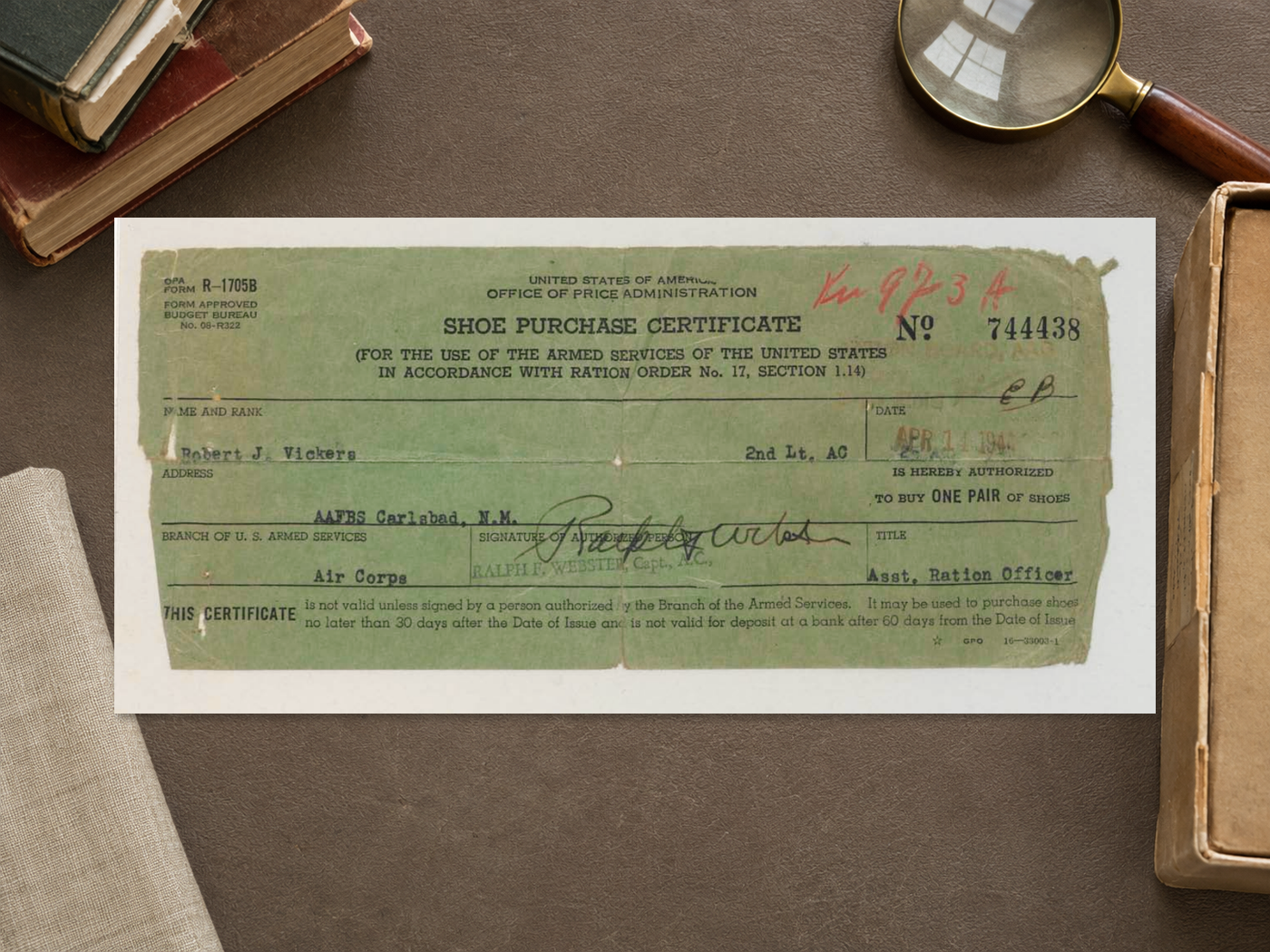
The illustrated Office of Price Administration Form R-1705B is a surviving shoe purchase certificate for armed-services use. It authorises one pair and identifies the provision under which it was issued. Its printed conditions are part of the evidence. It belongs to another individual and another setting from both the Wisconsin book and the Wilmington shop. Use it to learn what an authorisation looks like. It supplies no proof of a purchase from Cannon.
For an actual household purchase, check whether the date, shop, item and purchaser can be joined. A receipt headed only “shoes” may establish an expenditure without naming the model, material or adult who wore them. A store ledger with a household account can add the missing customer, though a family might have bought shoes for someone else. Keep a note of which record supplies each part of the statement. The most specific word on a receipt may narrow your claim more effectively than an elaborate advertisement.
Put the three records into a short account
For the Wilmington case, one dated note could read as follows. On July 23, 1943, Cannon advertised a shipment of non-rationed play shoes at a starting price of $1.99 in Wilmington, North Carolina. Stamp 18 of Book One was valid for rationed shoes that month. A customer taking the store’s advertised non-rationed offer could retain that stamp. The available records establish neither a buyer for those pairs nor what any named household did with its stamp.
Try changing the question as a check. If a family brings you a July receipt from the same shop for $1.99, you have a matching place and price. Does the receipt identify play shoes? Does it carry a customer name or a description that ties it to a particular surviving pair? Ask for the reverse and the rest of the bill before assigning the shoes. Another style could have shared the starting price, and a receipt might cover a deposit or a repair.
File the ad, book and any purchase evidence under their own identifiers, with a note explaining why you brought them together. Preserve the source’s date convention and country in every entry. A Canadian family’s wartime memory may be a valuable lead in its own right, but a U.S. order and a North Carolina advertisement cannot establish the rules governing a Canadian shop. The reader who opens your folder should be able to recover one retailer’s offer, one entitlement and the precise evidence still needed to put a particular pair on someone’s feet.

By Nell Aster