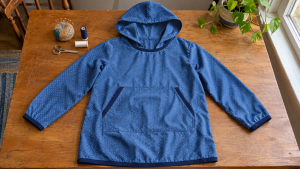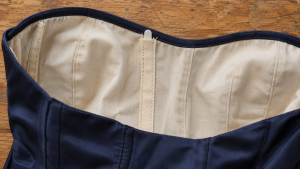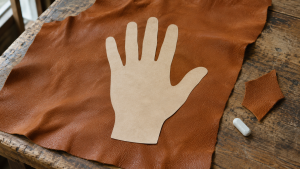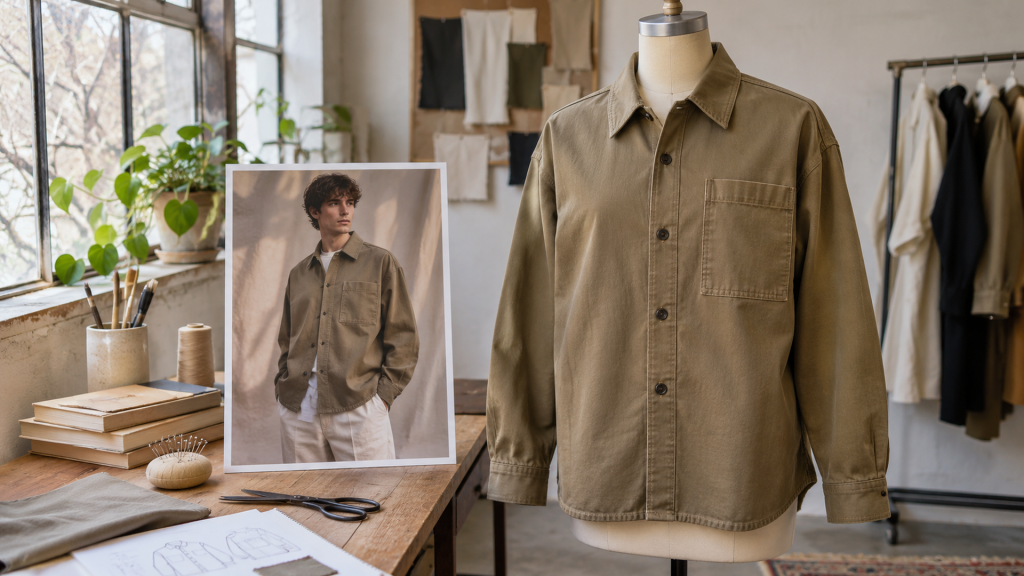
On March 3, a Seattle maker posts a photograph of a khaki overshirt and opens a campaign with a June delivery estimate. What can a backer verify that day? In this fictional case, one sample with a square chest pocket appears in a dated campaign image. To follow the run, give the sample, cloth order, workshop booking, finished units and dispatch their own dated entries. Keep each delivery estimate beside the evidence available when the maker issued it.
Featured image generated with AI. The campaign, dates and workshop objects in the photographic sequence are fictional.
A finished-looking garment tends to pull those stages together in the viewer’s mind. The pocket lies flat. The buttons match. A person could put on the sample and go out in it this afternoon. A production run is a different achievement. It requires material for the intended quantities and sizes, a workshop willing and able to do the work, and finished pieces that pass whatever acceptance step the maker agreed. Read the update for the particular achievement it records.
Save the version a backer actually saw
Begin with the campaign title, creator, launch date, garment version and reward you are examining. Preserve the original estimated delivery wording and the place where it appears. A shipping month beside a particular reward can differ from a general timetable in the campaign story. If the creator later edits the description, keep the earlier copy with the date you recorded it. A moving estimate can only be understood if its earlier wording survives.
Keep five spaces in your notes for each entry. Record the publication date, the date of the event described, who supplied the information, the item or quantity involved, and the narrow conclusion the record supports. A photograph posted in March might have been taken in January. An April update can report that fabric arrived in late March. The day you learned something is valuable information even when the actual production date is still missing.
Kickstarter’s fashion guidance invites creators to show designs, samples and plans before production. Its own funded-to-delivered guidance discusses manufacturing, shipping and fulfilment as subsequent work. Those distinctions help you read a campaign page. For instance, Bison Wares’ Revenant campaign identifies a particular sherpa-lined denim jacket project and its backers. That public campaign record establishes a funding event. For a claim about its sewing or delivery schedule you would still need the corresponding dated production information. The khaki overshirt used below is a separate invented case.
Identify precisely what the sample establishes
Examine the image from the original reward description. Record the colour, front opening, pocket arrangement and any other detail that distinguishes this version. Check whether the creator calls it a sketch, rendering, development sample or final approved sample. A model in a convincing photograph can still be wearing a one-off sample in one size. It gives you evidence about that garment’s visible form and the presentation the backers were asked to consider.
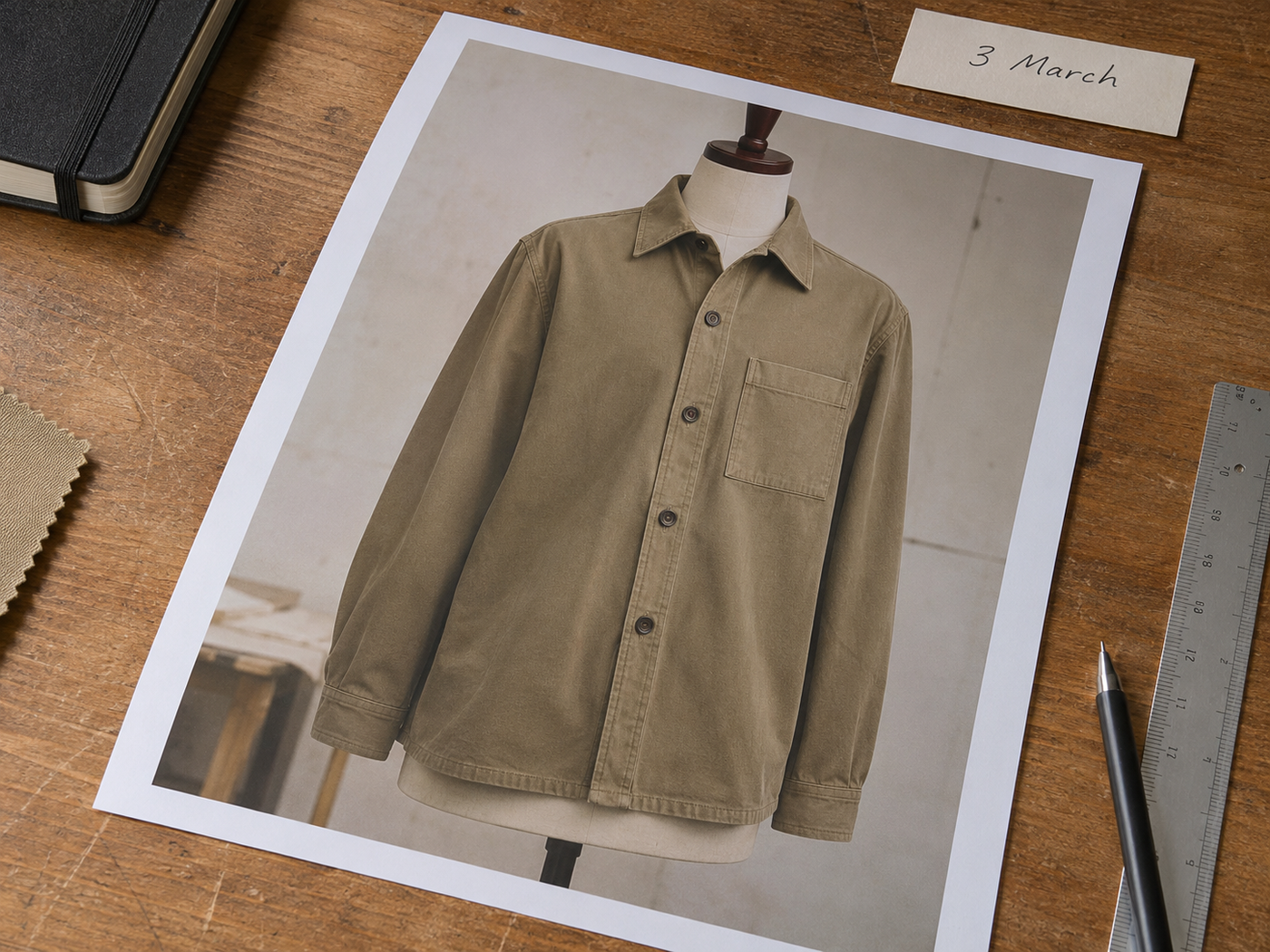
In the example, the March 3 image shows one patch pocket on a khaki overshirt. The campaign says the first sewing sample exists and the cloth has yet to be ordered. Record both statements. If a later photograph shows two pockets and a different placket, ask which image corresponds to the reward you chose. A genuinely improved design can still be a meaningful change for someone who pledged for the earlier one.
A photograph also has a boundary around it. The crop might omit the back, label or a seam the description says was revised. If the precise visible change matters, compare what survives in different published versions of a garment photograph. A larger copy of the same image may resolve a pocket detail. It cannot show the rest of the order waiting outside the frame.
Separate a supplier’s offer from cloth on the table
Ask what document sits behind the latest verb. A quotation gives terms on which a supplier offered material. A purchase order records what the buyer asked for. An acknowledgement can show that the supplier received or accepted the order, depending on its wording. A delivery receipt or receiving note provides another kind of evidence about quantity and location. Copy the relevant wording rather than upgrading “requested” to “arrived” in a summary.
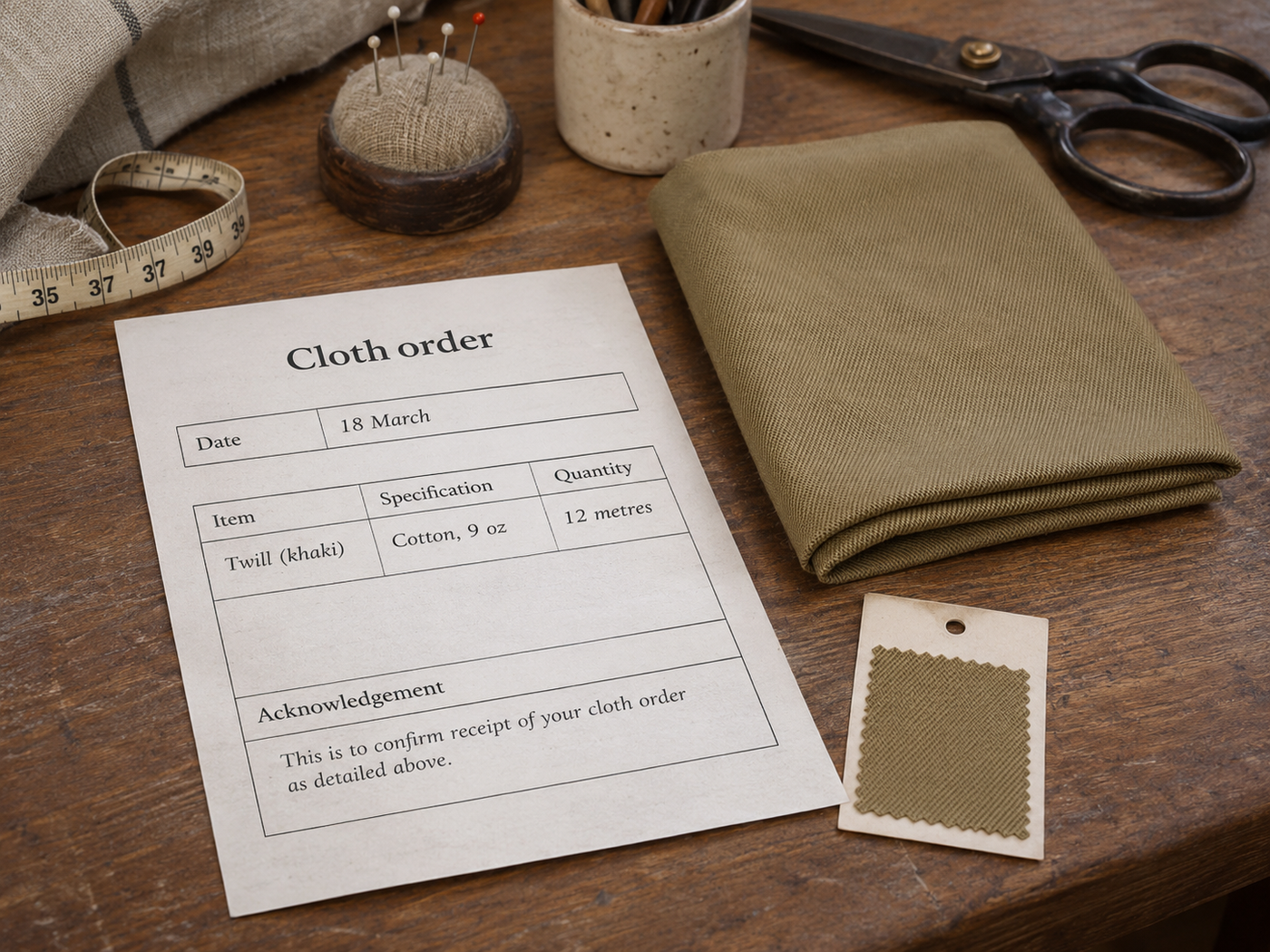
In the Seattle exercise the creator posts a March 18 acknowledgement for khaki twill. It identifies the same style and colour, and a note from the supplier confirms the order. Add a row for an acknowledged order. Leave cloth received open. A photograph of a folded swatch in that update gives the maker a way to identify the material. It supplies little evidence about how many metres have entered the workshop.
Check the minimum quantities that matter. The fabric mill may require a minimum per colour, while the sewing shop may require a minimum number of garments per style. A successful campaign funding total in dollars is a third measure. If 120 people chose assorted reward levels, you still need the size and colour breakdown for the actual garment order. A maker can reach the overall funding goal and still have an underfilled size or colour option to resolve.
Read a booking from the workshop’s side
When an update says a factory is booked, look for the work being booked and on whose terms. Is the appointment for sample revision, cutting, bulk sewing or final inspection? Does the workshop confirm the date or has the maker requested it? A redacted acknowledgement can identify the scope and week without exposing a supplier’s private rates. If only the creator’s summary is available, attribute the statement to the creator and leave supplier confirmation open.
Suppose the maker reports on April 2 that the workshop has reserved the week beginning April 22, provided the twill arrives by the preceding Friday. The update supplies a conditional booking. It says when the workshop expects to begin if a particular dependency is met. A later photograph of a workshop sewing table does not close that condition unless its date, garment and scope can be connected to this run. A factory handling three khaki styles could supply very similar pictures for all of them.
Check the number being described at each stage. Pieces cut, garments sewn and units accepted can all be honestly reported at different totals on the same day. The accepted-unit count on a small clothing run gives a useful way to think about rejects and rework. For a backer trying to find their size, an overall number may still leave a question. Ask which colours and sizes the counted batch covers.
Keep the original forecast when a new date appears
A timeline needs two kinds of line. On one, put dated events such as the sample posting and the acknowledged cloth order. On the other, put the forecasts issued at those dates. In the exercise June begins as an estimate on March 3. If the maker shifts it to July after reporting the fabric delay, keep June next to March 3 and write July on a new row next to the update that announced it.
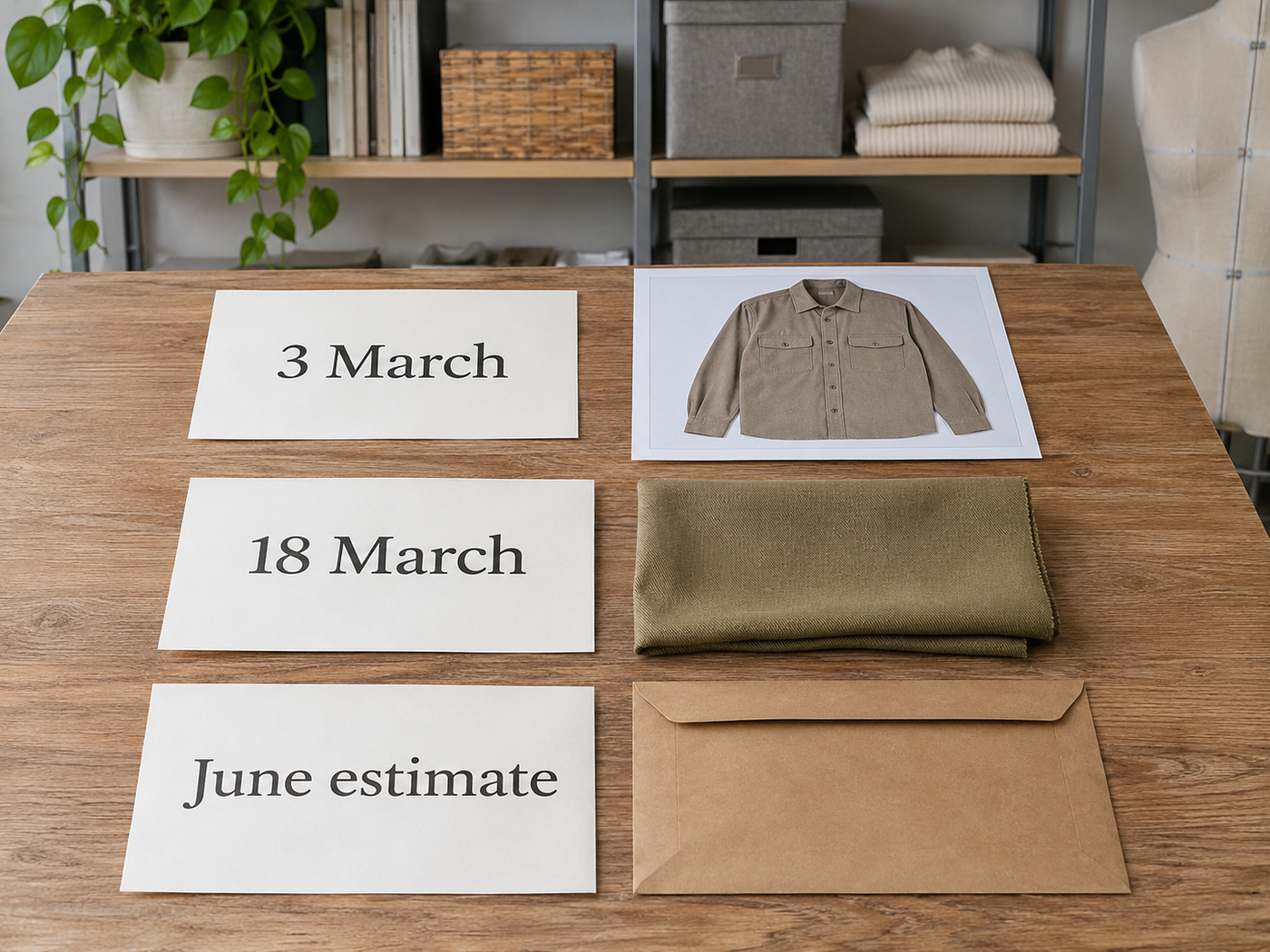
Find out which milestone the forecast describes. A maker might expect to finish sewing in June, dispatch the first parcels in July and have different transit times to different countries. The phrase “delivery in June” needs context if a later post says “shipping starts in June.” Preserve both descriptions before deciding whether the forecast moved. The words matter to a backer who will be away from the address on file.
A tracking number generated for one parcel, a scan accepting it into a carrier’s network and a message from a recipient are three successive pieces of evidence. One backer’s delivery establishes something about that parcel. A report that all sizes have been dispatched requires wider coverage. If some rewards include a second item, a parcel containing only the shirt may be a partial fulfilment. Check the actual reward before marking the line complete.
Ask for the one record that changes your conclusion
At the midpoint of the fictional run, an evidence record can fit on one card.
| Record date | Evidence available that day | What still had to happen |
|---|---|---|
| March 3 | The maker posted a sample with one chest pocket and gave a June delivery estimate | Identify production cloth and quantities |
| March 18 | The supplier acknowledged the corresponding twill order | Confirm receipt at the workshop |
| April 2 | The maker recorded a workshop week conditional on timely cloth arrival | Confirm the condition was met and bulk cutting began |
Keep the accepted count and dispatch open until the later updates reach those steps. The next useful question is when the workshop received the identified cloth and whether that preserved the booked week.
If a later update does establish receipt, carry the information forward with its own date and named source. If the creator says work has moved to a different shop, start a fresh line with that shop’s role and the first evidence joining it to the run. Keep earlier updates readable. A backer returning after a month can then distinguish a changed plan from a newly documented event and can see exactly which part of their overshirt’s journey they have reason to believe is complete.

By Idris Vale