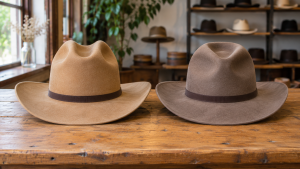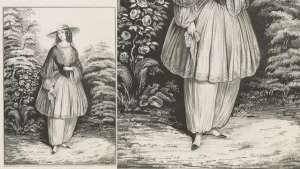
In May 1894, cyclists gathered outside the YWCA on Nicollet Avenue in Minneapolis wearing divided garments for a club ride. A newspaper account preserved in the association’s scrapbook puts the clothes on that street that month. It gives a reporter a date to work back from. To date a look in your own town, start with one equally specific detail, find the earliest local occasion you can corroborate, and say how far back the search went. A shop might have offered the garment much earlier than anyone photographed it in use.
Featured image generated with AI. The dated denim photograph is part of a fictional timeline.
Choose something two people could pick out
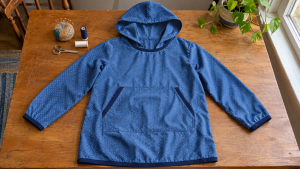
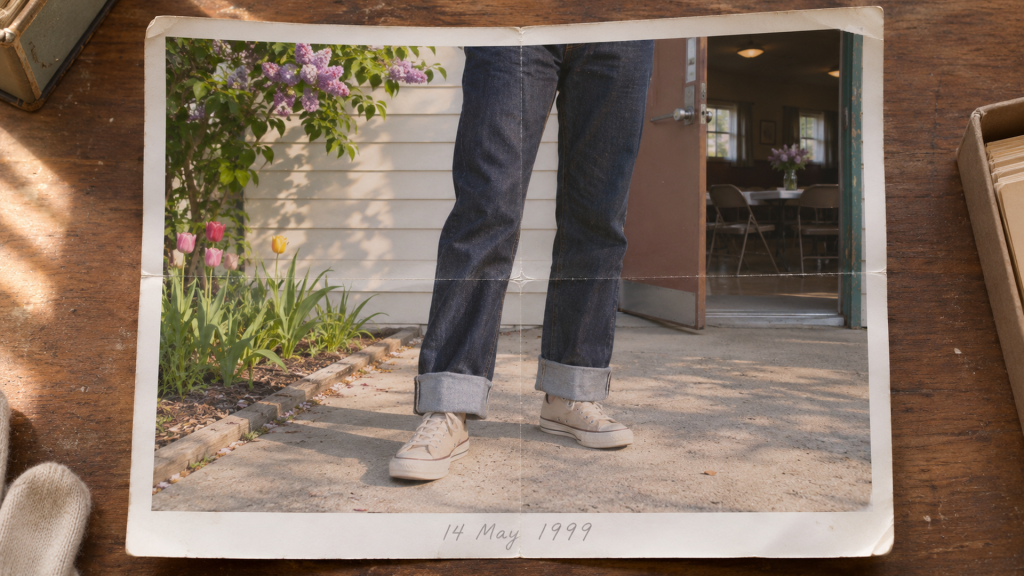
Ask two people to describe the same photograph without supplying the name of the trend. One may see jeans that are too long. The other sees a single deep turn-up with a band of pale denim showing above each shoe. The second description gives you a feature you can look for in another picture. Decide whether two narrow rolls count, whether a tailored cuff counts and how much of the leg needs to be visible. Write that down before a good-looking early candidate tempts you to change the definition.
Define “here” with the same care. A hall inside the town boundary, a shop in the next municipality and a portrait made on a trip could all appear in one local family album. If the question concerns what people wore to dances in town, keep the hall and set the other places aside for now. If the question concerns the whole county, put a place beside every entry. One precise sighting in the smaller area is already something another person can check.
The Minneapolis records show what this buys you. Kirsten Delegard’s account for Historyapolis draws on the YWCA’s 1894 scrapbooks at the University of Minnesota. The press described a club decision about what members would wear, then described riders turning out in the clothes. A gym photograph preserved with that material shows exercise dress indoors. All three records matter. Give the date of the vote to the decision, the occasion of the ride to the street sighting, and the gym picture the broader date its caption actually carries.
Find the photograph before it acquired a new date
For the rest of the guide, imagine a town investigating those deep denim cuffs. The names of the garments, the cards and the 1999 dates in the illustrations belong to this exercise. A community page has shared a picture of shoes lined up outside a hall. Someone calls it opening night. Save the whole view, the credit and the words that accompanied it. Then ask who supplied it and whether there is a print, negative, contact sheet or original file. The day a page shared it is one entry in the record. The day the shutter opened needs its own evidence.
Suppose the print comes from a photographer’s envelope marked 14 May 1999. The hall’s name shows over the door on the full frame. A dated programme confirms an event there on the fourteenth. Ask how the envelope and this print were kept together, and whether the same room hosted more than one night that month. A programme establishes a booking. To connect that booking to the picture, look for something particular to the evening, such as a bill naming the same two performers that appear together on a placard in the uncropped frame.
A repost can take out exactly the part you need. Follow the changes between an original photograph and its published crop when the hem or the place marker disappears at an edge. If two websites share the same worn corner, treat them as two appearances of one print. Look for another source with a different history. Keep the photographer’s credit, permission to reproduce the image and any decision about identifying the people in separate fields. There is no need to name a dancer to describe a trouser hem.
Read the shop record for what passed over its counter
Now try the local shop. In the exercise its stock card dated 2 April 1999 records straight denim. That establishes a shop had a style of jeans that could be turned up. The card supplies no way to tell how a customer wore them. A window photograph could document a folded cuff on display. An alteration slip might identify a customer who asked a member of staff to leave a deep turn. Those are different sorts of evidence. Copy the verb you can support alongside the date, whether the garment arrived, appeared in a window or was altered.
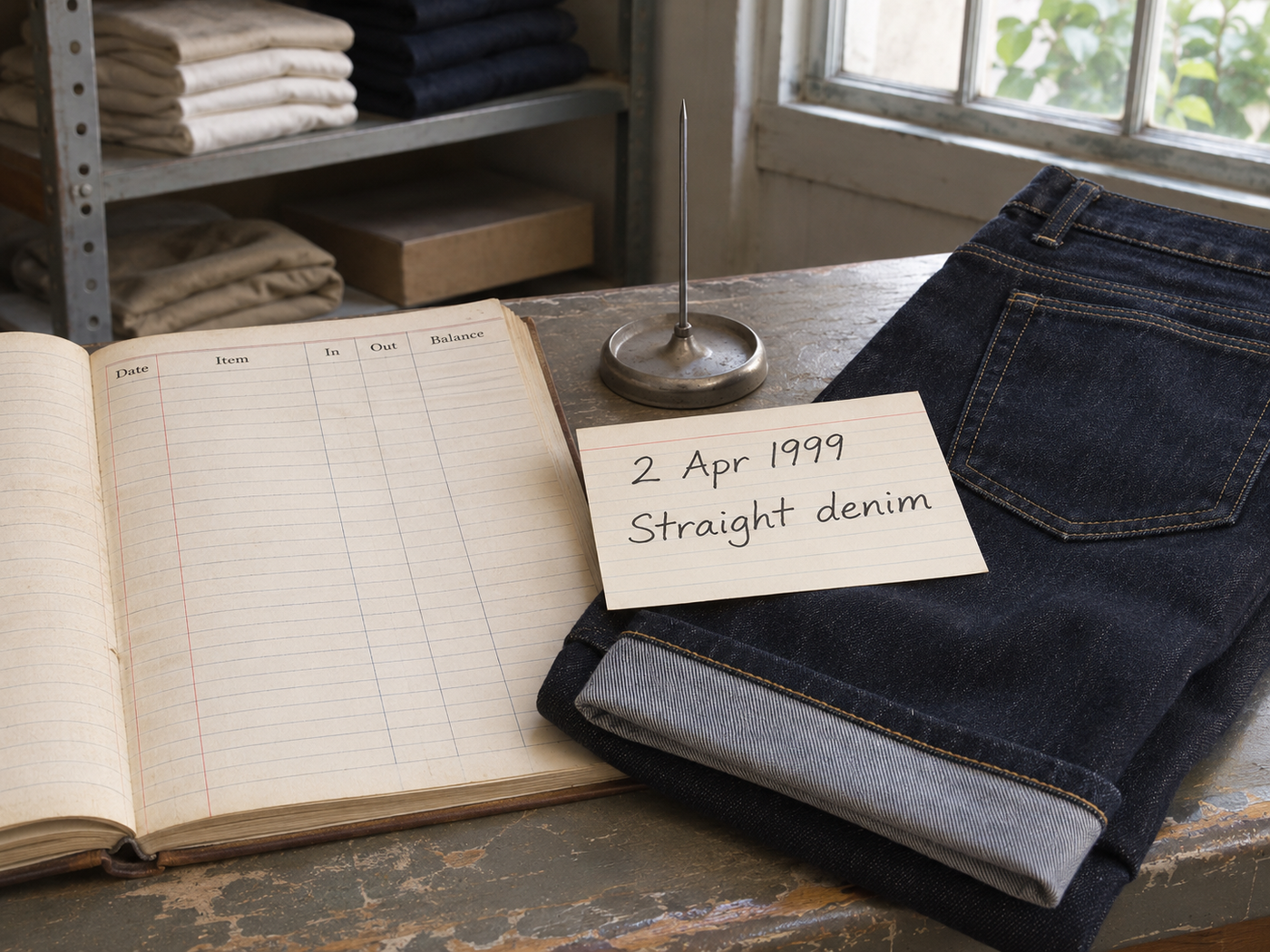
Check the address then in use. A long-running shop may have kept its name while moving from another town. A chain advertisement can carry a local address below a photograph supplied to every branch. On the record card give the branch, the relevant line and the date on the actual document. If it says the delivery was due in April, look for an entry showing it was received. A buyer’s intention makes a worthwhile lead even if the receiving book has gone missing.
Ask the wearer about an ordinary day
Before showing a date to a possible witness, ask where the jeans went, who else was there and what else they remember about the clothes. A wearer might remember turning the hem up outside a hall because it dragged on the pavement. That detail helps explain the gesture. Ask which garment was theirs and whether they recall that particular night or the many evenings they dressed that way. Someone who can describe a habit vividly may have an honest uncertainty about which spring it began.
In the example a second wearer brings a pair of jeans and a picnic snapshot marked 12 June 1999. Someone else took the picture at a different gathering and the wearer knows which relative kept the print. Ask whether they will let you describe the cuff, reproduce the photograph or attach their name. They can choose any combination. If they have kept the trousers, examine the faded fold with their permission. It locates the turn on this pair. Only the separately dated account or picture can put it at the picnic.
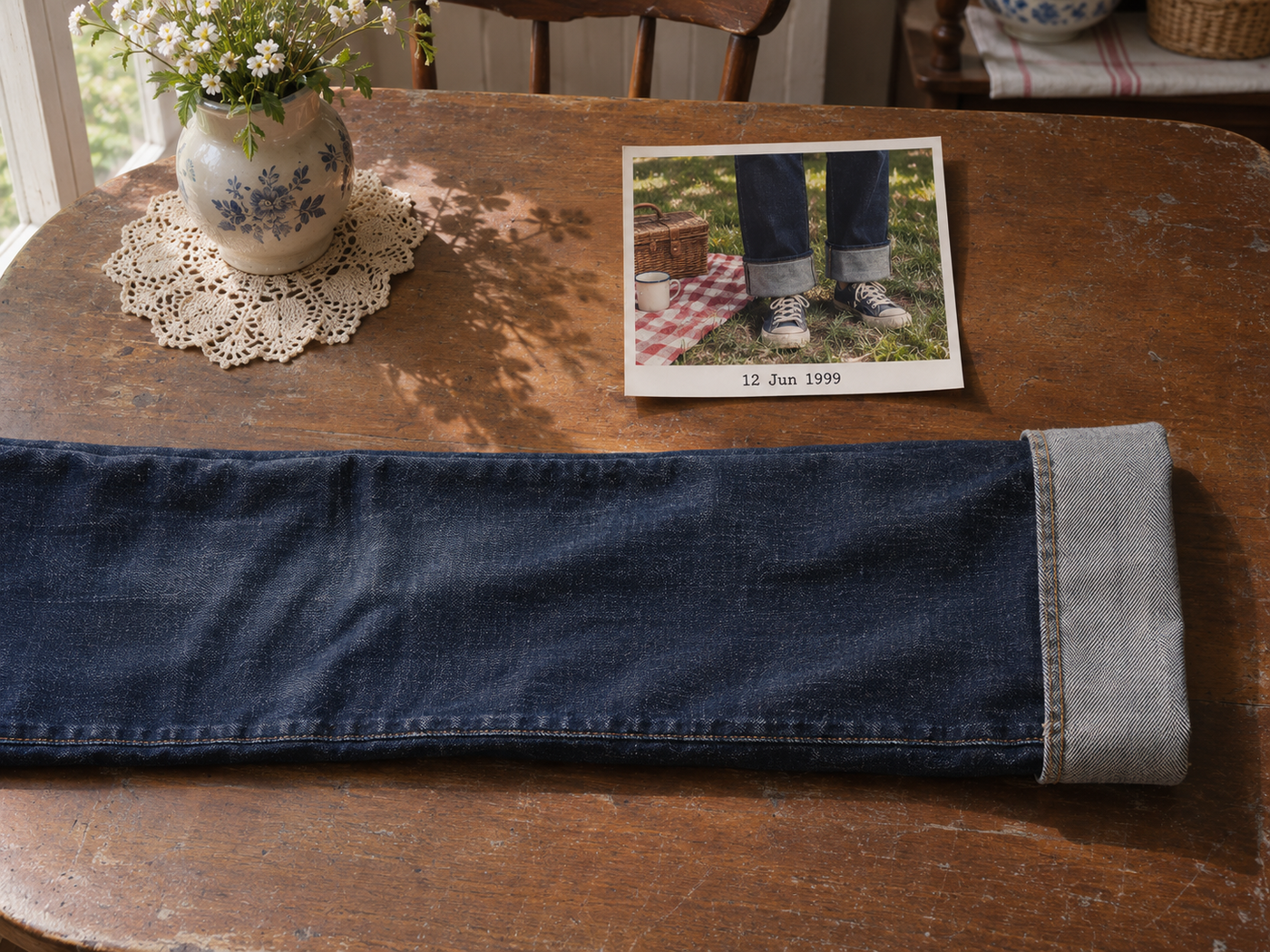
Keep the wearer’s date in their terms. “The summer after the shop moved” may become a range once a directory places the move between editions. Let the speaker see the proposed identification and invite them to correct your caption. The guide to identifying firsthand dress memories is helpful when the wearer remembers the picnic personally and knows the hall story through a friend. Keep the friend’s lead, the wearer’s recollection and the photographer’s envelope separately traceable.
Give an empty interval a place on the timeline
Look at the previous comparable event. A surviving programme for last year’s dance tells you the dance took place. A photograph cropped at knee height tells you almost nothing about cuffs. Write how much of the earlier material you saw, where you found it and why it did or did not answer the question. Someone else may have pictures taken outside when a whole seated row was on its feet. Knowing what is missing makes it much easier for a neighbour to bring the right envelope.
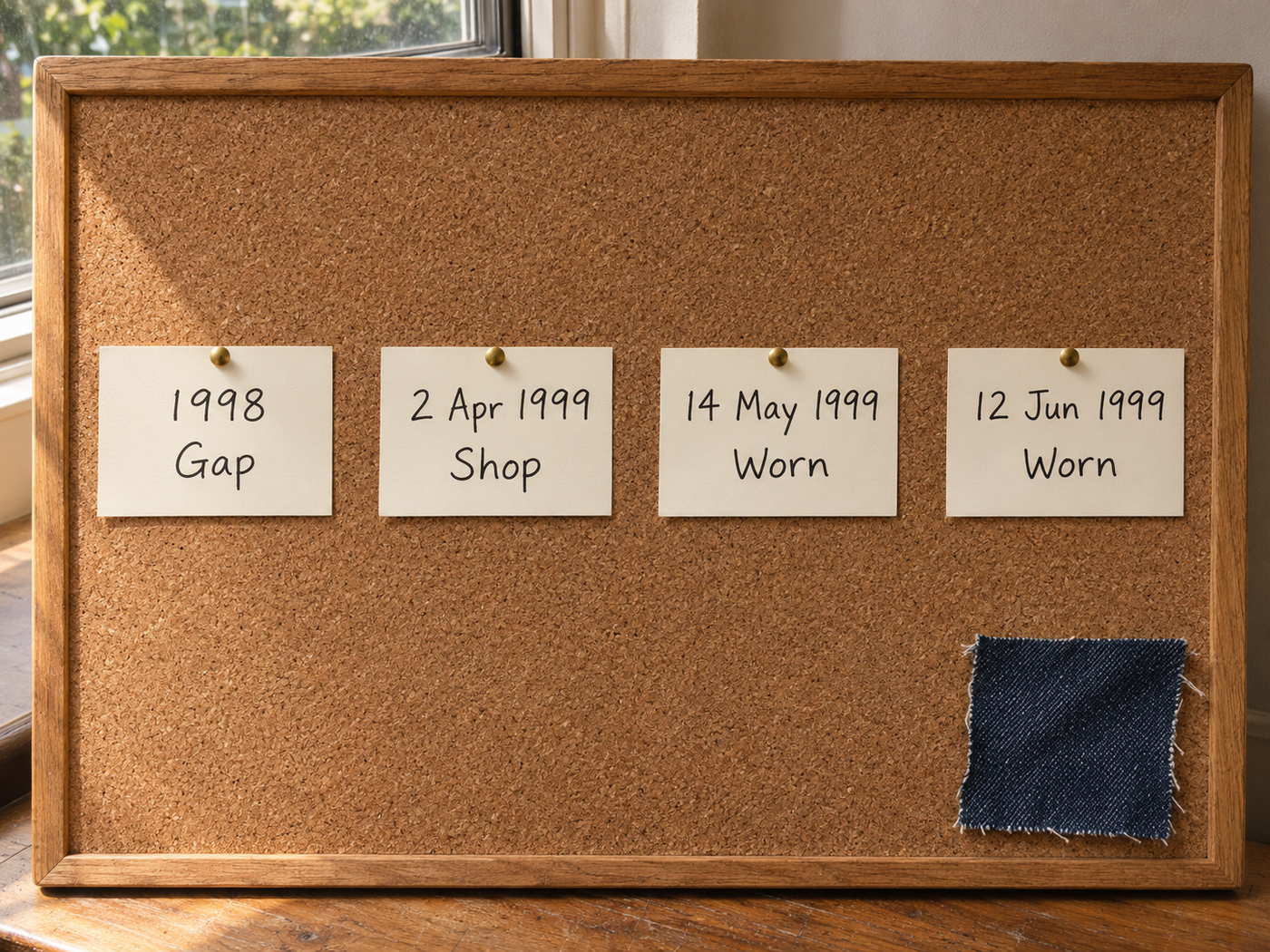
- In the example, the 1998 hall photographs end above the ankle. The earlier interval stays open.
- On 2 April 1999 the shop recorded straight jeans in stock. There is no recorded wearer on that line.
- On 14 May the hall print shows the deep turn-up. The envelope, the uncropped placard and the event programme connect the occasion and place.
- On 12 June a different wearer’s picnic print supplies a second occasion. Record how its owner dated it and the use they approved.
If a new photograph turns up, try to disprove your own reading. A light band above the shoe could be a visible sock. Enlarge the hem, look for the cloth folding back on itself and see whether the other leg shows the same turn. Get the print’s owner to point out the place before showing them your proposed location. If the detail holds but the date covers three summers, give it that range. An uncertain early candidate and a later firm sighting can sit on the same timeline.
Put a date on the sentence you publish
For the exercise you could write, “A deep turn-up on straight jeans was worn outside the town hall by 14 May 1999. A June picnic photograph shows it on a second occasion. Earlier hall photographs leave the hems out of view.” Add where the records can be consulted under the owners’ permissions. Two occasions can justify a search for a wider habit. To call it widespread you would want evidence from more wearers and settings, including people outside the first group of friends.
Limit an invitation for more evidence to the point still open. Ask for full-length photographs at the previous spring’s dance, or stock records showing the shop displayed jeans with cuffs already turned. A person who never thought of their photograph as fashion history may recognise that request immediately. If an earlier dated example emerges, give its owner the same checks and change the date in public. The next reader can then see exactly which piece of evidence moved it.

By Idris Vale