
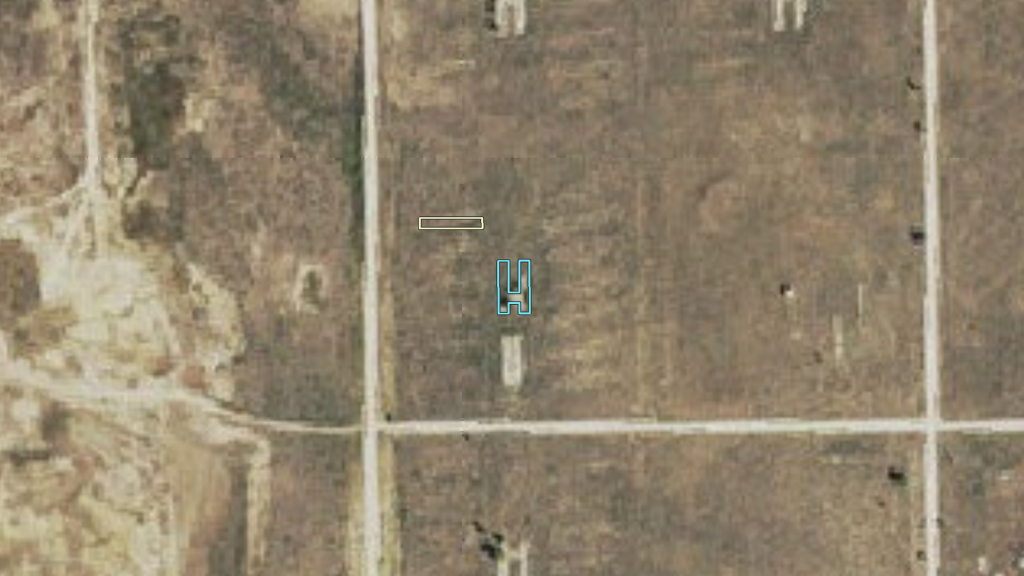
Cream marks Barrack 7. Blue marks the communal bathhouse. The map identifies the endpoints of the walk. USGS National Map aerial imagery. Building locations from the Amache Community Archaeology Project, University of Denver.
Ikuko “Cookie” Takeshita remembered her family’s address at Amache down to the apartment letter. It was 9-E-7B. She and her sister had a little room adjoining the one their mother, father and brother shared. A daughter could cross an interior threshold to reach her mother. To wash, people in that same block had to get dressed for a walk outside.
Featured map. Cream marks Barrack 7 and blue marks the bathhouse. USGS National Map aerial imagery. Building locations from the Amache Community Archaeology Project, University of Denver.
The National Park Service’s study of Amache traces accounts of the bathhouse routine to an interview Takeshita gave in 2008. Residents wrapped themselves in bathrobes for the walk and wore geta, wooden sandals, in the showers. A robe supplied a measure of cover between two buildings. The family’s rooms and the place where they could bathe had been put on different parts of the block by the authorities who built the camp.
An address you can put on a plan
Amache was the incarceration camp outside Granada in southeastern Colorado. Construction began in June 1942. Japanese Americans, many of them US citizens, were forcibly removed from their homes during the war. Living quarters at Amache were arranged in blocks. A residential block included rows of barracks, a mess hall and a communal building for bathing and other washing. A household’s address got a person to a room in a barrack. Places that ordinarily would have been part of a home had addresses of a different kind.
Read Takeshita’s address from the outside in. Find block 9E on the plan, then look for barrack 7 within that block. B identifies the living quarters there. The wash building served the block. The Amache community’s interactive directory map locates the barrack and the bathhouse in the same block. Those two points establish why the journey took her family outdoors. They leave open which door a person used and where she put her feet between the two. A line drawn for a modern visitor would be more exact than the surviving account.
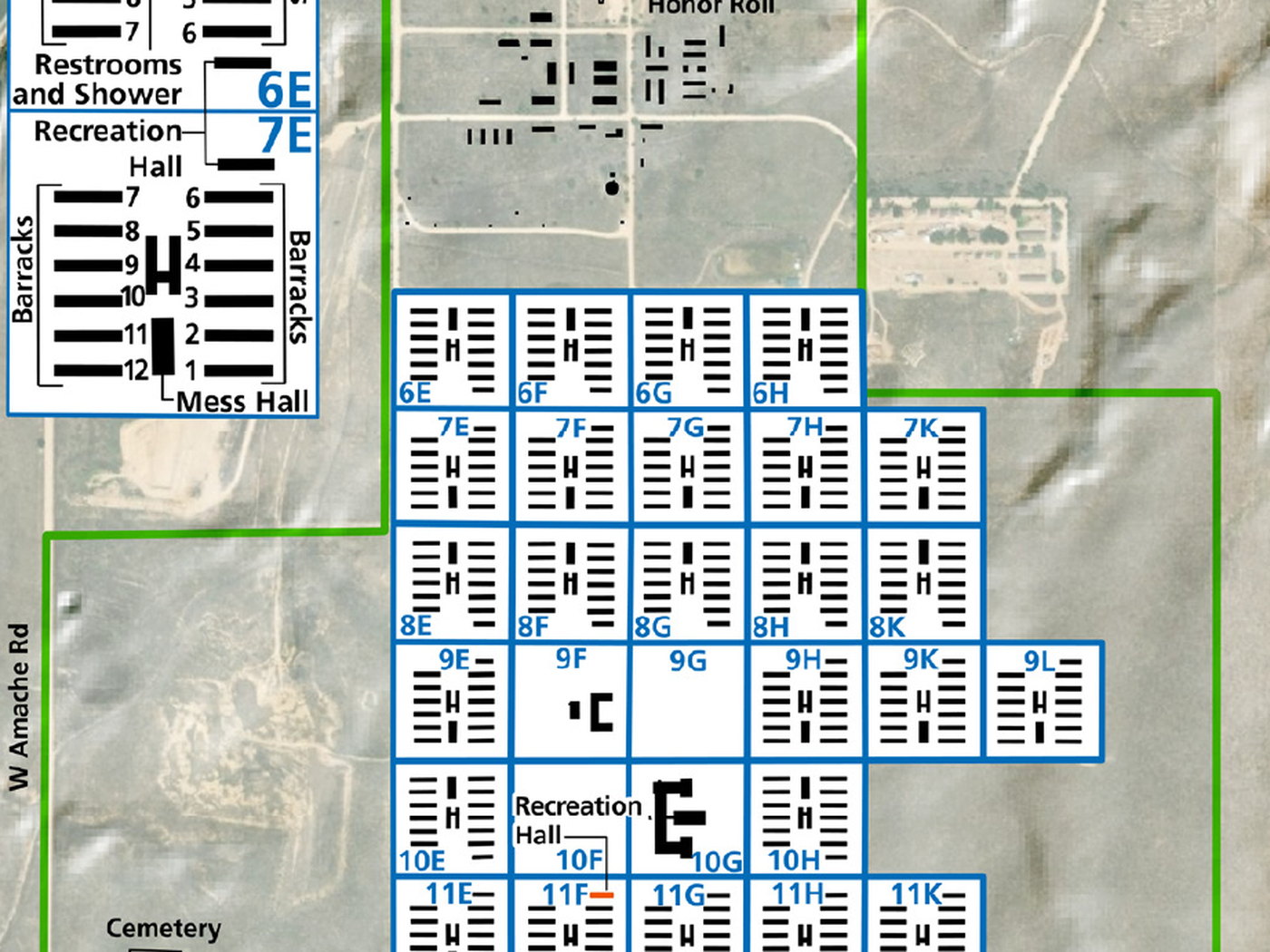
Takeshita recalled the rooms in a later interview with Densho. Her mother was bedridden, and the arrangement gave the sisters a small adjoining room of their own. The detail changes how the plan reads. One long rectangle on the page held a family with reasons to value being close enough to hear one another.
Getting dressed to undress
A person going to wash at home might close a door before taking off a garment. At Amache she had to anticipate whom she might meet on the way there and again on the way back. The robe belonged to that public interval. A photograph of a robe folded on a bed, even if one survived with a family name attached, would leave much of its use invisible. It took the layout of the block to give this piece of clothing its particular work.
The walk ended at a shared bathhouse with a women’s side and a men’s side. Inside, showers and toilets afforded little privacy. The Park Service also records residents putting up makeshift screens from materials such as sheets or cardboard. Those screens and the robes answered different problems. One could go round the body and travel with its wearer. The other could change what a neighbour saw once someone reached the room.
There is good reason to keep the details attached to their sources. The record supports robes on the walk and wooden sandals in the shower. It gives no colour for Takeshita’s robe, and no one can recover a morning’s weather from the block plan. When listening for clothes in an oral history, mark whose memory supplies a detail and whose description gathers several people’s experiences. The same care matters when an exhibition lets you hear someone speak about their own clothes.
On a second look at the map, go back to the small space inside barrack 7. Think of the distance between closing its door and being able to wash behind another one. A bathrobe is an ordinary thing to own. Having to wear one across a block of an American incarceration camp tells us who got to decide where private life could take place.
1 thought on “The Clothes an Amache Resident Wore to the Bathhouse”