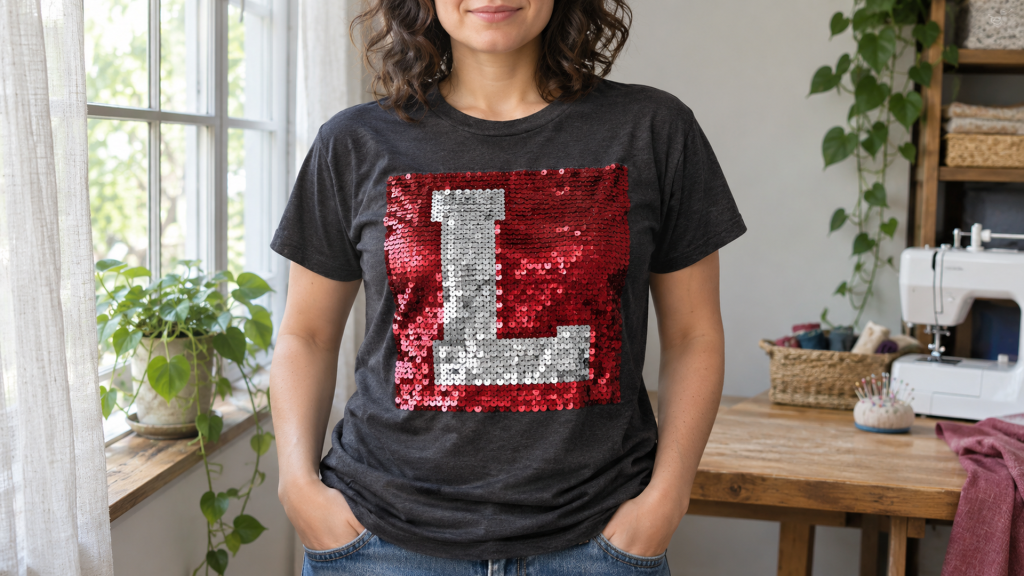
The square corner gives the wearer a clear place to look after moving an arm. AI-generated image.
A silver L on a red sequin top takes two strokes to draw and one sleeve brushing past to spoil. Start by finding the direction that turns the discs silver, then choose a patch of the top that stays reasonably quiet when you wear it. The return stroke is your eraser. Knowing which way it runs is at least as handy as knowing how to make the mark.
Featured image generated with AI.
Use a panel sold as reversible or two-way sequins. Each visible disc can tip over to show its other face. A one-colour sequin shifting in the light can also look brighter or darker, so give a little test patch a gentle pass in each direction. The red-and-silver surface sold by Empress Mills provides one example of this change of face. If the discs resist or the thread starts to pull, leave that patch alone.
Give the letter a straight edge to start from
Spread the top flat as you would wear it, with the neckline away from you. Pick out a seam you can find again with the top on. Smooth a patch beside it to one colour with the pad of a finger. Keep the pressure light. The largest change you need is the turn of a disc on its stitching. Pressing the whole knit panel into the table makes it harder to tell whether your finger has caught a sequin edge.
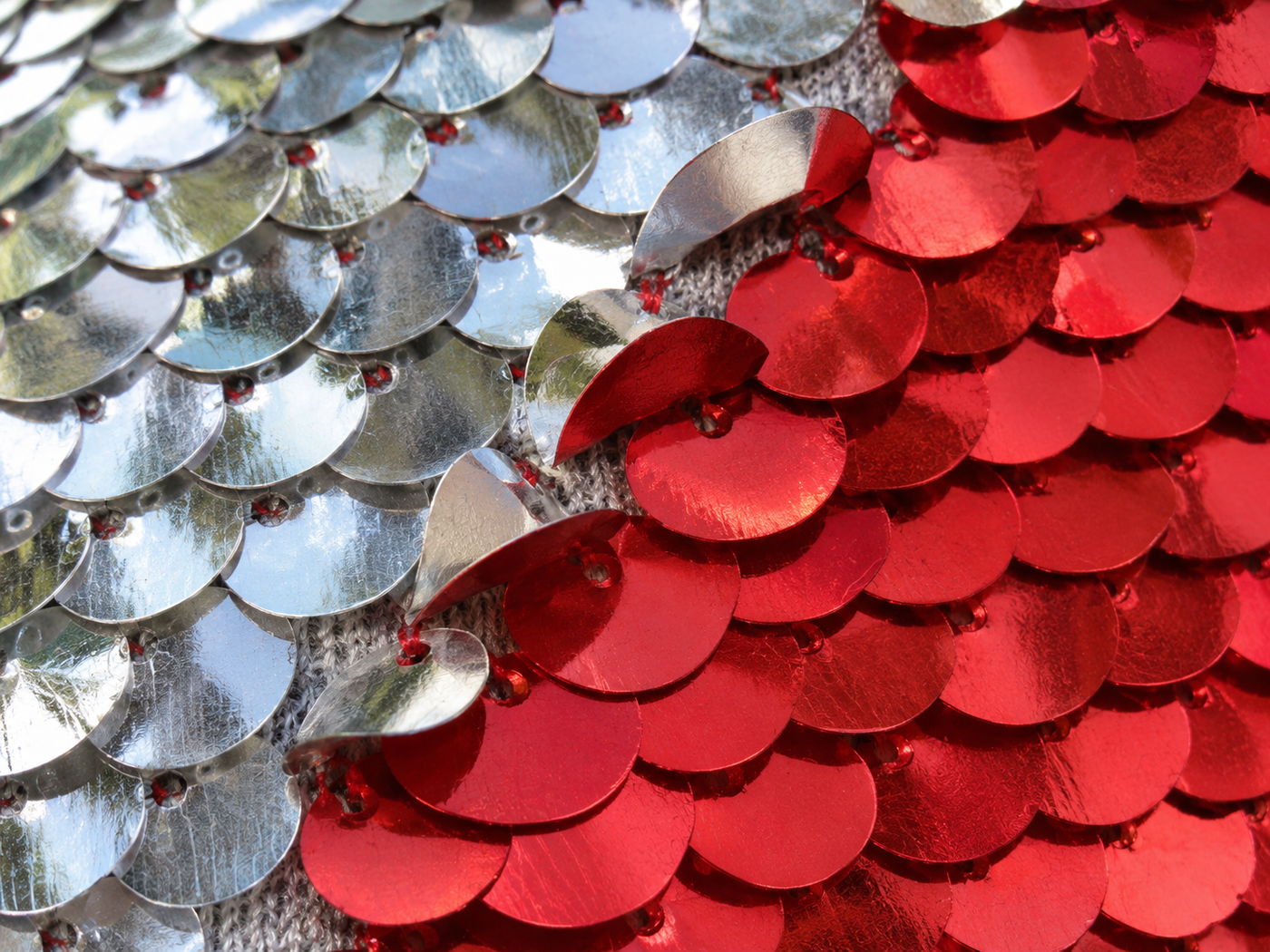
Make a short stroke at right angles to the seam and another along it. Which stroke turns most of the discs over in one pass? Which leaves little flecks of the first colour? Pick a direction by looking at this patch. A row sewn to face down the body on one garment might run across a panel cut and inserted into another.
For the upright of the L, turn a short run of sequins to silver. To make the foot, work in short neighbouring strokes in the direction that actually flips them. Pushing your finger sideways like a pencil can leave the whole crossbar red. Step back before tidying the corners. A finger-width line that looks untidy from six inches away may read perfectly well at the distance of a bathroom mirror.
Put the same patch back on the body
Brush the panel back to red and put the top on. Find the seam again. For a fair comparison keep your new L about the same distance away from it as the first one. If a friend is wearing the garment, let them draw on their own top or agree on the placement before touching it. The direction that points towards the neckline on a table still points there in wear, even though it may now feel like the opposite movement to the person doing the drawing.
Look at the upright first. Fabric easing round a curve can make a straight run of sequins look as if it leans. Then look at the foot. Its last few discs might disappear round the side of the body while every one of them is still turned silver. You can tell by turning a little towards the mirror. If the foot reappears, the change came from the viewing angle. If individual red discs interrupt it, something has brushed them back.
Lift an arm as you would to take down a coat. Let it drop, then take two ordinary steps. A patch next to an armhole may lose an edge where the sleeve passes over it. Move the mark a few rows towards the centre and repeat exactly the same movement. For a panel with a damaged row or a visible thread, switch to an undamaged patch. The guide to photographing a loose beaded line shows how to record a lifted decoration without pulling on it.
The L makes a good trial because it only has one corner to keep track of. If you’re choosing a place for a more elaborate motif, photograph the successful position with the seam in the frame. A labelled handling sample can keep the brush direction on record if several people are working with the same fabric. On the finished top, the useful spot is the one where you can still read the letter after the wearer has reached for something.