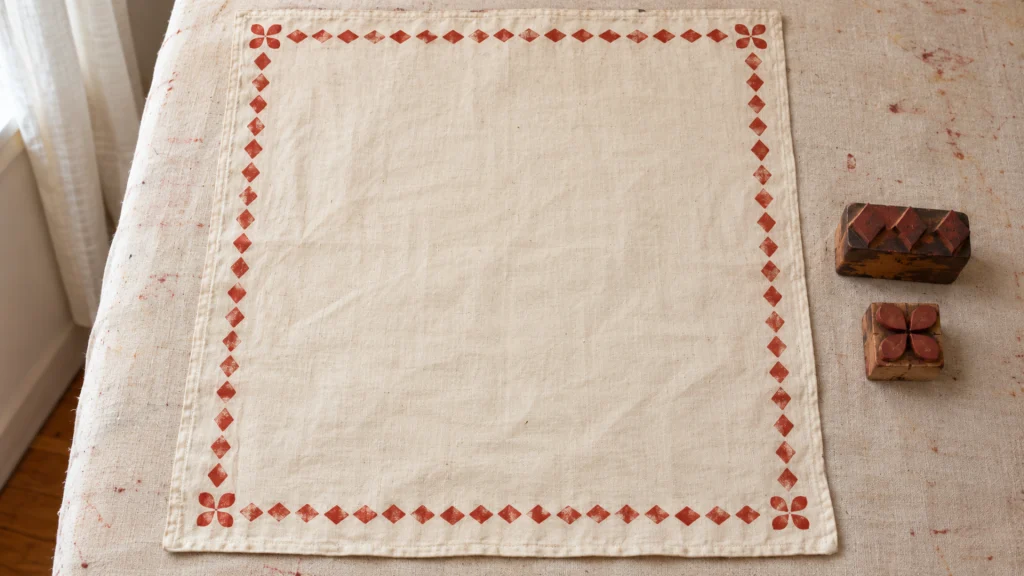
A single straight repeat and a four-petal corner form the complete border on this sample kerchief. AI-generated image.
Put a finger on one of the diamonds along the edge of a bandanna and follow the row. It goes straight, straight, straight, then a flower occupies the corner and the diamonds set off down the next side. The bend in this example takes two pieces of wood. A long block supplies a short run of diamonds. A square block puts a flower in the space where two runs would otherwise collide. You can work out which one made which marks with a scrap of cotton and a clear sheet.
Featured image generated with AI. The kerchief and its tools illustrate a two-block design.
First find the end of one impression
Lay the kerchief open so you can see two adjoining sides all the way to the hem. Count the diamonds on the face of the long block. If there are three, one lowering and lifting of the wood can leave three diamond marks. The interval between the last diamond of one group and the first of the next belongs to the printer’s hand. A single glance at a tidy row can make it surprisingly hard to say where one impression ended.
Try the block on waste cotton of a similar weave, over a slightly yielding printing surface. Use a thin, even coat of textile ink and lift the block straight up after pressing. Textile artist Maday Delgado starts her block-printing lesson with a practice impression to judge ink and pressure. Keep that first impression off to one side. It gives you a complete repeat to compare with a row in which one diamond might have printed faintly.
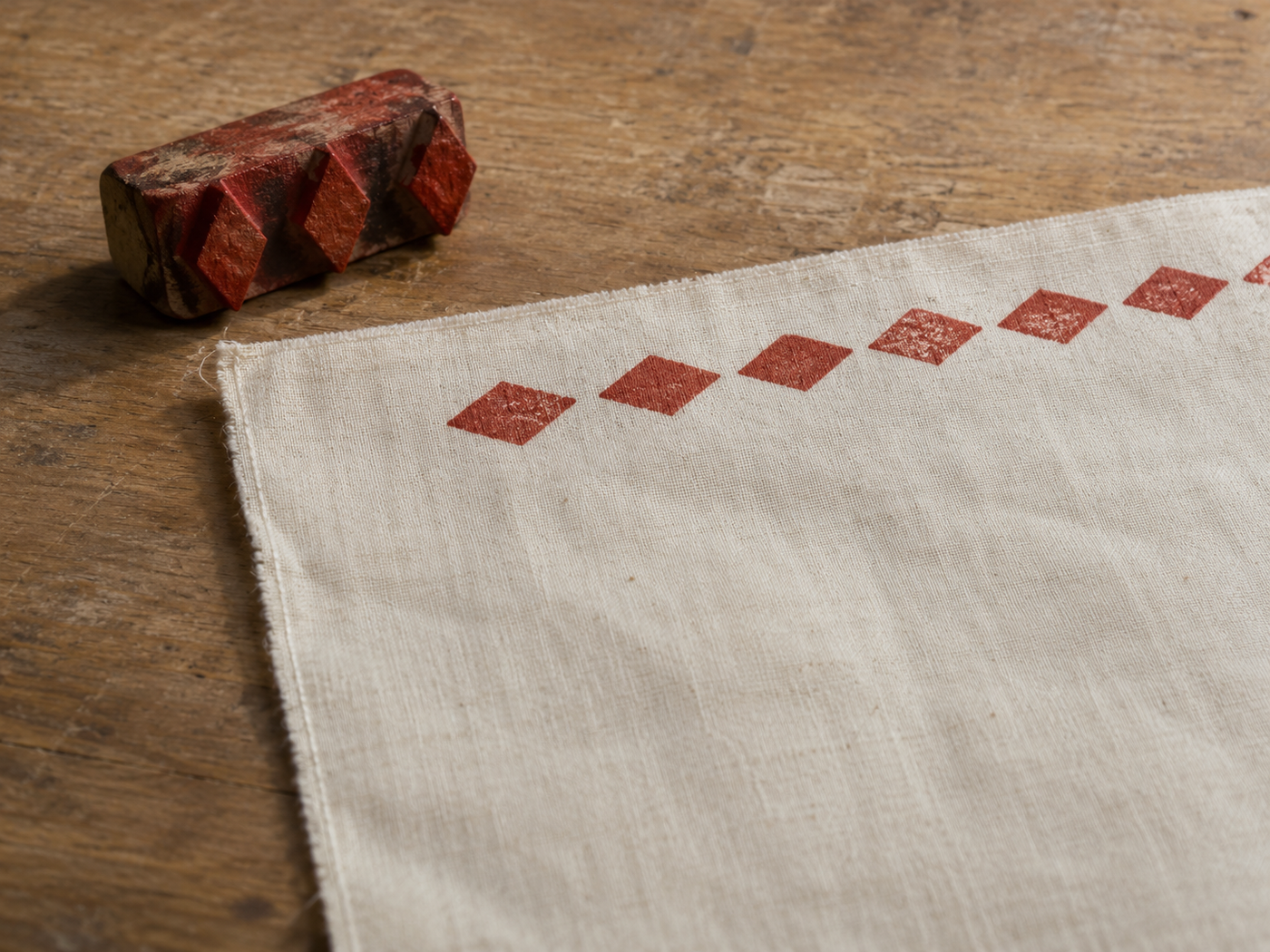
Now print a short straight run on the scrap. Working towards a corner, stop with a square of bare cotton big enough for the flower. The unprinted square can look oddly large while the next side is still empty. Resist the urge to squeeze in one more diamond until you have put the corner block beside it. The space around the flower has to serve two neighbours.
Try the same turn twice
On a second scrap, run the straight block right up to the turn. Rotate it a quarter turn and line it up for the new side. Before inking, imagine where its end diamond will land. If it falls over the diamond already in the corner, even a careful impression will put two marks in the same patch of cotton. Try it on the scrap. Look for a darker edge or a second outline where the two impressions landed slightly apart. If they coincide exactly, the tracing you make later will still show the overlap.
Go back to the piece with the square reserved. Lower the flower into the square, lift, and set off down the next edge with the long block. Leave roughly the same breathing room on either side of the flower as between two neighbouring diamonds. When that trial dries, lay it next to the first. One version makes the change of direction conspicuous. The other gives the eye a distinct motif to turn around. Pick the one you would like to see four times when the kerchief is unfolded.
Draw the wood around the ink
For a map of the join, lay acetate over the dry trial and hold it still with a small weight outside the pattern. Place the clean, dry corner block face down over its own print. Trace its outside edges on the sheet with a fine grease pencil, then lift it. Repeat with the straight block on each side. A carved block often carries a little margin of wood around the raised design. Tracing that wood explains why the block’s edge can extend into an apparently empty bit of border.
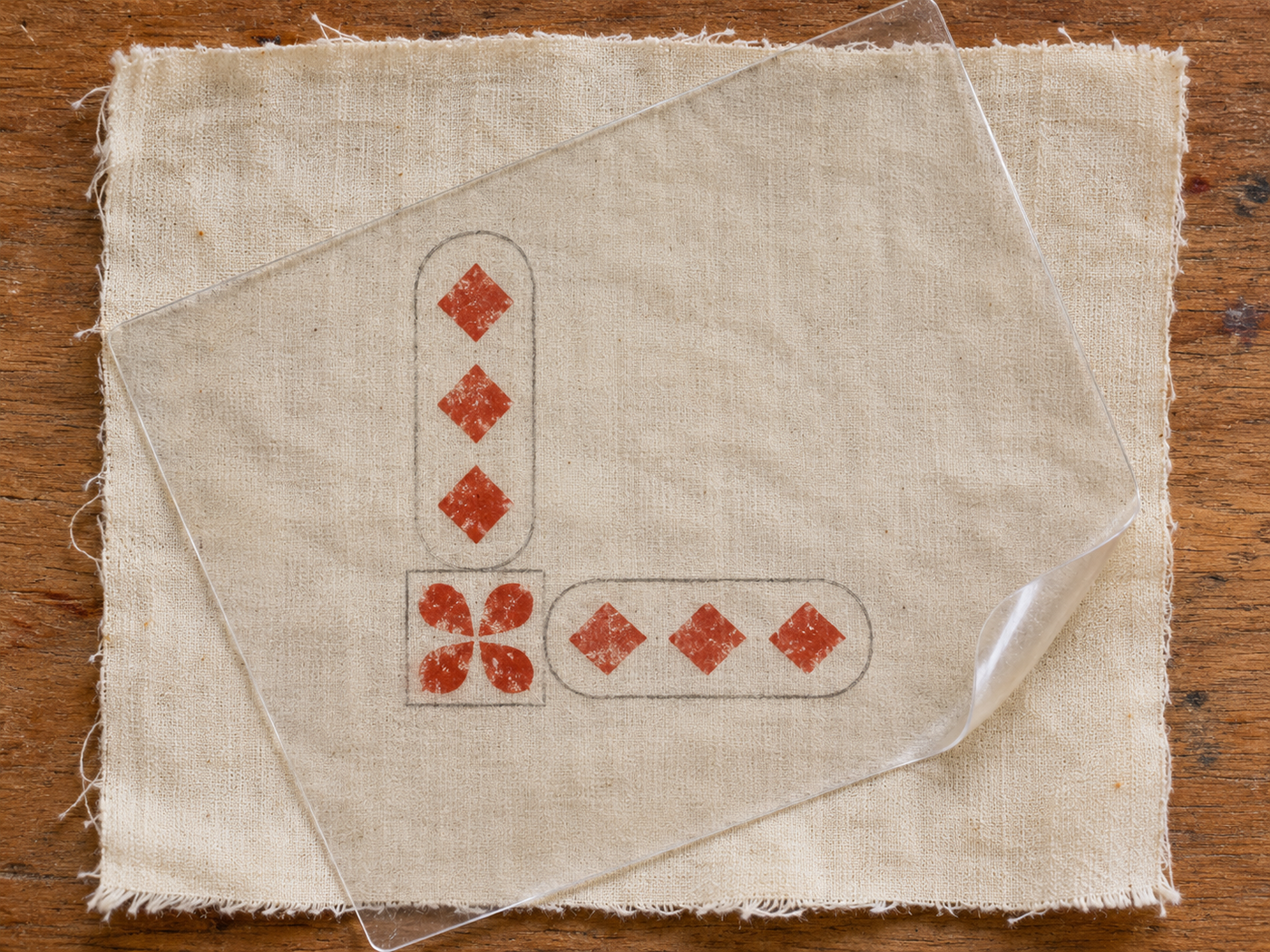
Lift the acetate and turn it towards the light. Three outlines give you the order of the turn, including the patch of untouched cotton between the marks. On a two-colour kerchief you might also find a sliver of background only on one side of the second colour. Our guide to reading a textile printer’s registration proof follows that separate question of how two passes line up.
There is a historical counterpart to the pencil line. The Textiles Committee’s hand-block printing manual describes small pins used to leave dots that guide the next impression. A dot repeated at each join could be a working mark the design leaves in plain sight.
Bring the tracing back to the finished kerchief. Compare the run just before the flower with the run just after it. Count the marks and the spaces as well. A pale centre within a correctly placed diamond invites another look at pressure or ink. A complete diamond landing too close to the flower invites a look at where the block was set down. With the trial beside you, one fingertip can follow both decisions around a single corner.