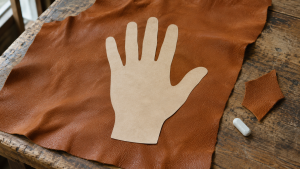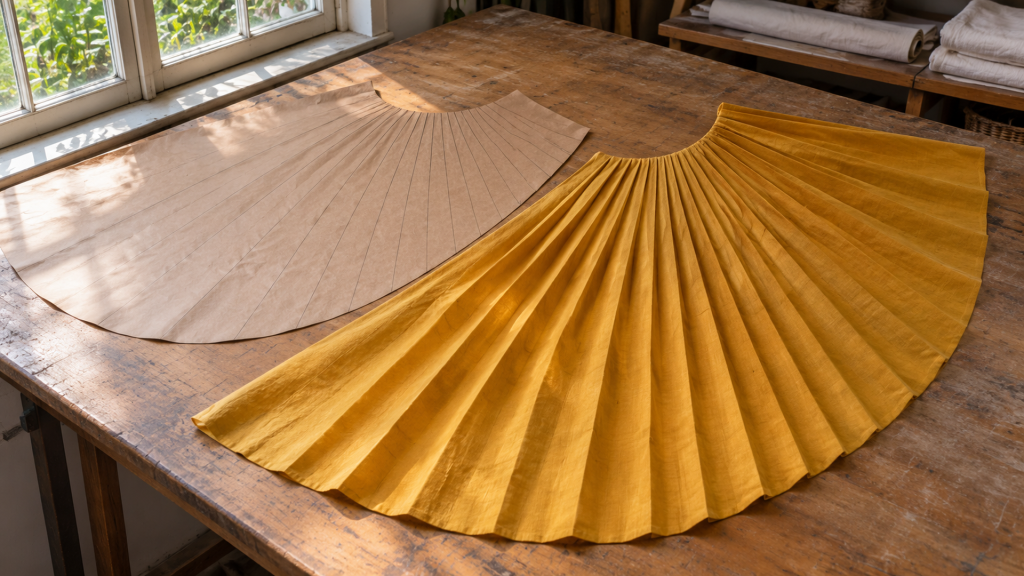
A curved waist and long hem give the same set of folds two different distances to cover. AI-generated image.
Rest a fingertip on the crest of a paper fan and follow it towards the wide edge. The crease stays narrow enough to fit under your nail. What grows wider is the face between that crease and the next one. A sunburst skirt gets its changing fold width from the same geometry. Several ridges share a short curve near the waist and have a much longer curve to divide at the hem.
Featured image generated with AI.
The paper in a pleating workshop does more than give the operator something to draw on. It can be the mould that holds the fabric in a particular set of folds. Once the cloth comes out, a skirt can carry a record of a tool that its wearer will never see. You can follow one part of that record with an ordinary sheet of paper, a pencil, and a free edge of table.
Give one ridge a name
Draw a fan-shaped piece with a small curve cut out for the waist. Use a single point, just beyond the cutout, as the imagined centre of the fan. Draw a few straight lines from that point towards the outer edge. Fold along them, bringing alternate creases up and down. There should be a raised ridge, then a valley, then another ridge. A pencil dash near the waist will help you find one raised edge again after you close the paper.
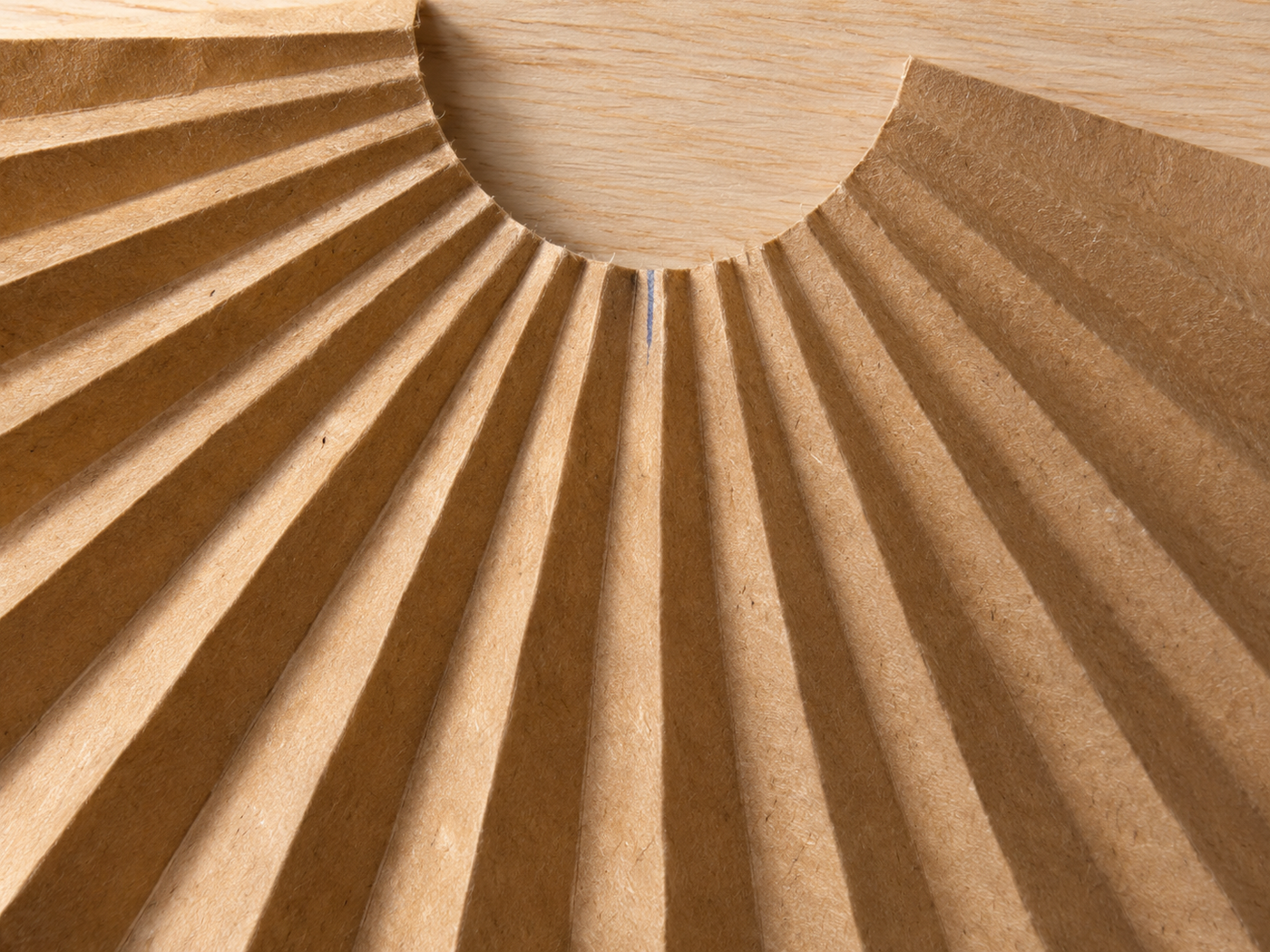
Open the fan a little and keep your thumb at the short curve. Look across two neighbouring ridges near your thumb, then across the same pair at the far edge. You can see more of the flat paper face between them at the far end. Adding more ridges would divide both curves into smaller pieces. It would still leave more room for each fold on the longer curve. If you want to compare two arrangements, make a second paper skirt with the same top edge. Changing the waist as well makes the result harder to read.
What the workshop puts between the papers
In hand pleating, a pair of matching forms can hold a layer of cloth between them. The pleater settles the fabric into the folds and closes the mould. The account published by le19M, home to specialist craft ateliers, describes placing the cloth between cardboard layers and setting it in a steam oven. The tool has to impose its ridges on the cloth while keeping the layers in register. A crease that starts a fold away from its partner at the waist will have a good deal more room to wander at the wide end.
Different sunburst effects call for different preparation. In New York, Tom’s Sons International Pleating specifies half-circle panels for its sunburst side pleating. The company asks for the intended skirt length and the effect the customer wants before cutting. That distinction is worth carrying to a worktable. A length of fabric bought by the yard and a panel already cut on a curve give the operator quite different edges to work from.
Let the cloth hang
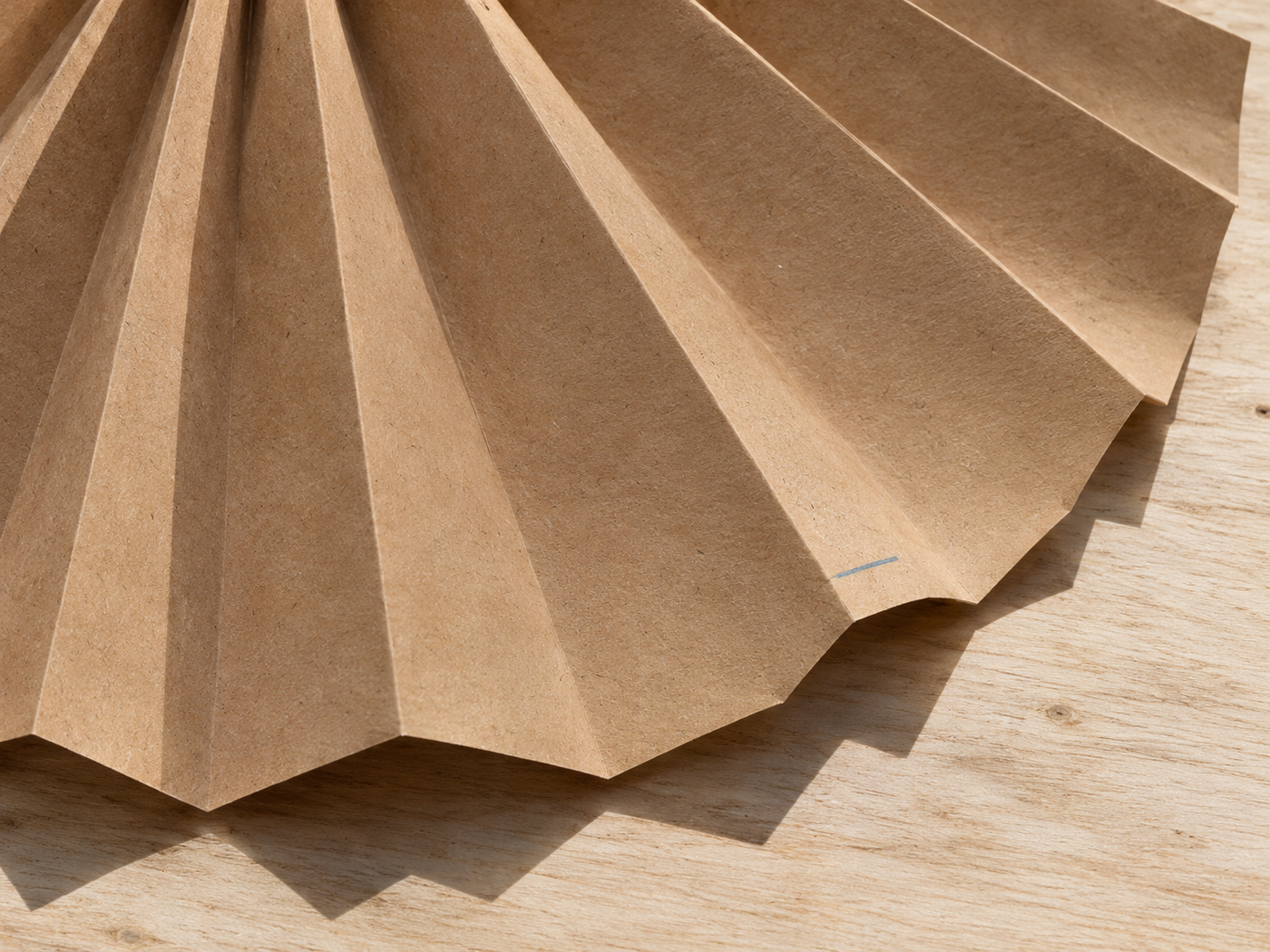
Take the paper by its waist edge and let the hem drop. A little pencil mark at the wide end of your chosen ridge helps you follow it even where a neighbouring fold covers part of the face. On a cloth panel, look for the same path with light coming from the side. Turn the hanger a few degrees. The bright edge that seemed to disappear can come back as the face next to it turns into shadow.
Paper will tell you where the fullness has been put. For the weight and swing you have to go back to the cloth. Ask the pleater which way the panel was cut in relation to the fabric threads, what the material is, and how that sample was set. Those particulars belong to the piece in front of you. A heavy skirt and a sheer one can follow much the same paper drawing and fall very differently once you let go of the hem.
There’s another way to place extra width low in a skirt. A triangular insert called a godet adds cloth below a chosen point. Here, follow your pencil mark back to the top. The fold has had its share of that width all along. You can see where the hem gets its sweep without undoing a stitch.