
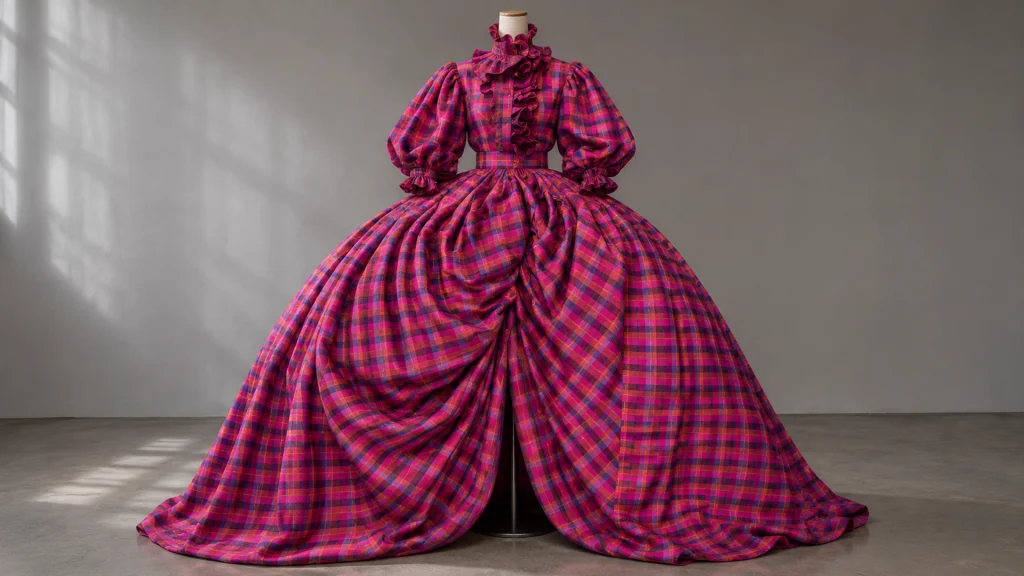
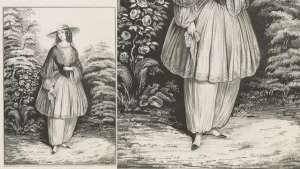
Study illustration of Christopher John Rogers’s fall 2020 silhouette. Follow the checks from the puffed sleeve through the skirt. AI-generated image.
On October 13, the Art Gallery of Ontario opened Sunday Best to the public in Toronto. In room eight, beside a vast checked skirt and its matching blouse, visitors can listen to the person who chose to make them that way. Christopher John Rogers is stop twelve on the audio guide. The gallery text quotes Rogers on his fascination with colour. Take that thought into the recording. What happens to a straight band of pink when the skirt opens into a fold?
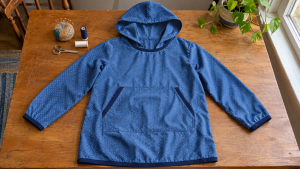
Featured image generated with AI. It illustrates the ensemble described at this stop.
A number to take into the gallery
On Level 5, look for Gallery 506 and the section called The New Guard. The outfit is from Rogers’s fall 2020 collection. Take a moment with the two pieces before pressing play. A band of pink meets a dark stripe in the blouse, disappears into a puffed sleeve and comes back into sight on a different plane. Lower down there is room for the same bands to run a considerable distance before a fold interrupts them. One check does two quite different jobs on one body.
If you had to describe the look to somebody at the other end of the room, which detail would get there first? Probably the amount of space the skirt occupies. Now imagine trying to identify it from a drawer full of swatches. The check and its colours would do most of the work. Those are both fair descriptions. Neither would tell you which decision mattered most to the person who made the clothes.
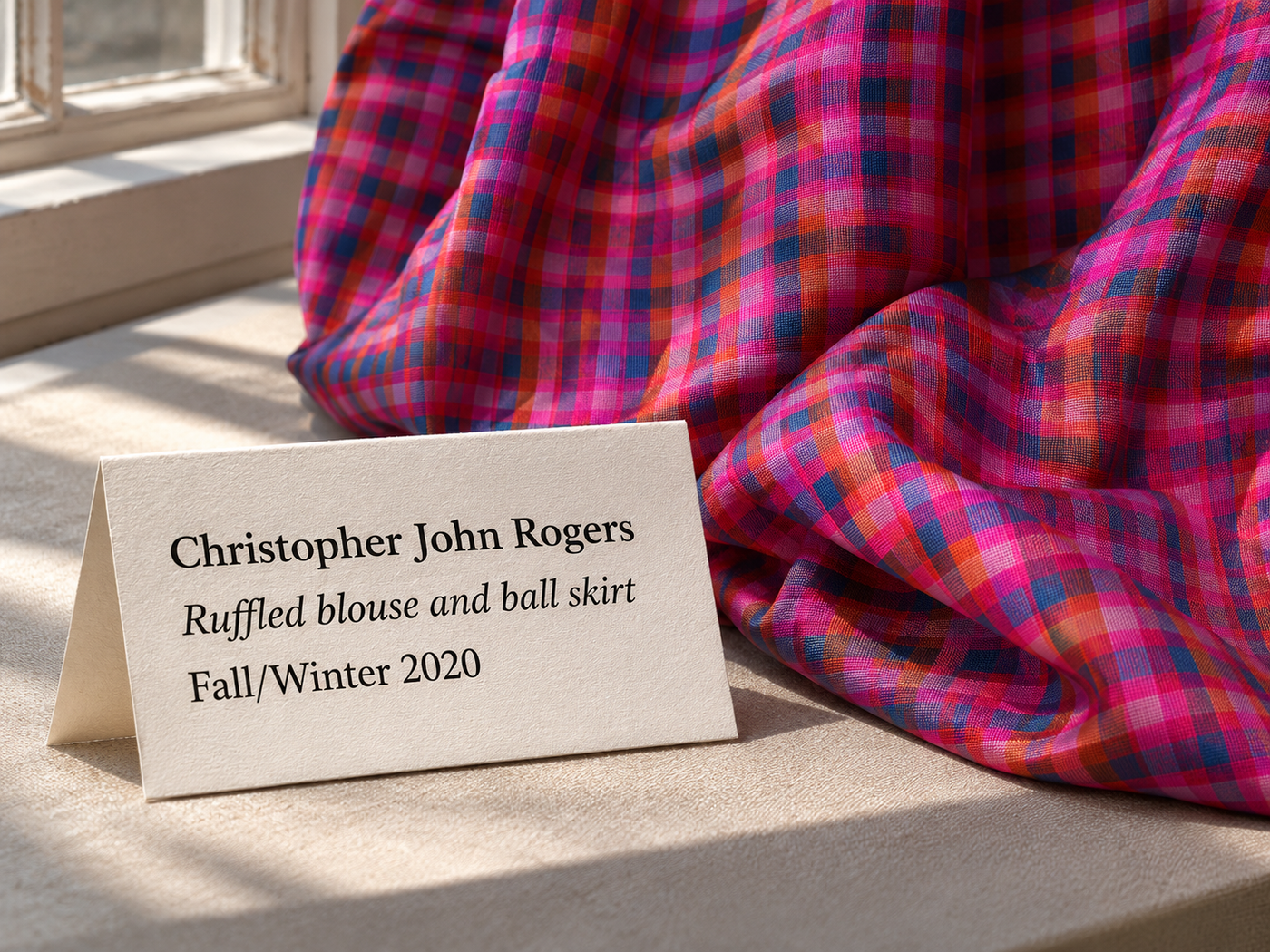
The AGO’s large-print text for rooms eight and nine puts a short statement in Rogers’s own words beside the number for the recording. “From the beginning, colour was always really my primary fascination.” The gallery identifies him as the designer and describes the recording as his account of this particular look. A visitor can keep those three things together in a note — the two pieces, the speaker and stop twelve — and find the passage again.
What a crumpled bag has to do with a ball skirt
Rogers had noticed crushed carry-out bags on the streets of Bushwick in Brooklyn. The gallery puts that observation alongside the extravagant shapes of Paris couture in the 1980s. The bag supplies a way to look at the cloth. Follow one dark stripe towards the waist. The material can have a handsome, orderly pattern when spread out, then buckle into an irregular pocket of colour when it has somewhere to go. Anyone can see the buckle. It took Rogers to tell us that a discarded bag belonged in the company of an evening gown.
He made a related observation in a backstage interview when the collection was new. He compared a crumpled bag with the way a painted curtain brushed the floor. His eye had connected two things that somebody else might pass several times a day without putting them together. Look at the lower edge of the skirt with that comparison in mind. Its fullness carries the eye as far as the floor, where some of the most interesting changes of direction happen.
Listen once with your eyes on the sleeve
The show follows Black self-fashioning across places where people dress with an audience in mind, from church to the runway. In this room, the audience can get close enough to see an individual check, then step back far enough to take in the silhouette. Rogers’s choice of a colour that carries across that distance belongs to him. A wearer might have quite another reason for choosing it. Imagine putting on a coat over the outfit. The skirt would still announce your approach before anyone saw the ruffles on the blouse. Which part you wanted an audience to see first would be your decision.
Try the recording a second time with just the sleeve in view. Note the moment the guide describes a design choice, who is speaking and which part of the cloth made the words click. The same habit helps when you listen for clothing details in a recorded oral history. At home, the AGO’s exhibition page and audio-guide link lead back to the same stop. Draw the path of a check through a fold. Beside it, write down the everyday thing that helped Rogers see the shape. A sketch of a ball skirt with “a bag on a Brooklyn street” written underneath would be hard to mistake for anyone else’s.

2 thoughts on “Whose Voice Do You Hear in Toronto’s Sunday Best?”