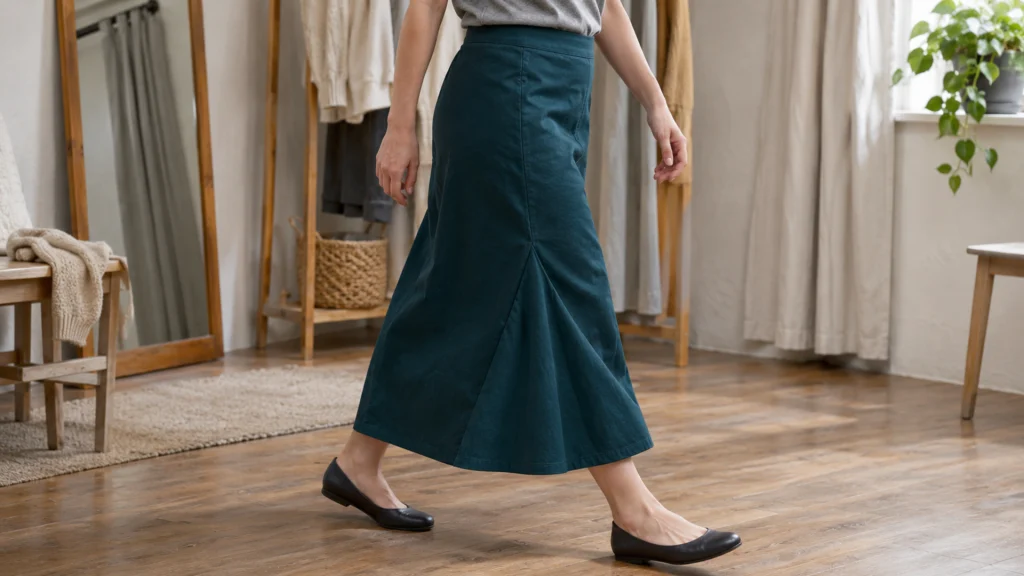
During a step, the front insert has room to open below its pointed seam. AI-generated image.
The fullest part of a skirt can hang in a fold scarcely wider than a finger. Give the wearer somewhere to go and that fold opens. To predict where it can open, turn the skirt inside out and find the point of the triangular insert, or godet. A high point gives the cloth room to separate farther up the leg. A low point keeps the skirt close farther down and saves the extra width for the hem. How readily that width opens on a particular stride takes a few steps to find out.
Featured image generated with AI. The walking view illustrates the cut.
Follow the two seams home
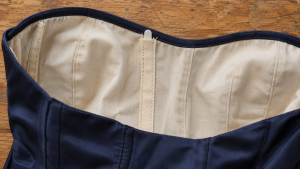
Start at the hem of an unlined skirt. Find the patch of cloth that widens towards the floor. Put a finger on each of its side seams and run both fingers upwards until they meet. That meeting place is the apex. Above it, the surrounding panels can continue as one ordinary vertical seam. Below it, the two edges enclose another piece of fabric. Gently spread the hem on a table and the triangle that hid on the hanger will show its full width.
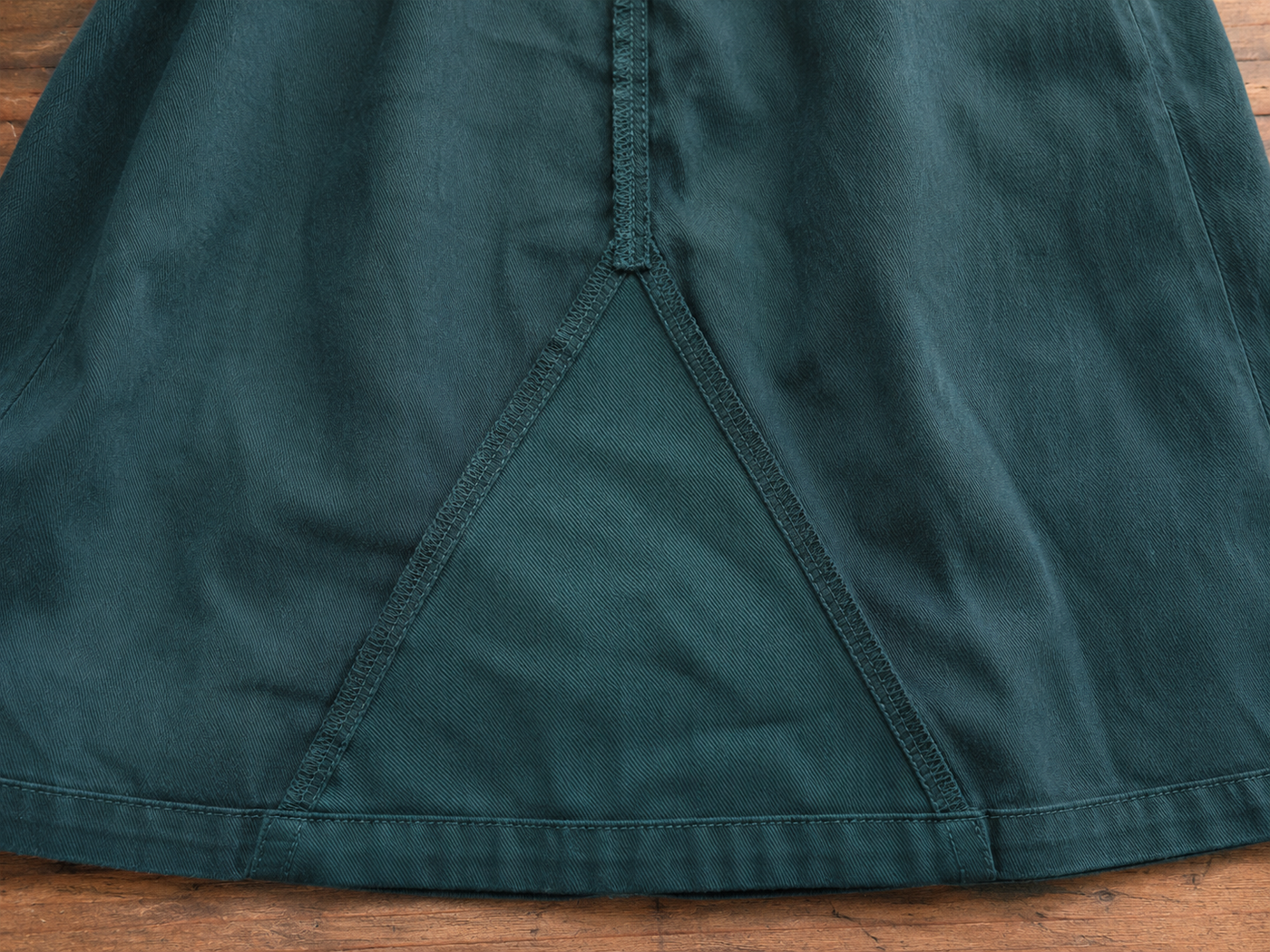
Use the actual stitching as a reference. A narrow strip of cloth beyond the stitching is the seam allowance, and its trimmed edge can stop a little short of the point you want. If a lining hides the inside, trace the seams on the face in raking light. A diagonal shadow that disappears when you smooth the skirt is probably a fold. A line that still encloses a separate piece is worth following.
Sewing editor Sarah McFarland gives an especially clear starting example in her godet skirt demonstration for Threads. Four straight skirt panels give her four seams for the inserts. She places their top points around knee level and chooses the width she wants at the hem. Those are two decisions you can change independently. A long narrow insert and a short broad one can begin and end in quite different places on the leg.
Give two skirts the same three steps
Choose two skirts that fit the same wearer at the waist. For the cleanest comparison, look for similar length, cloth weight, number of inserts and sweep, the distance all the way around the hem. Measure from the hem up to one apex on each skirt. A note such as “front left, 15 centimetres up” is easier to find in a film than “the little triangle somewhere at the front.”
Set a phone on a steady support far enough back to include the waistband, hem and feet. Mark a starting place on the floor. In the same shoes, take three ordinary steps across the frame in the first skirt and repeat in the second. Keep the camera, route and pace fixed. Start each clip with a moment of standing still. If somebody else wears the skirts, let them set a comfortable stride and ask which one gave their knee room at the moment they wanted it.
Pause each clip when the forward heel touches down. Find the apex, then look just below it for the first strip of the insert brought into the light as the folds part. On the next frame, see how far down the extra width has travelled. A dense fabric may hold its folds apart even at rest. A light one may drop straight down again the moment the wearer stops. Record those differences alongside the two measurements before giving the cut all the credit.
Choose a starting height
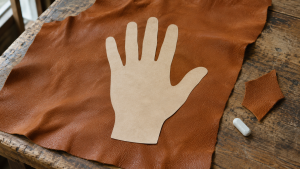
For a paper comparison, give two triangles the same 18-centimetre base and mark one point 15 centimetres above it and the other 30. Lay each against the same straight opening from the hem. Both supply the same base width. At 7.5 centimetres above the hem, the shorter triangle has narrowed to 9 centimetres. The taller one still measures 13.5 centimetres across. A small paper skirt with fullness opened in different places lets you see that difference all the way around.
For a hem that flicks out near the ankle while the knee stays close, take the lower point into the fitting room first. For room earlier in a stride, try the higher one. If you are sewing the skirt, mark the point on a test piece in a fabric close to your final choice. Stand still, take those same three steps, and use the frame where your knee comes forward to decide where the stitching should end.